
Navratri Kalash Sthapana 2026: Puja Vidhi, Samagri & Muhurat
Every Navratri begins with one quiet, deeply personal ritual: installing a sacred pot in your home and inviting the Goddess to stay for nine days. This is Kalash Sthapana, also called Ghatasthapana. Done with care, it sets the mood for the entire festival.
This guide covers the date, the muhurat, the full samagri list and the Kalash Sthapana vidhi at home, written for families who want to do it correctly without making it complicated. It follows the Sharad Navratri calendar for 2026.
Navratri Kalash Sthapana 2026: Quick Answer
Navratri Kalash Sthapana 2026 is on Sunday, 11 October 2026, the first day of Sharad Navratri (Ashwin Shukla Pratipada). The best time is the morning, after sunrise and while Pratipada is still running. For Delhi, panchang sources list this window as roughly 6:19 AM to 10:11 AM. The Abhijit Muhurat, around 11:44 AM to 12:30 PM, is the accepted alternative.
Key Highlights
- Date: Sunday, 11 October 2026 (Ashwin Shukla Pratipada)
- Best time: Morning window after sunrise, about 6:19 AM to 10:11 AM in Delhi
- Alternative: Abhijit Muhurat, about 11:44 AM to 12:30 PM in Delhi
- Do not perform Kalash Sthapana at night or after Pratipada ends (about 9:30 PM that day)
- Basic items: clay or copper kalash, soil, barley (jau), Ganga jal, mango leaves, coconut, red cloth, moli, roli and akshat
- Times change by city. Confirm yours on the DevMarg Muhurat page or with your family pandit
What Is Kalash Sthapana and Why Is It Done on the First Day of Navratri?
Kalash Sthapana is the ritual installation of a water-filled pot that is worshipped as the seat of Goddess Durga for the nine days of Navratri. In many regions, it is called Ghatasthapana, because "ghat" is another word for the pot.
Tradition treats the kalash as a complete, living symbol. A common belief holds that Vishnu resides at its mouth, Rudra at its neck, Brahma at its base, and the Mother Goddesses in the middle. The water stands for purity and the life that sustains all things. The mango leaves and coconut on top welcome auspicious energy into the home. Read more about the festival in why Shardiya Navratri is observed and the story of Durga and Mahishasura.
The barley seeds sown in the soil beneath the kalash carry their own meaning. They are among the first grains of the harvest, and sprouting shoots are seen as a sign of growth and abundance in the household. Families watch them with hope, but they are a symbol of devotion, not a prediction.
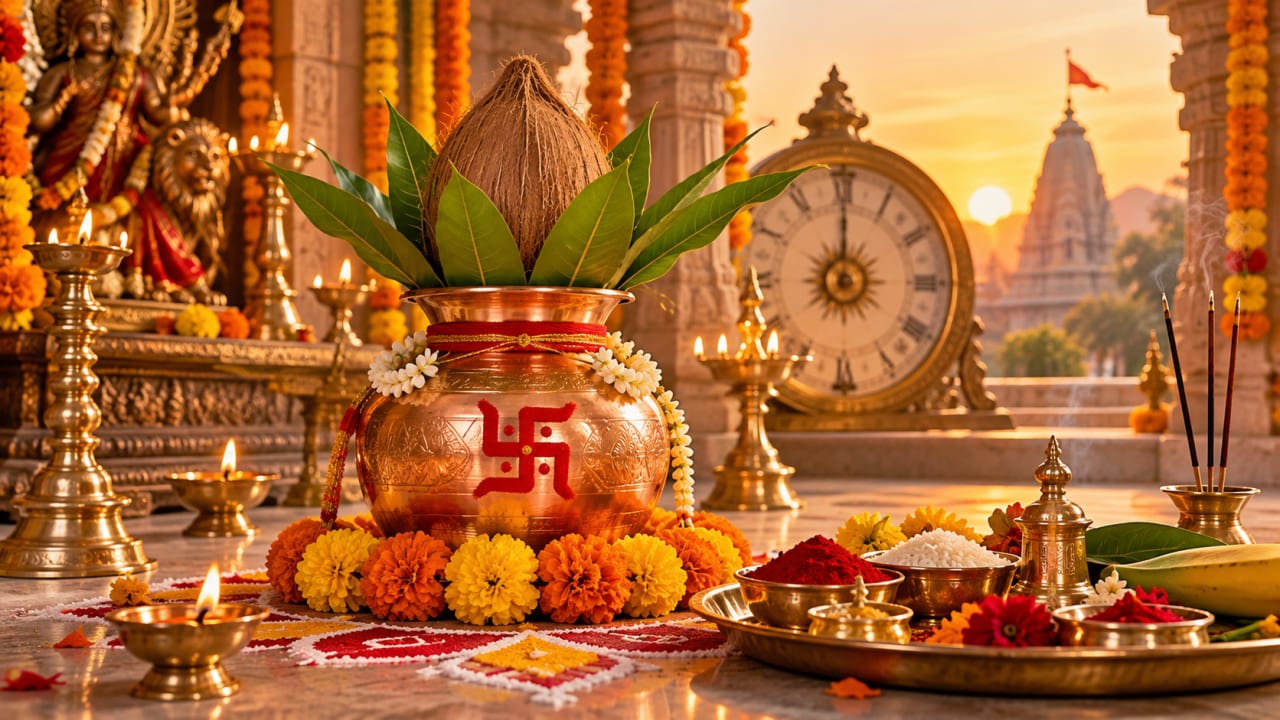
Navratri Kalash Sthapana Muhurat 2026
The correct time for Kalash Sthapana is the morning of Pratipada, in the first third of the day, while the tithi is running. If the morning window is missed, the Abhijit Muhurat around local noon is the accepted fallback. It is never done at night, and not after Pratipada ends.
| Detail | Delhi reference | Prokerala panchang reference |
|---|---|---|
| Date | Sunday, 11 October 2026 | Sunday, 11 October 2026 |
| Morning Ghatasthapana window | 6:19 AM to 10:11 AM | 6:26 AM to 10:17 AM |
| Abhijit Muhurat | 11:44 AM to 12:30 PM | 11:50 AM to 12:36 PM |
| Pratipada tithi | Ends about 9:32 PM | 10 October, 9:20 PM to 11 October, 9:31 PM |
Panchang calculations differ by a few minutes depending on the location used, so treat these as reference values. Enter your own city on the DevMarg Muhurat page for local timings, and see how to read a panchang if you want to understand how tithi and sunrise decide the timing.
A Note on Chitra Nakshatra and Vaidhriti Yoga
Some panchang sources point out that Chitra nakshatra and Vaidhriti yoga run through the morning of 11 October 2026, and that many traditions avoid both for Kalash Sthapana. Families who follow this rule prefer the Abhijit Muhurat around noon. Practice varies between regions and lineages, so if your family has a standing custom or a trusted priest, follow that guidance.
Navratri 2026 Key Dates at a Glance
| Event | Date | Day |
|---|---|---|
| Ghatasthapana / Kalash Sthapana (Day 1) | 11 October 2026 | Sunday |
| Navratri ends (Maha Navami) | 19 October 2026 | Monday |
| Vijayadashami (Dussehra) | 20 October 2026 | Tuesday |
Ashtami and Navami fall very close together this year, and sources differ on the exact Ashtami day. Check your local panchang before planning Kanya Pujan. For the full festival, see the nine days of Navratri and our festival calendar.
Kalash Sthapana Samagri: Complete Puja Items List
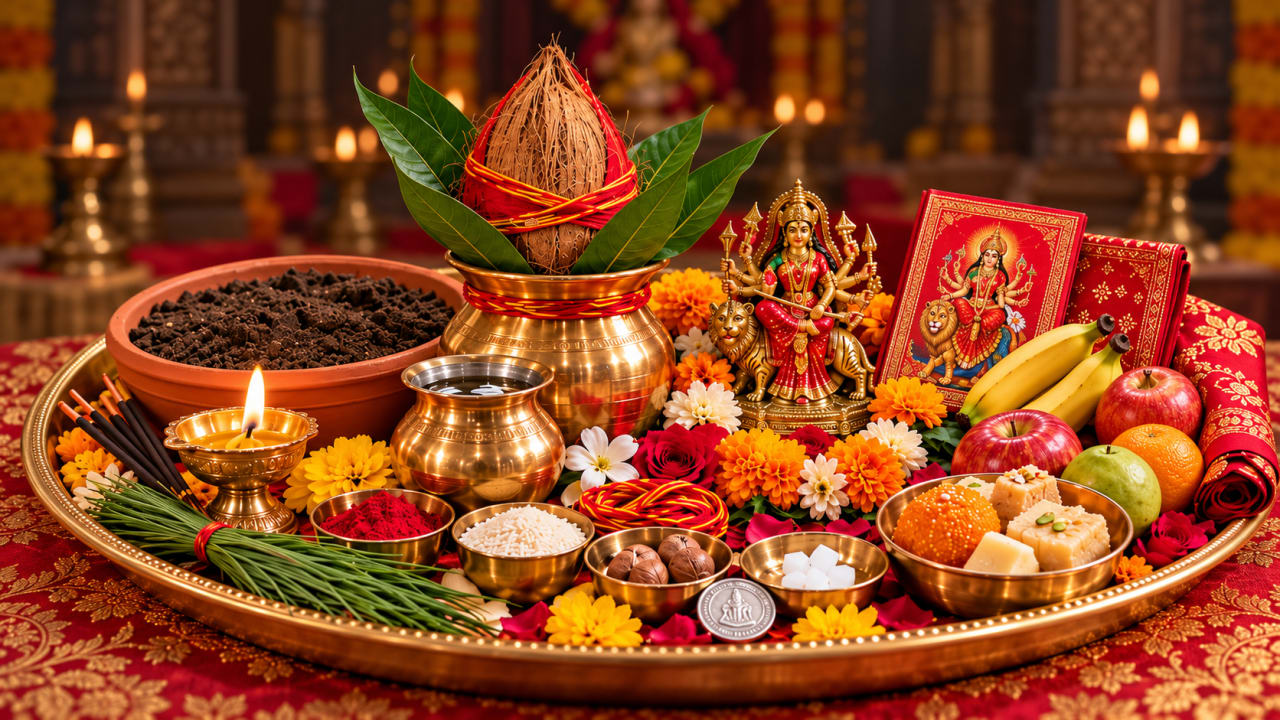
Kalash Sthapana samagri is simple and mostly available at home or from a local puja shop. Keep everything ready the evening before so the morning stays calm and unhurried.
| Item | Purpose |
|---|---|
| Kalash (clay, copper or brass) | The sacred pot that holds the Goddess. Many households avoid iron. |
| Wide earthen pot or tray with clean soil | The bed in which barley is sown beneath the kalash |
| Barley (jau) seeds | Sown for sprouts; symbol of growth and abundance |
| Clean water with a little Ganga jal | Filled into the kalash |
| Mango leaves (5 or 7) | Placed around the mouth of the kalash |
| Coconut with husk, wrapped in red cloth | Placed on the kalash; represents the Goddess |
| Moli (kalawa), roli, akshat | To tie the kalash, mark a swastik and offer in puja |
| Supari, coin, durva grass | Dropped into the kalash for prosperity |
| Red chunri or cloth | To wrap the coconut and cover the seat |
| Flowers and garland | Red hibiscus is traditionally preferred for Durga |
| Incense, camphor, ghee diya | For aarti and the daily lamp |
| Fruits, sweets and naivedya | Offered as prasad |
| Image or idol of Goddess Durga | Placed beside the kalash |
| Durga Saptashati or Durga Chalisa | For daily recitation |
Read about sacred plants in Hinduism to understand why mango leaves and durva hold a place in Hindu ritual.
Kalash Sthapana Puja Vidhi Step by Step (Ghatasthapana Vidhi at Home)
The Kalash Sthapana puja vidhi has five stages: prepare the space and yourself, take the sankalp and worship Ganesha, sow the barley and set up the kalash, invoke Goddess Durga, and close with aarti. Done calmly, the whole puja takes about 45 minutes to an hour. The steps below follow the common North Indian method for Kalash Sthapana at home for Navratri, and each step carries a short reason so you understand what you are doing and why.
Customs differ by region and family, so adapt the details as your elders or pandit advise. If you are new to home worship, our guide to daily puja at home is a good companion read.
Stage 1: Prepare the Space and Yourself
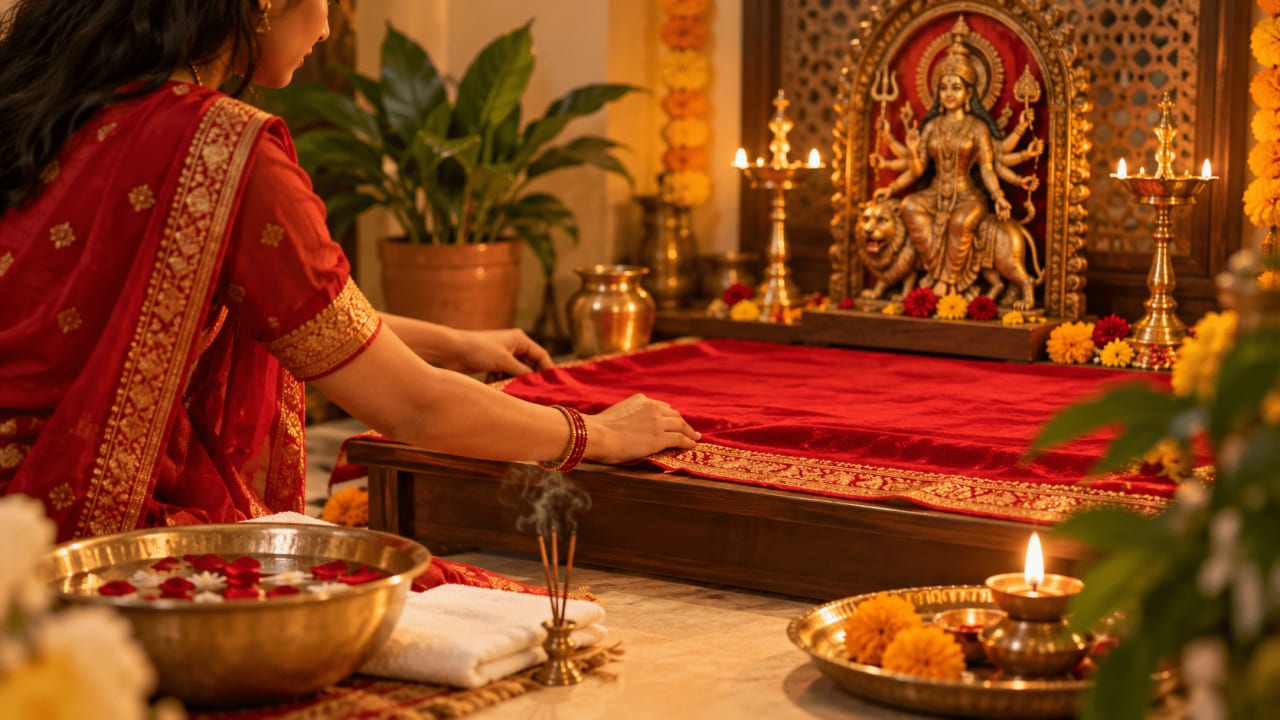
- Clean the puja corner. Wipe the north-east or east corner of the home with clean water, then spread a red or yellow cloth on a raised wooden platform (chowki). The kalash stays here for nine days, so choose a calm spot that nobody will need to pass through. If you are setting up a new corner, see our guide to a home temple or puja room.
- Arrange everything within reach. Keep the soil pot, barley, kalash, water, mango leaves, coconut, moli, roli, akshat, flowers and diya on a tray beside you. Once the puja begins, you should not need to get up and search for anything.
- Purify yourself. After a bath, wear clean clothes and sit on a mat (asan) facing east or north. Sip water three times (achamana) while saying "Om Keshavaya Namah, Om Narayanaya Namah, Om Madhavaya Namah", then apply a tilak. This settles the mind before worship begins.
- Light the lamp and place the Goddess. Light a ghee diya and incense, and place the image or idol of Goddess Durga on the chowki, slightly behind the spot where the kalash will sit. Many families treat the lamp as a witness to the puja. Learn why we light a diya.
Stage 2: Sankalp and Ganesha Puja
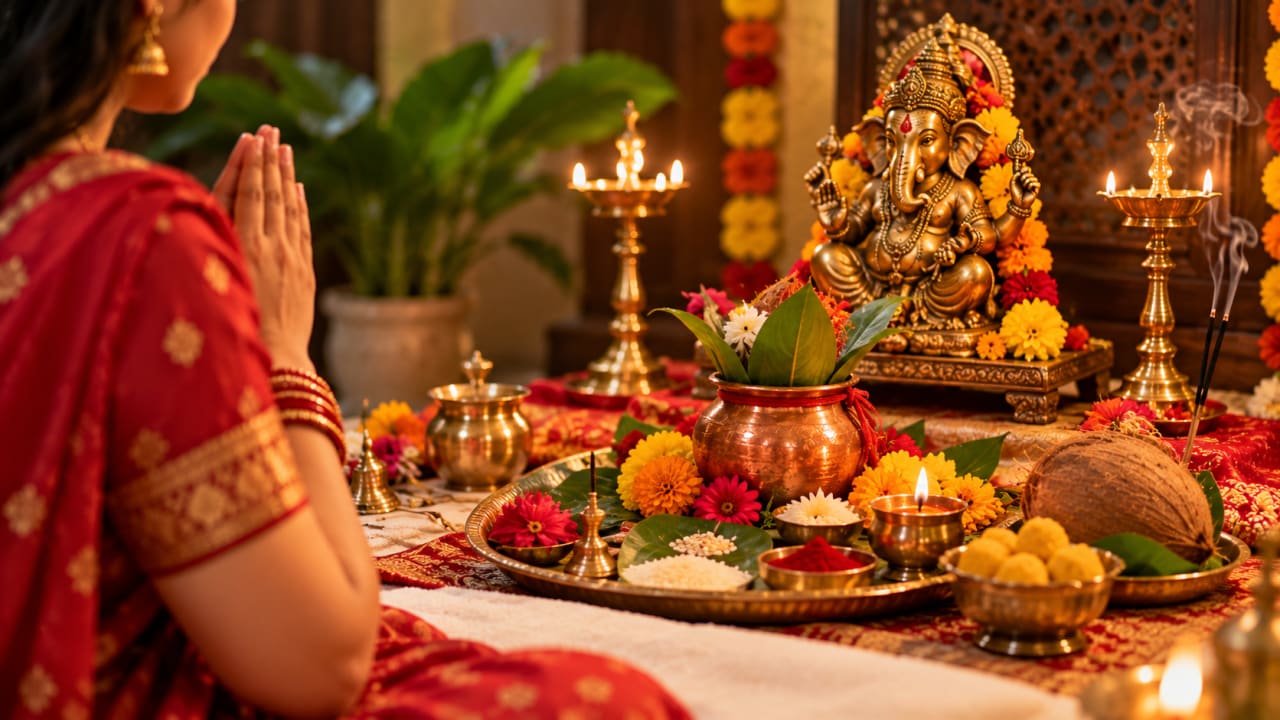
- Take the sankalp. Hold water, a few grains of rice and a flower in your right hand. State, in simple words, that you are beginning Sharad Navratri puja at home on Pratipada to worship Goddess Durga with devotion, and ask that it be completed without obstacles. A pandit would add your name, gotra and place; at home, sincere words are enough. Release the water into a small plate.
- Worship Lord Ganesha first. Offer roli, akshat and a flower while chanting "Om Gan Ganapataye Namah". Ganesha is invoked at the start of every Hindu ritual so that the puja proceeds without hurdles.
Stage 3: Sow the Barley and Set Up the Kalash
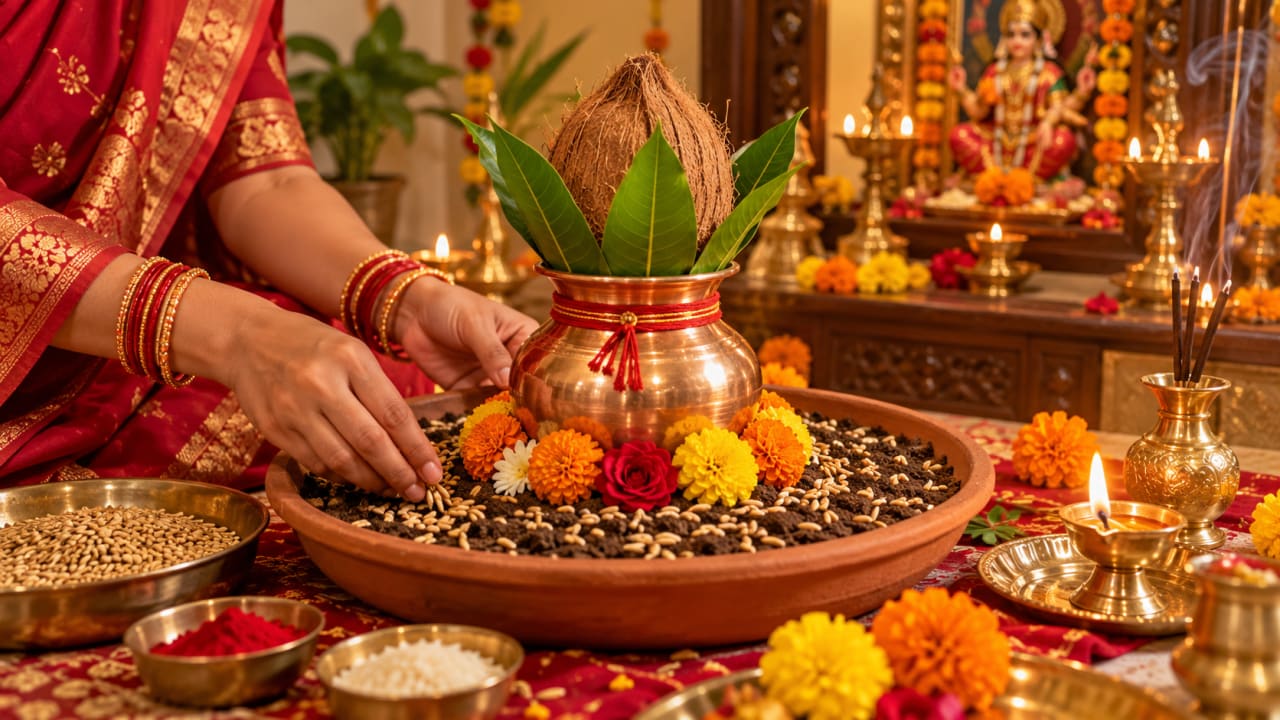
- Make the soil bed. Spread a layer of clean soil in the wide pot or tray, sprinkle a little water, scatter the barley evenly and cover it with a thin layer of soil. The barley will sprout over the nine days and stands for growth and abundance in the household.
- Mark the kalash. Draw a swastik on the body of the kalash with roli and tie moli around its neck. The swastik is a symbol of auspiciousness and is drawn before any sacred object is used.
- Fill the kalash. Pour in clean water with a few drops of Ganga jal, leaving a little space at the top so it does not overflow when the leaves and coconut are added.
- Add the offerings. Drop in a supari, a coin, a pinch of akshat and a few blades of durva grass. These represent prosperity, health and lasting well-being.
- Place the mango leaves. Arrange five or seven leaves around the mouth of the kalash with the stems inside and the tips resting outward.
- Crown the kalash with the coconut. Wrap the coconut in red cloth, tie it with moli and set it on the leaves with its tuft end facing upward, as is common. Settle it firmly so it does not tip. The coconut represents the Goddess herself.
- Install the kalash. Place it at the centre of the soil bed and press it down gently so it stands steady. From this moment, do not move it until Navratri ends.
Stage 4: Invoke and Worship Goddess Durga
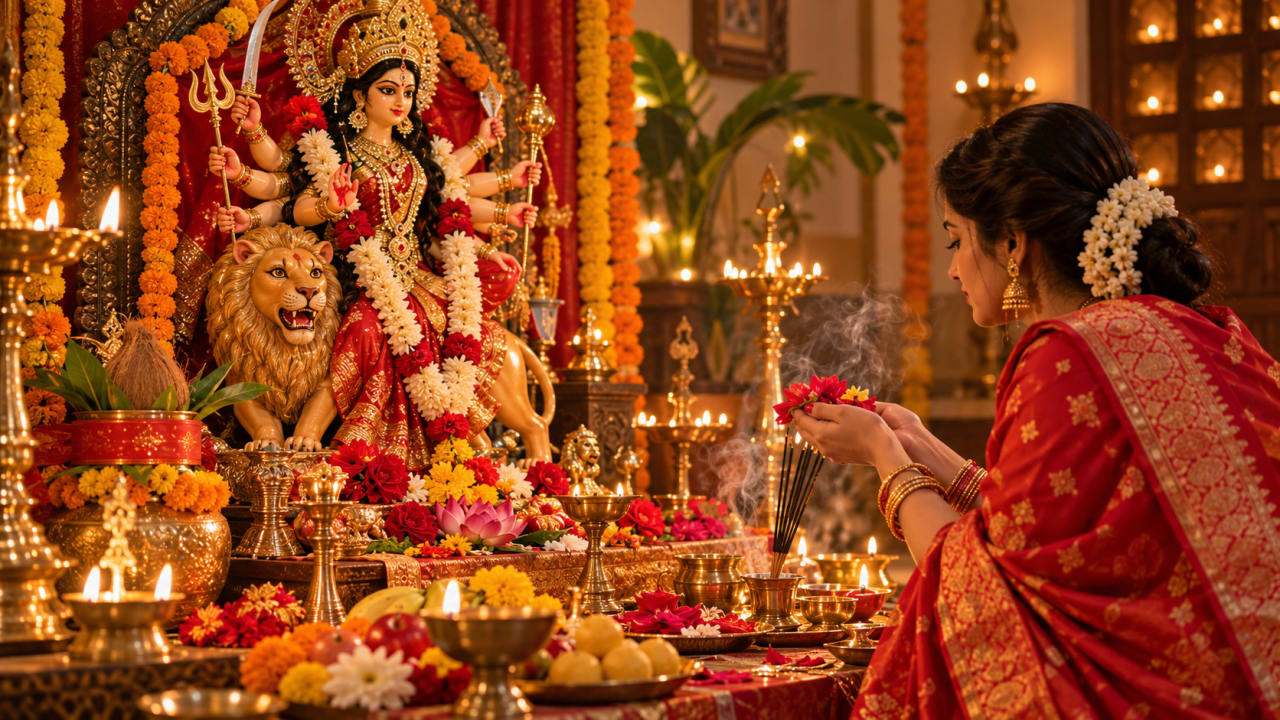
- Invite the deities into the kalash. With folded hands, request the presence of Varuna, the holy rivers, the Navagrahas and Goddess Durga in the kalash. Sprinkle a little akshat on it while chanting "Om Dum Durgayai Namah".
- Offer the puja items. Offer roli, akshat and flowers to the kalash and the image, a red chunri to the Goddess, then incense and the lamp. Red hibiscus is traditionally preferred for Durga.
- Offer naivedya. Place fruit or sweets before the kalash with a little water. After the puja, this becomes prasad for the family.
- Chant or recite. Recite the Durga Saptashati if your family follows it, or the Durga Chalisa. Alternatively, chant the Navarna mantra "Om Aim Hreem Kleem Chamundayai Vichche" with a mala. Even 11 or 21 repetitions said with attention are meaningful. Browse more in our guide to Durga mantras.
Stage 5: Aarti and Closing
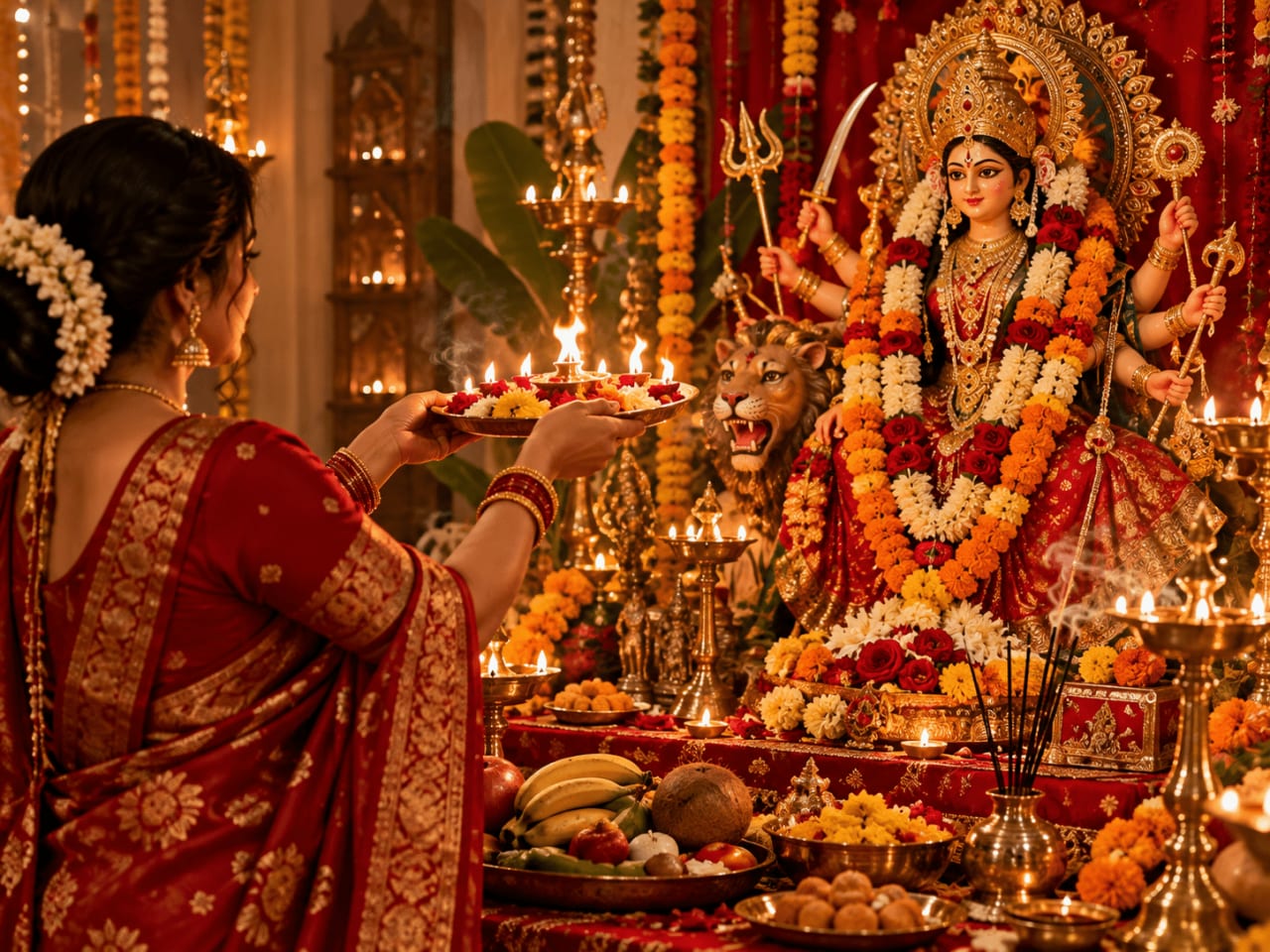
- Perform the aarti. Light a camphor lamp, ring the bell and wave the aarti in clockwise circles before the kalash and the Goddess while the family sings. See how to perform aarti if you are unsure.
- Seek forgiveness. With folded hands, ask the Goddess to forgive any mistake made in the puja, knowingly or unknowingly. This short prayer (kshama prarthana) closes every Hindu worship.
- Share the prasad. Distribute the fruit and sweets to everyone present, and place the Akhand Jyot or daily diya where it can burn safely if your family keeps one.
With the kalash installed, the nine days of worship begin. The next section explains how to look after it each day until Navratri ends.
How to Care for the Kalash During the Nine Days
Once installed, the kalash is not moved until Navratri ends. Treat the corner as a small temple for nine days.
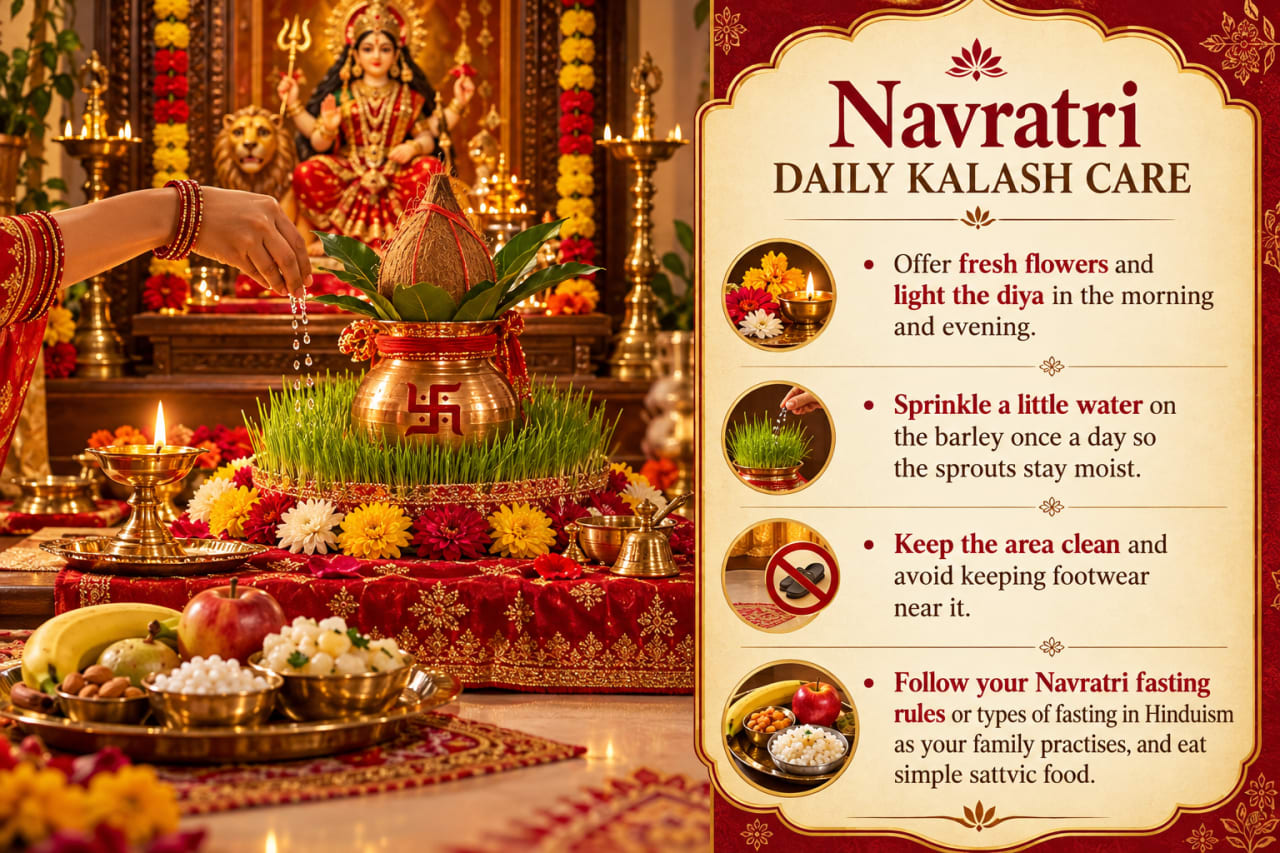
- Offer fresh flowers and light the diya in the morning and evening.
- Sprinkle a little water on the barley once a day so the sprouts stay moist.
- Keep the area clean and avoid keeping footwear near it.
- Follow your Navratri fasting rules or types of fasting in Hinduism as your family practises, and eat simple sattvic food.
On the last day, after the concluding puja, the sprouted barley is often kept as prasad or placed in the household puja space. The kalash water is sprinkled around the home, and the soil and remaining offerings are returned to running water or placed at the base of a tree. Some families conduct a short havan at this point. Customs differ, so follow your own tradition.
Common Kalash Sthapana Mistakes to Avoid
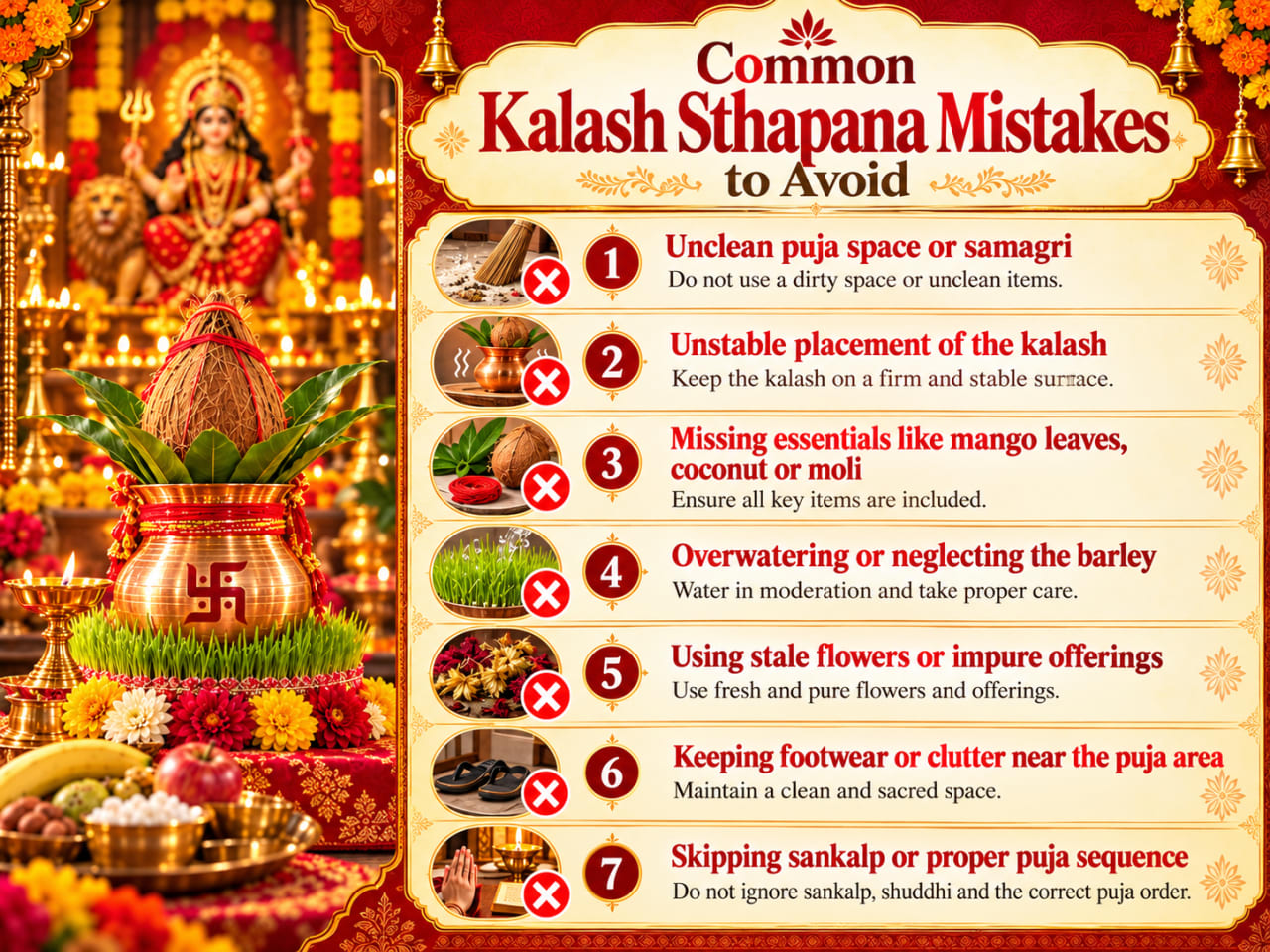
| Mistake | What to do instead |
|---|---|
| Installing the kalash at night or after Pratipada ends | Perform it in the morning window or the Abhijit Muhurat |
| Using a cracked, chipped or leaking pot | Use a clean, whole clay, copper or brass kalash |
| Setting the coconut loosely so it tips over | Wrap it, tie it with moli and settle it firmly on the mango leaves |
| Moving the kalash during Navratri | Choose the spot carefully on Day 1 and keep it there |
| Letting the diya or sprouts go unattended | Assign a family member to check them morning and evening |
| Doing the puja in a hurry | Set aside unhurried time and keep samagri ready the evening before |
What If You Miss the Muhurat or Start Late?
If the morning window passes, the Abhijit Muhurat around noon is the accepted alternative on the same day. Kalash Sthapana is tied to Pratipada, so it is not postponed to later days in the usual practice. If circumstances prevented you from doing it at all, speak to your family pandit or a trusted priest. Guidance differs across traditions, and a priest can advise what suits your family.
You can still observe the remaining days with daily prayer, mantra recitation and fasting. Devotion matters more than perfect timing.
Where to Continue Your Navratri Worship

Many devotees pair home worship with a visit to a Devi temple during these nine days. Popular choices include the Vaishno Devi Temple, Katra and the Kamakhya Temple, Guwahati.
In the south and the Hindi heartland, the Kanaka Durga Temple, Vijayawada and the Vindhyavasini Devi Temple, Mirzapur draw large crowds during these days.
In Kashi, the Durga Temple, Varanasi is a well-known stop. You can browse more on our Shakti Peeth temples page.
To understand why these temples matter, read about the 51 Shakti Peethas. If you are in Gujarat, see Navratri 2026 Garba dates in Gujarat.
Conclusion
Kalash Sthapana is simple in form and rich in meaning. A clean space, a well-prepared kalash, a correct muhurat and a sincere heart are all it needs. Whether you follow the full vidhi or a shorter family version, the nine days that follow are a chance to slow down and reconnect with Goddess Durga.
As the festival unfolds, you can read about Maha Navami and Dussehra. The same vidhi applies when you prepare for Chaitra Navratri next year.
Frequently Asked Questions
When is Navratri Kalash Sthapana in 2026?
Navratri Kalash Sthapana 2026 is on Sunday, 11 October 2026, on Ashwin Shukla Pratipada, the first day of Sharad Navratri.
What is the Kalash Sthapana muhurat in 2026?
The morning window is roughly 6:19 AM to 10:11 AM in Delhi, and the Abhijit Muhurat is around 11:44 AM to 12:30 PM. Timings shift by city, so check a local panchang.
Is Ghatasthapana the same as Kalash Sthapana?
Yes. Both names describe the ritual installation of the sacred pot on the first day of Navratri. "Ghat" means pot.
Can Kalash Sthapana be done at night?
No. It is performed in the morning or in the Abhijit Muhurat, and while Pratipada is still running.
Do I need a pandit for Kalash Sthapana at home?
It is not compulsory. Many families perform it themselves with devotion. A pandit can help if you want a detailed Sanskrit procedure or have a regional custom to follow.
Which direction should the kalash face?
The north-east or east of the home is commonly preferred. Choose a clean, calm spot where the kalash can stay undisturbed for nine days.
What can I use if I do not have barley seeds?
Barley is traditional. Some families use wheat or other grains when barley is unavailable. If possible, check with your family elders.
What should be done with the coconut and sprouts after Navratri?
The coconut is commonly offered as prasad. The sprouts are kept in the puja space or placed in running water or at the base of a tree. Follow your family custom.