41 UNESCO World Heritage Sites across 20+ states -- centuries of culture, nature, and architectural splendor.
Goa's heritage includes centuries-old places of worship beyond temples. Explore the historic churches and convents of Goa.
 cultural1984
कोणार्क सूर्य मंदिर
The Konark Sun Temple is a 13th-century temple dedicated to the Hindu Sun god Surya. Designed as a massive chariot with 24 elaborately carved stone wheels pulled by seven horses, it is a masterpiece of Kalinga architecture and one of India's most famous Brahmanical sanctuaries.
 cultural1983
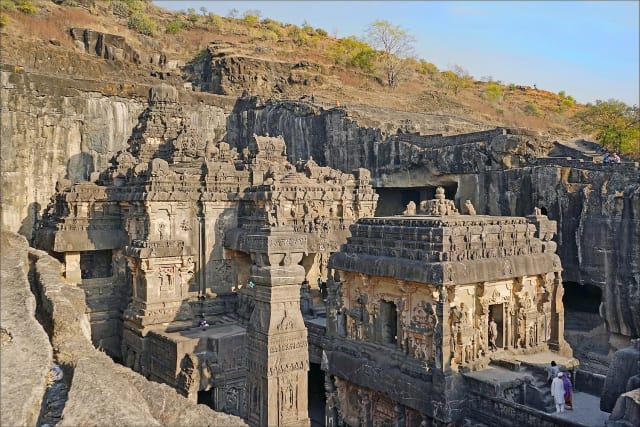
एलोरा गुफाएँ
Ellora is an archaeological site with 34 caves representing Buddhist, Hindu, and Jain rock-cut temples built between the 6th and 11th centuries. The Kailasa Temple (Cave 16) is the world's largest monolithic rock excavation, carved top-down from a single basalt cliff.
 cultural1983
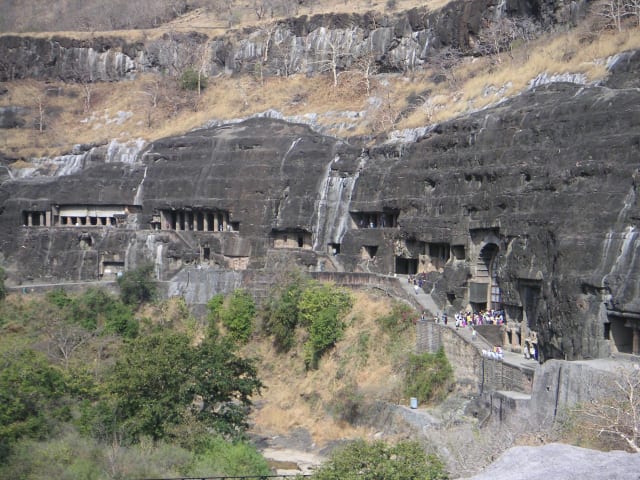
अजंता गुफाएँ
The Ajanta Caves are 30 rock-cut Buddhist cave monuments dating from the 2nd century BCE to about 480 CE. Located in a horseshoe-shaped gorge, they contain some of the finest surviving examples of ancient Indian art, including masterful paintings and elaborate rock-cut sculptures.
 cultural1984
महाबलीपुरम के स्मारक समूह
Mahabalipuram, also known as Mamallapuram, is a 7th- and 8th-century Pallava dynasty port city on the Coromandel Coast of Tamil Nadu. The site features rathas (chariot-shaped temples), mandapas (cave sanctuaries), the Shore Temple, and the giant open-air rock relief Arjuna's Penance.
 cultural1986
गोवा के चर्च और कॉन्वेंट
The Churches and Convents of Goa in Old Goa illustrate the evangelization of Asia. The ensemble includes the Basilica of Bom Jesus, which holds the mortal remains of St. Francis Xavier, and the Se Cathedral, one of the largest churches in Asia, showcasing Portuguese colonial Manueline, Mannerist, and Baroque art forms.
 cultural1986
हम्पी के स्मारक समूह
Hampi was the capital of the Vijayanagara Empire in the 14th to 16th centuries and is one of the most spectacular archaeological sites in India. Spread across 4,187 hectares along the Tungabhadra River, it includes over 1,600 remains of forts, temples, royal structures, and water systems.
 cultural1986
खजुराहो के स्मारक समूह
The Khajuraho temples are a group of Hindu and Jain temples in Madhya Pradesh, famous for their stunning Nagara-style architecture and erotic sculptures. Built by the Chandela dynasty between 950 and 1050 CE, only 25 of the original 85 temples survive, showcasing incredible sculptural artistry.
 cultural1986
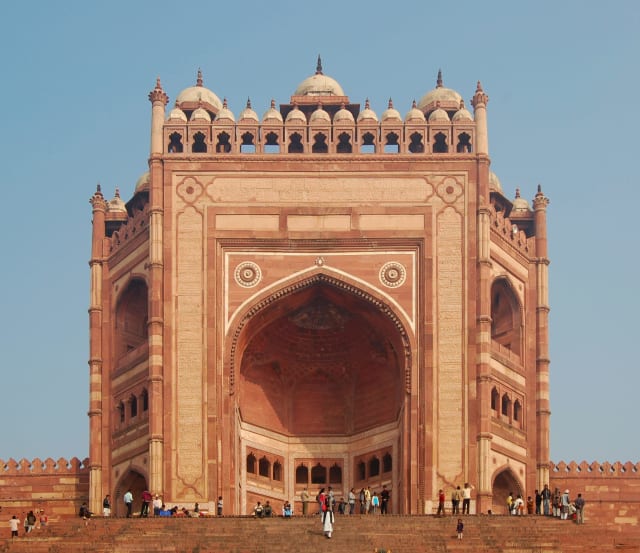
फतेहपुर सीकरी
Fatehpur Sikri is a fortified city built during the second half of the 16th century by Emperor Akbar as the Mughal capital. The city blends Indian and Islamic architectural styles and includes the stunning Buland Darwaza (Victory Gate), the tallest gateway in the world, and the Tomb of Salim Chishti.
 cultural1987
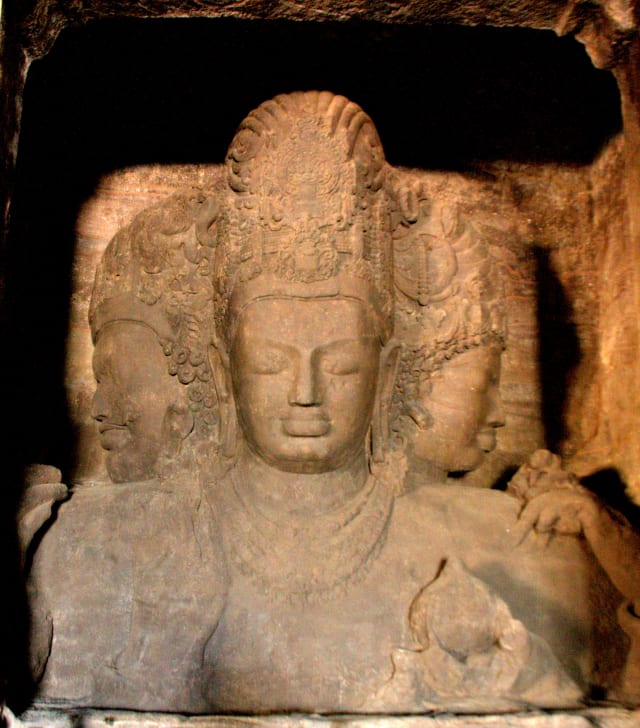
एलीफेंटा गुफाएँ
The Elephanta Caves are a network of sculpted caves on Elephanta Island in Mumbai Harbour. The main cave houses a 20-foot Trimurti sculpture of Lord Shiva representing the creator, preserver, and destroyer - one of the finest pieces of Indian sculpture from the 5th to 8th centuries.
 cultural1987
पट्टडकल के स्मारक समूह
Pattadakal in Karnataka represents the high point of an eclectic art which achieved a harmonious blend of Nagara and Dravidian architectural forms. Built by the Chalukya dynasty in the 7th and 8th centuries, the nine Hindu temples and one Jain sanctuary are masterpieces of early temple architecture.
 cultural1987
महान जीवंत चोल मंदिर
The Great Living Chola Temples include three magnificent 11th- and 12th-century temples: the Brihadeeswara Temple at Thanjavur, the Brihadeeswara Temple at Gangaikondacholapuram, and the Airavatesvara Temple at Darasuram. Built by the Chola dynasty, they showcase the brilliant achievements of Chola architecture and sculpture.
 cultural1989
सांची के बौद्ध स्मारक
Sanchi is a Buddhist complex famous for its Great Stupa, originally commissioned by Emperor Ashoka in the 3rd century BCE. The hilltop site features stupas, monasteries, temples, and pillars spanning nearly 1,500 years of Buddhist art and architecture from the Mauryan period onwards.
 cultural1993
हुमायूँ का मकबरा
Humayun's Tomb in Delhi is the first garden-tomb on the Indian subcontinent, built in 1570. It inspired several major architectural innovations culminating in the construction of the Taj Mahal. The tomb is set within a geometrical Mughal garden with channels and pathways representing the Islamic concept of paradise.
 cultural2002
महाबोधि मंदिर परिसर, बोधगया
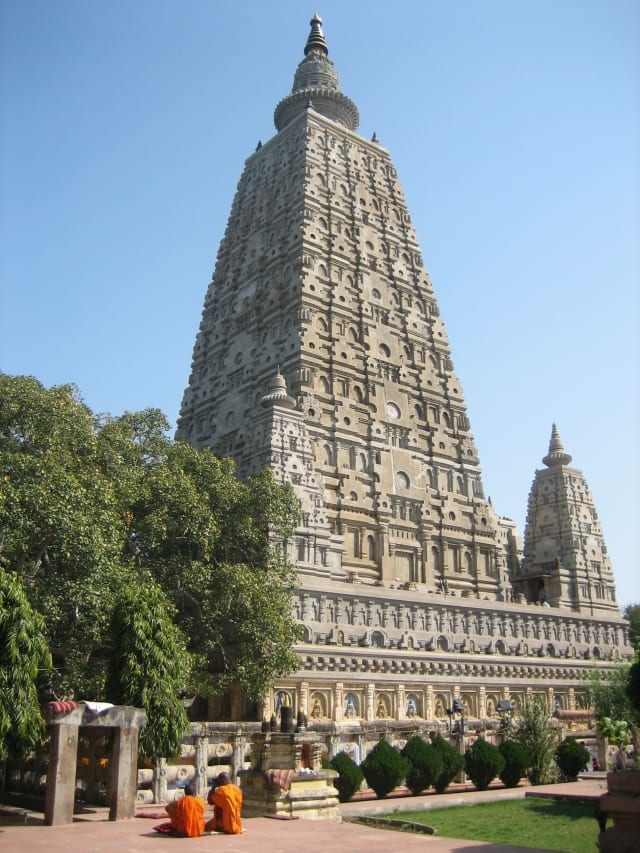
The Mahabodhi Temple Complex at Bodh Gaya marks the place where Siddhartha Gautama attained Enlightenment and became the Buddha. The 55-meter tall temple with the Bodhi Tree is one of the earliest brick structures in India and the most sacred pilgrimage site for Buddhists worldwide.
 cultural2003
भीमबेटका के शैल आश्रय
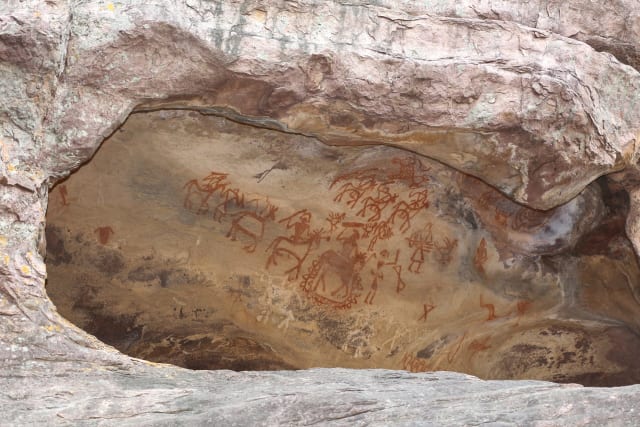
The Rock Shelters of Bhimbetka in the foothills of the Vindhyan mountains contain over 750 rock shelters, of which 500 bear paintings spanning from the Mesolithic period to the historical period. These are among the oldest known rock art in the Indian subcontinent, dating back 30,000 years.
 cultural2004
चंपानेर-पावागढ़ पुरातात्विक उद्यान
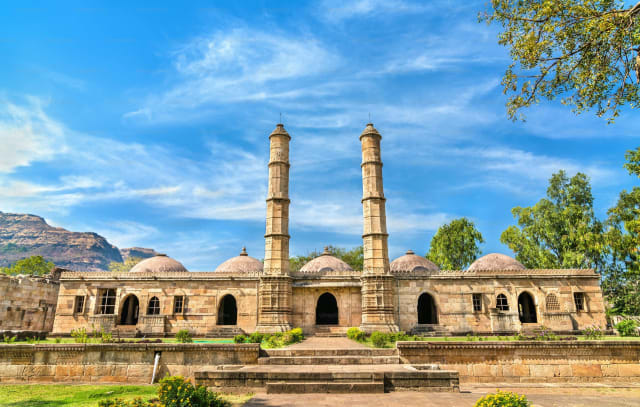
Champaner-Pavagadh is a remarkable concentration of largely unexcavated archaeological, historical, and living cultural heritage properties spread over a hill. The site includes chalcolithic sites, a hill fortress, palaces, mosques, temples, and the sacred Kalikamata Temple atop Pavagadh Hill.
 cultural2004
छत्रपति शिवाजी टर्मिनस
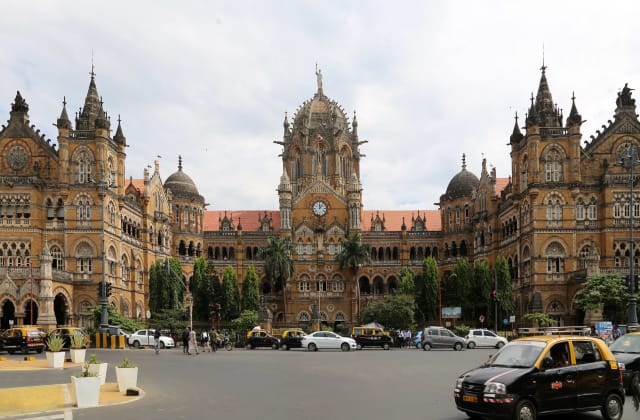
Chhatrapati Shivaji Terminus (formerly Victoria Terminus) in Mumbai is an outstanding example of late 19th-century railway architecture. Designed by British architect F.W. Stevens, the building blends Victorian Gothic Revival and traditional Indian architectural elements with turrets, pointed arches, stained glass, and decorative tiles.
 cultural2007
लाल किला परिसर
The Red Fort in Delhi was the main residence of Mughal emperors for nearly 200 years, until 1857. Built by Shah Jahan in 1639, the massive red sandstone fort with its iconic octagonal towers represents the zenith of Mughal creativity. India's Independence Day flag hoisting takes place here every year.
 cultural2010
जंतर मंतर, जयपुर
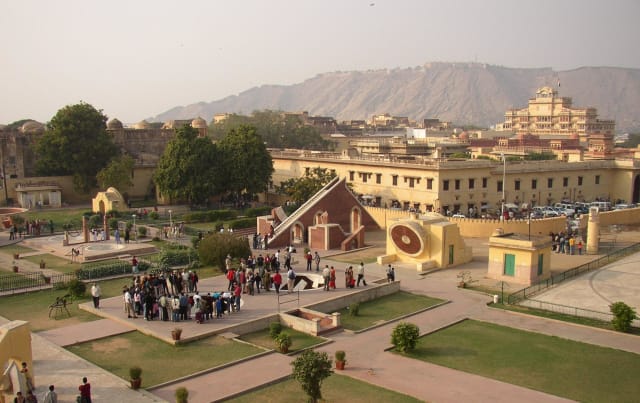
Jantar Mantar in Jaipur is the largest of five astronomical observation sites built by Maharaja Sawai Jai Singh II in 1734. It houses the world's largest stone sundial (Samrat Yantra) and a collection of 19 architectural astronomical instruments that can still make accurate astronomical observations.
 cultural2013
राजस्थान के पहाड़ी किले
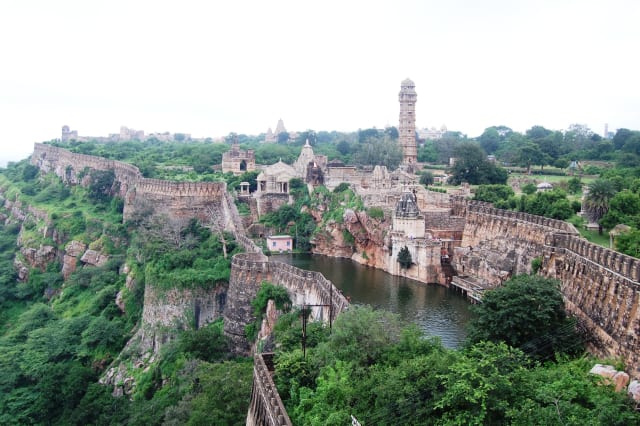
The Hill Forts of Rajasthan include six majestic forts: Chittorgarh, Kumbhalgarh, Ranthambore, Gagron, Amber, and Jaisalmer. These Rajput military hill architecture sites enclose palaces, temples, and urban centers within their fortified walls, representing the power and creativity of Rajput princely states.
 cultural2014
रानी की वाव
Rani ki Vav is an intricately constructed stepwell in Patan, Gujarat, built as a memorial to an 11th-century king. Designed as an inverted temple with seven levels of stairs descending to the water, it contains over 500 principal sculptures and more than 1,000 minor ones depicting religious and mythological themes.
 cultural2016
नालंदा महाविहार का पुरातात्विक स्थल
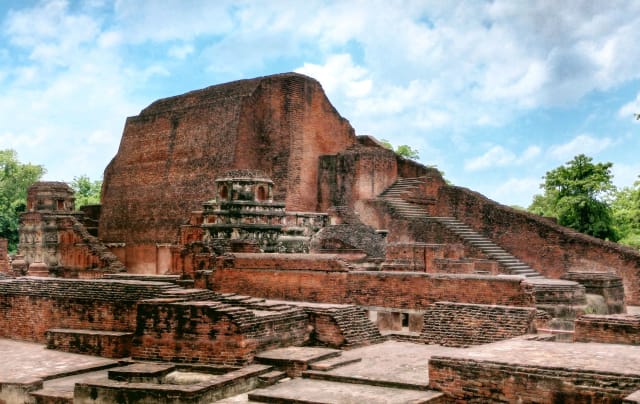
Nalanda Mahavihara was one of the world's greatest centers of learning from the 3rd century BCE to the 13th century CE. The archaeological site in Bihar comprises the remains of 11 monasteries and 6 temples, bearing testimony to an organized system of education at a Buddhist monastic institution.
 cultural2016
ले कोर्बुज़िए की कैपिटल कॉम्प्लेक्स, चंडीगढ़
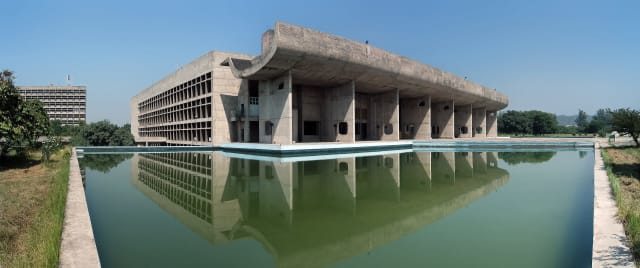
Chandigarh's Capitol Complex is part of the transnational UNESCO serial nomination of Le Corbusier's architectural work. The complex includes the High Court, Secretariat, and Legislative Assembly, representing a masterpiece of modern architecture and a key example of modern urban planning in the 20th century.
 cultural2017
अहमदाबाद का ऐतिहासिक शहर
The walled city of Ahmadabad, founded by Sultan Ahmad Shah in the 15th century, showcases the rich architectural heritage of Gujarat with its distinctive pols (residential clusters), carved wooden houses, elegant havelis, and ornate mosques reflecting a blend of Hindu, Jain, and Islamic architecture.
 cultural2018
मुंबई की विक्टोरियन गोथिक और आर्ट डेको इमारतें
This site comprises two architectural ensembles along Mumbai's waterfront: the 19th-century Victorian Gothic public buildings around the Oval Maidan, and the 20th-century Art Deco buildings along Marine Drive and the Back Bay. Together they form a unique ensemble of world-class urban architecture.
 cultural2019
जयपुर शहर
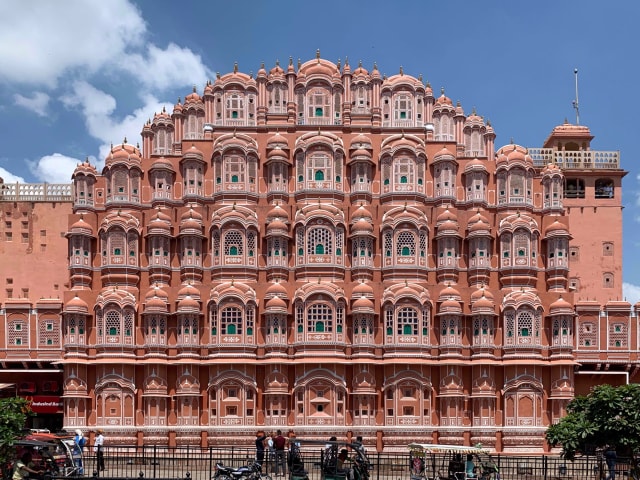
Jaipur, the Pink City, was founded in 1727 by Maharaja Sawai Jai Singh II. It was one of the earliest planned cities in India, laid out on a grid inspired by Vedic architecture. The city is known for its distinctive terracotta pink color, grand bazaars, Hawa Mahal, City Palace, and the Nahargarh Fort.
 cultural2021
धोलावीरा: एक हड़प्पा नगर
Dholavira is a remarkable archaeological site of a Harappan (Indus Valley) city in the Khadir island of the Great Rann of Kutch. Occupied from approximately 3000 BCE to 1500 BCE, it is one of the five largest cities of the Indus Valley Civilization and features an exceptional water management system.
 cultural2021
काकतीय रुद्रेश्वर (रामप्पा) मंदिर
The Ramappa Temple, also known as Rudreshwara Temple, was built in 1213 CE under the patronage of the Kakatiya dynasty. The temple's engineering marvel lies in its floating bricks that are so light they can float on water, and its exquisitely sculpted bracket figures of dancing women (madanikas).
 cultural2023
होयसल के पवित्र मंदिर समूह
The Sacred Ensembles of the Hoysala comprise three 12th-13th century Hindu temples in Karnataka: Chennakeshava Temple at Belur, Hoysaleshwara Temple at Halebidu, and Keshava Temple at Somanathapura. These temples showcase an extraordinary level of artistic detail in stone carving unmatched anywhere in the world.
 natural1985
काजीरंगा राष्ट्रीय उद्यान
Kaziranga National Park in Assam hosts two-thirds of the world's endangered one-horned rhinoceroses. Spread across the floodplains of the Brahmaputra River, the park has the highest density of tigers among protected areas in the world and is also home to large breeding populations of elephants, wild buffalo, and swamp deer.
 natural1985
केवलादेव राष्ट्रीय उद्यान
Keoladeo National Park (formerly Bharatpur Bird Sanctuary) in Rajasthan is one of the world's most important bird breeding and feeding grounds. The park harbors over 350 species of birds, including the rare Siberian crane, and is a winter home for migratory birds from Central Asia and Siberia.
 natural1985
मानस वन्यजीव अभयारण्य
Manas Wildlife Sanctuary lies in the foothills of the Himalayas in Assam, known for its rare and endangered endemic wildlife such as the Assam roofed turtle, hispid hare, golden langur, and pygmy hog. The sanctuary is part of the larger Manas Tiger Reserve and is bordered by the Royal Manas National Park of Bhutan.
 natural1987
सुंदरबन राष्ट्रीय उद्यान
The Sundarbans is the world's largest mangrove forest, spread across the delta of the Ganges, Brahmaputra, and Meghna rivers. It is home to the endangered Royal Bengal Tiger, which has adapted to swim between mangrove islands. The park contains an extraordinary variety of wildlife and bird species.
 natural1988
नंदा देवी और फूलों की घाटी राष्ट्रीय उद्यान
Nestled high in the Western Himalaya of Uttarakhand, the Valley of Flowers is an outstandingly beautiful high-altitude meadow with over 600 species of flowering plants. Combined with Nanda Devi National Park surrounding India's second-highest peak, the area is home to rare Himalayan wildlife including the snow leopard and Himalayan black bear.
 natural2012
पश्चिमी घाट
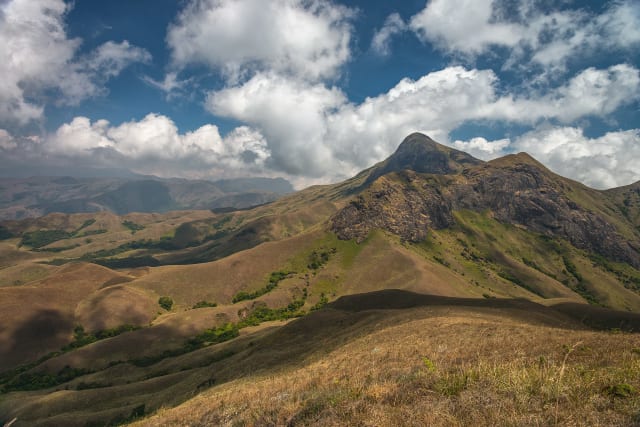
The Western Ghats is a mountain chain running parallel to India's western coast for 1,600 km through six states. Older than the Himalayas, this biodiversity hotspot has over 325 globally threatened species and is home to endemic plant and animal species found nowhere else on earth.
 natural2014
ग्रेट हिमालयन राष्ट्रीय उद्यान
The Great Himalayan National Park Conservation Area in Himachal Pradesh protects the biodiversity of the western Himalayan alpine forests. Its 90,540-hectare area harbors 375 floral species, 31 mammal species including snow leopard, blue sheep, and Himalayan brown bear, and 181 bird species.
 mixed2016
कंचनजंगा राष्ट्रीय उद्यान
Khangchendzonga National Park in Sikkim is centered around Mount Kanchenjunga, the world's third-highest peak. The park combines spectacular mountain scenery with significant cultural and spiritual importance - the peak is revered by the Sikkimese people as a sacred mountain and abode of the guardian deity.
 cultural2024
मोइदाम - अहोम राजवंश की टीला-समाधि प्रणाली
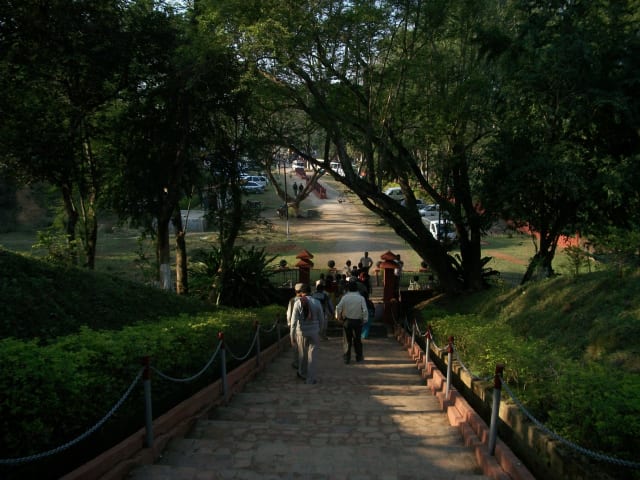
The Moidams at Charaideo are the mound-burial system of the Ahom dynasty that ruled Assam for six centuries (1228-1826). These vault-like structures covered with earthen mounds are the last resting places of Ahom royals and are often called the Pyramids of Assam. The site was inscribed in 2024 as India's 42nd UNESCO World Heritage Site.
 cultural1983
आगरा का किला
Agra Fort is a massive red sandstone fortress on the banks of the Yamuna River, serving as the main residence of Mughal emperors until 1638. Built by Emperor Akbar beginning in 1565, the fort contains stunning palaces, audience halls, and mosques reflecting Mughal architectural grandeur.
 cultural1983
ताज महल
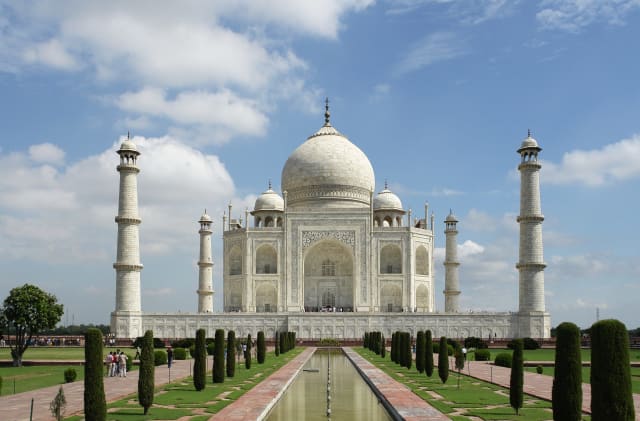
The Taj Mahal is an ivory-white marble mausoleum on the south bank of the Yamuna River in Agra. Commissioned in 1632 by Mughal emperor Shah Jahan for his beloved wife Mumtaz Mahal, it is regarded as the finest example of Mughal architecture and a jewel of Muslim art in India.
 cultural1993
कुतुब मीनार और उसके स्मारक
The Qutb Minar is a 72.5-meter red sandstone tower built in 1193, the tallest brick minaret in the world. The complex includes the Quwwat-ul-Islam Mosque, the Iron Pillar of Delhi which has resisted corrosion for 1,600 years, and the unfinished Alai Minar.
Combine heritage sites with nearby temple visits for a complete spiritual and cultural experience.
Explore Yatra Routes