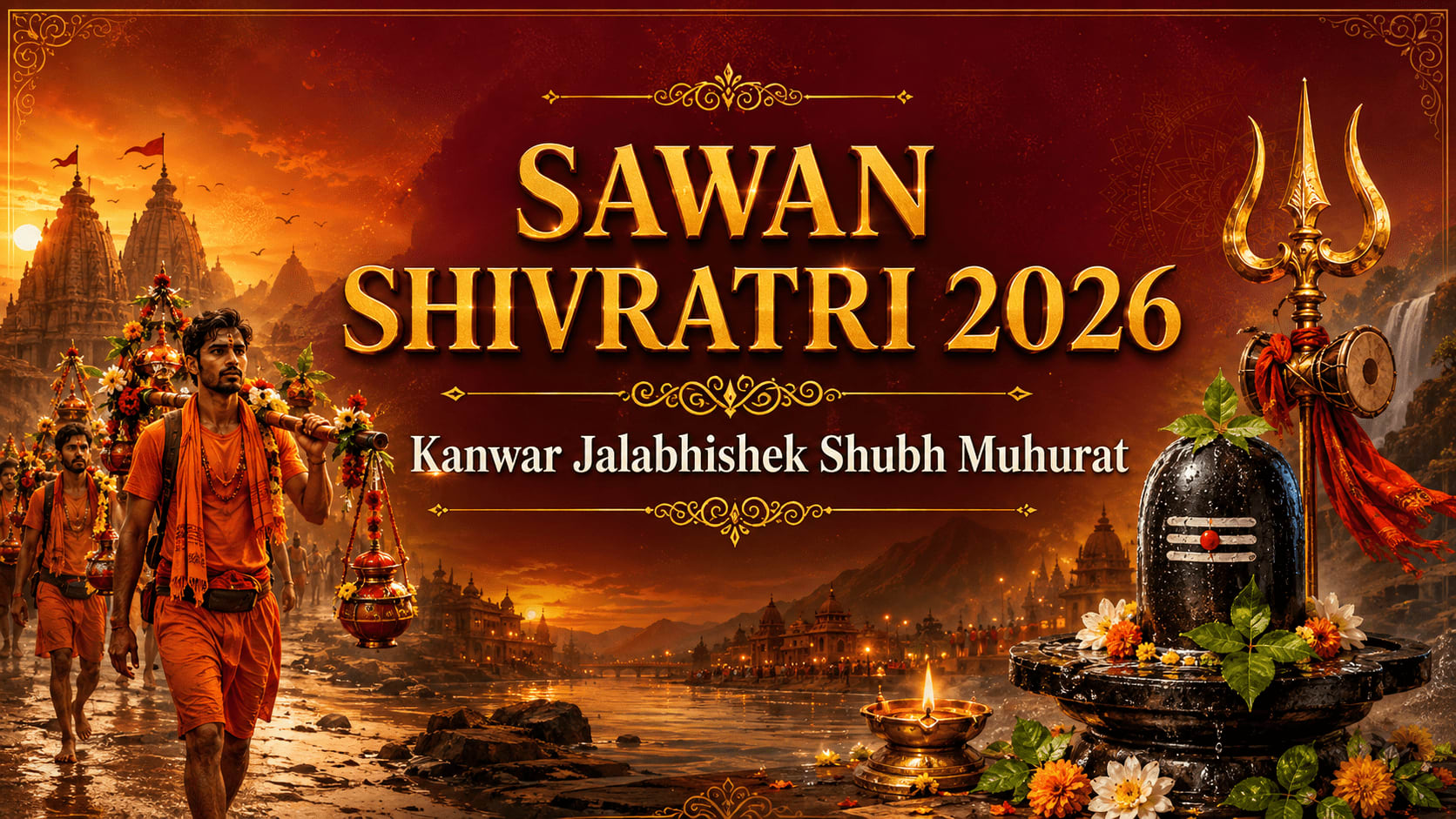
Sawan Shivratri 2026: Kanwar Jalabhishek Shubh Muhurat
Sawan Shivratri 2026 falls on Tuesday, 11 August, marking the most sacred night of the holy month of Shravan. The Krishna Paksha Chaturdashi Tithi begins at 4:54 AM on 11 August and continues until 1:52 AM the next day, so the fast and jalabhishek are observed through 11 August.
The most auspicious window for Kanwar jalabhishek is the Nishita Kaal muhurat, from 11:59 PM to 12:43 AM on the intervening night of 11 and 12 August. This is also the day the Kanwar Yatra reaches its peak, as lakhs of kanwariyas complete their pilgrimage by offering Gangajal on the Shivling.
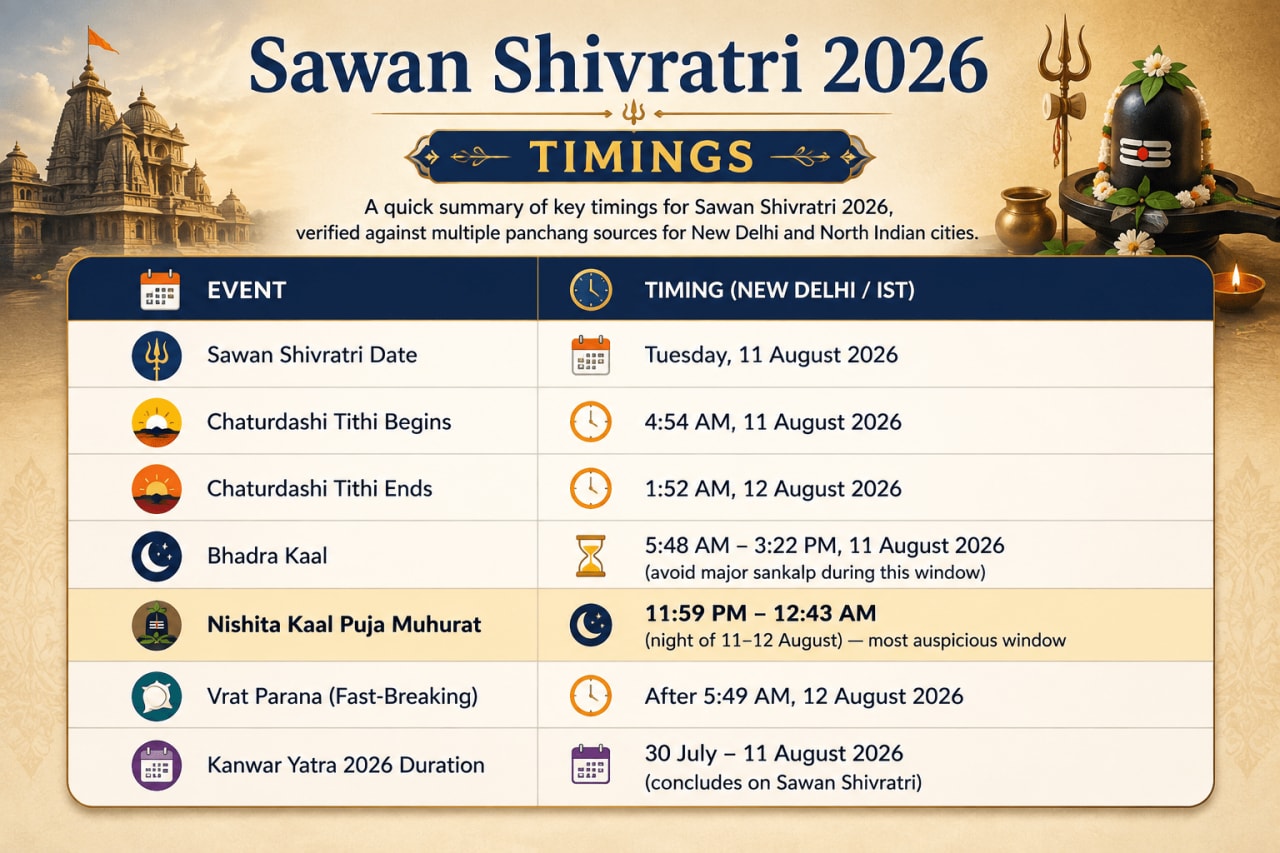
Sawan Shivratri 2026 Timings
Here is a quick summary of every timing you need for Sawan Shivratri 2026, verified against multiple panchang sources for New Delhi and North Indian cities.
Importance and Significance of Sawan Shivratri
While Maha Shivratri in February or March remains the most widely celebrated Shivratri of the year, the Shivratri that falls in Shravan carries its own special weight because the entire month is already dedicated to Shiva worship.
The significance of Sawan Shivratri is rooted in the story of Samudra Manthan, the churning of the cosmic ocean. When the deadly Halahala poison emerged and threatened all creation, Lord Shiva drank it to protect the universe, holding it in his throat. This turned his throat blue, earning him the name Neelkanth. To cool the effect of the poison, the devas poured water over him continuously, and this act became the origin of jalabhishek.
This is why offering water to the Shivling during Shravan, and especially on Shivratri, is considered one of the most beloved forms of worship. Sawan Shivratri is observed most widely in Uttar Pradesh, Uttarakhand, Rajasthan, Madhya Pradesh, Punjab, Himachal Pradesh and Bihar, which follow the Purnimanta lunar calendar. For the full month's calendar of Somwar vrats and festivals, see our guide to Sawan 2026 dates and Somwar vrat.
Of the twelve Masik Shivratris observed every year, the one falling in Shravan holds the most importance for devotees who chant the Om Namah Shivaya mantra or recite the Shiv Chalisa through the night, staying awake to keep vigil with Lord Shiva.
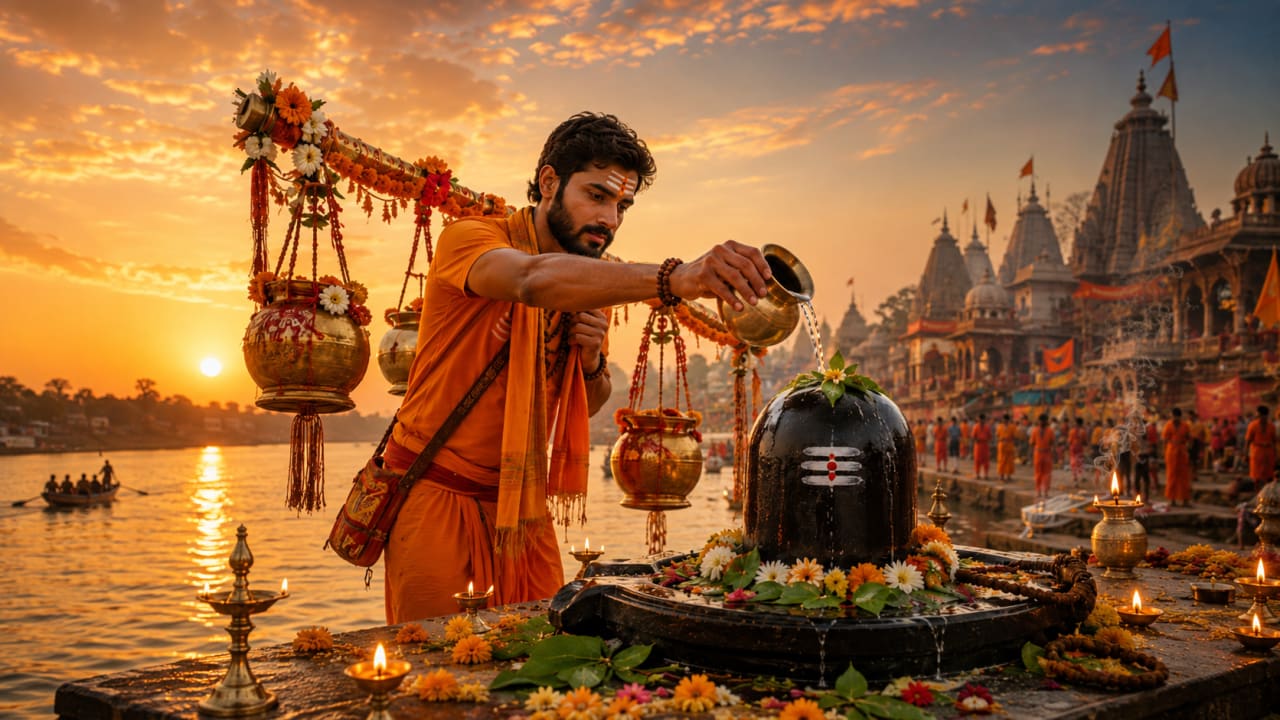
Kashi Vishwanath in Varanasi is among the most significant destinations for Sawan Shivratri jalabhishek, drawing kanwariyas from across North India. If you are planning your first trip, DevMarg's guide to Varanasi, the spiritual capital covers what makes the city and its temples so central to Shiva worship. Devotees also apply a tilak of chandan or vibhuti after the puja, a practice explained in this guide to the spiritual meaning of tilak and kumkum.
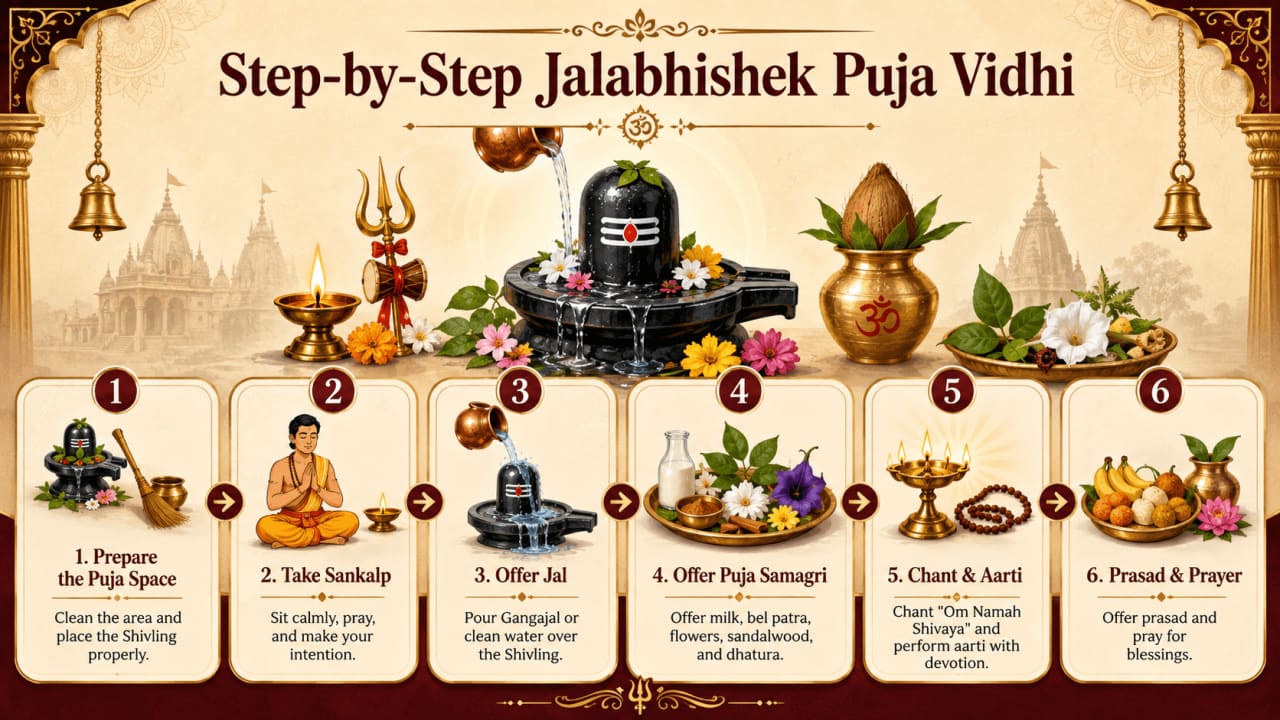
Step-by-Step Jalabhishek Puja Vidhi
Follow these steps for a complete Sawan Shivratri puja and jalabhishek, whether at a temple or at your home altar.
- Wake up before sunrise, take a bath, and take the sankalp (pledge) to observe the Sawan Shivratri vrat for the day.
- Clean the Shivling or the puja area, and light a diya and dhoop before you begin.
- Begin the abhishekam by offering plain water, followed by Gangajal if you have it.
- Offer Panchamrit, which is a mix of milk, curd, ghee, honey and sugar, followed by another round of clean water to complete the cleansing.
- Offer belpatra leaves, dhatura, aak flowers, white sandalwood and bhasma, all traditionally dear to Lord Shiva.
- Chant Om Namah Shivaya or the Maha Mrityunjaya Mantra through the abhishekam, and light incense before the Aarti.
- If you are keeping the full night vigil, repeat a shorter version of this puja at the start of each of the four prahars.
- Perform the final jalabhishek during the Nishita Kaal muhurat (11:59 PM to 12:43 AM), considered the most powerful window of the night.
- Break your fast (parana) only after 5:49 AM on 12 August, once the night's puja is complete.
Devotees observing a strict vrat may also refer to a Hindu fasting guide for guidance on what is permitted during a nirjala or phalahar (fruit-based) fast.
Many temples also encourage devotees to complete a pradakshina or parikrama around the Shivling before the puja concludes, one of several practices covered in our guide to temple etiquette, dos and don'ts. The night closes with a full Aarti, and this guide on the significance of Aarti explains why this final act of worship matters as much as the abhishekam itself.
Best Time: Nishita Kaal and Four Prahar Puja Timings
Shivratri puja is traditionally performed across four prahars of the night, with the Nishita Kaal window considered the most sacred of all. Here are the exact four-prahar timings for 11–12 August 2026:
| Prahar | Puja Timing |
|---|---|
| First Prahar | 7:04 PM – 9:45 PM, 11 August |
| Second Prahar | 9:45 PM, 11 August – 12:26 AM, 12 August |
| Third Prahar | 12:26 AM – 3:07 AM, 12 August |
| Fourth Prahar | 3:07 AM – 5:49 AM, 12 August |
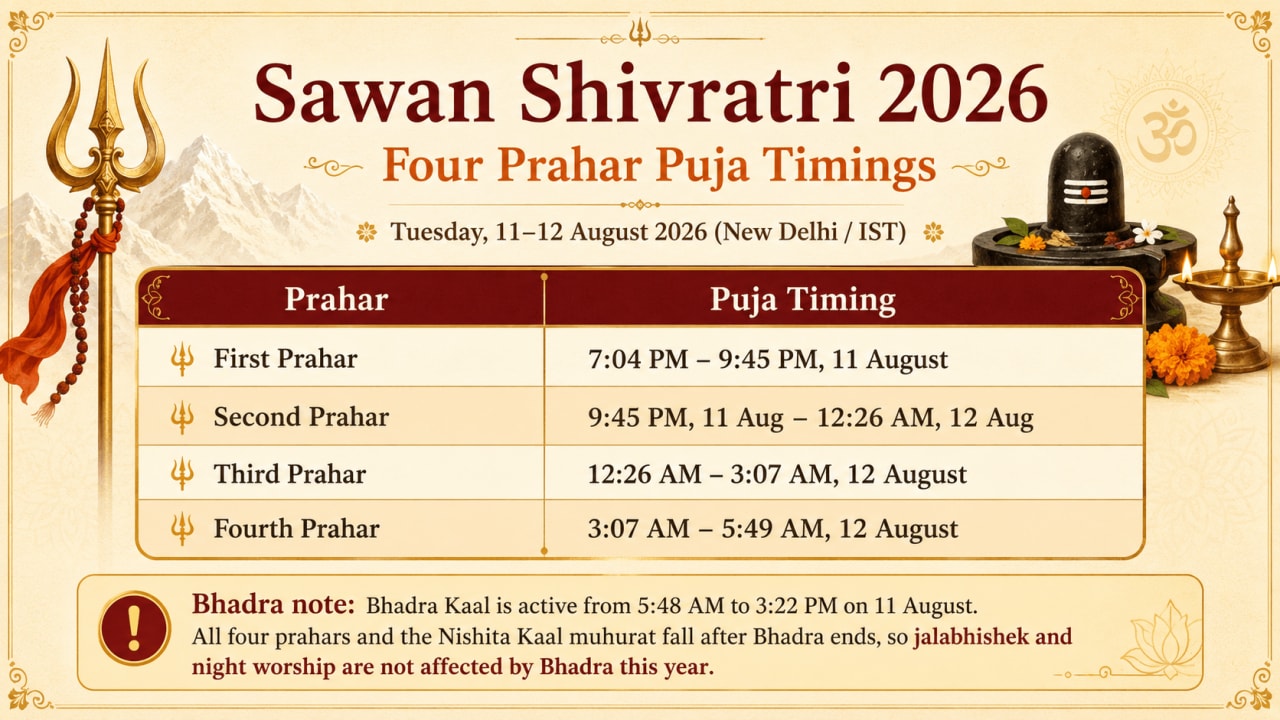
A note on Bhadra: this year, Bhadra Kaal is active from 5:48 AM to 3:22 PM on 11 August. Since the evening puja, all four prahars, and the Nishita Kaal muhurat fall well after Bhadra ends, your jalabhishek and night worship are not affected by Bhadra this year.
Frequently Asked Questions
What is the date of Sawan Shivratri 2026? Sawan Shivratri 2026 falls on Tuesday, 11 August 2026, based on the Krishna Paksha Chaturdashi Tithi of the Shravan month.
What is the best time for Kanwar jalabhishek on Sawan Shivratri 2026? The Nishita Kaal muhurat, from 11:59 PM to 12:43 AM on the night of 11–12 August, is considered the most auspicious time. Devotees can also perform jalabhishek during any of the four night prahars.
Does Bhadra Kaal affect Sawan Shivratri puja this year? No. Bhadra Kaal on 11 August runs from 5:48 AM to 3:22 PM, well before the evening puja and Nishita Kaal muhurat begin, so the night worship is unaffected.
When does the Kanwar Yatra 2026 end? The Kanwar Yatra 2026 began on 30 July, the first day of Sawan, and concludes on Sawan Shivratri, 11 August, when most kanwariyas complete their jalabhishek.
What is the difference between Sawan Shivratri and Maha Shivratri? Maha Shivratri, observed in February or March, is the largest annual Shivratri celebration. Sawan Shivratri is a Masik (monthly) Shivratri that falls during the sacred month of Shravan, making it especially significant even though it is a monthly observance.
What should be offered to the Shivling during jalabhishek? Traditional offerings include water, Gangajal, Panchamrit (milk, curd, ghee, honey and sugar), belpatra leaves, dhatura, aak flowers, white sandalwood and bhasma.
Can Sawan Shivratri vrat be observed without a full nirjala fast? Yes. While a strict waterless fast is one option, many devotees observe the vrat on fruits, milk or satvik food. The emphasis is on discipline and devotion, not deprivation.
What samagri (items) do I need for Sawan Shivratri puja at home? A simple home puja needs a Shivling or Shiva image, clean water, Gangajal if available, bel patra, milk, curd, honey, ghee and sugar for Panchamrit, a diya with cotton wicks, incense, chandan, akshat and white or seasonal flowers. Dhatura, aak flowers and bhaang can be added where this is a family tradition. Even a simple jalabhishek with water and a bel patra leaf, offered with sincerity, is considered a complete puja.
What mantras should be chanted during Sawan Shivratri jalabhishek? Om Namah Shivaya, the five-syllable Panchakshara mantra, is the primary chant used through the abhishekam. Many devotees also recite the Mahamrityunjaya Mantra and the Shiv Chalisa during the four prahars and at Nishita Kaal.
Can Sawan Shivratri jalabhishek be performed at home, or is a temple visit necessary? A temple visit is not compulsory. Jalabhishek can be performed at home on a Shivling or a Shiva image with the same devotion, and many families who cannot travel choose to keep a home puja or book a pandit to perform it on their behalf.
What is Nishita Kaal and why is it considered so important? Nishita Kaal is the midnight period, calculated as the middle of the night between sunset and sunrise. On Shivratri, this window is believed to be when Lord Shiva is worshipped in his purest and most powerful form, which is why priests recommend it as the primary muhurat for jalabhishek.
What if I am unable to perform puja during the exact Nishita Kaal muhurat? The Nishita Kaal window is considered the most auspicious, but it is not the only valid time. Jalabhishek performed during any of the four prahars, or even during the day after Bhadra Kaal ends, is accepted as long as it is done with sincere devotion and following the Chaturdashi Tithi.
Is Sawan Shivratri observed the same way across India? The core worship of jalabhishek, fasting and chanting is common everywhere, but the scale differs by region. It is observed most elaborately in Uttar Pradesh, Uttarakhand, Rajasthan, Madhya Pradesh, Punjab, Himachal Pradesh and Bihar, where the Kanwar Yatra tradition is strongest. In parts of South India that follow the Amanta calendar, the equivalent Shivratri in this lunar month is often referred to as Ashadha Shivaratri and is observed as a quieter, more personal fast.
Editor's note: Panchang timings are calculated for New Delhi (IST) and can shift by several minutes for other cities. Customs also vary across regions and family traditions. For timings specific to your city or rituals specific to your tradition, please check a local panchang or consult your family priest.
Conclusion
Sawan Shivratri 2026 on 11 August brings together the culmination of the Kanwar Yatra and the most sacred night of the Shravan month. With Bhadra Kaal ending well before sunset, devotees have a clear, unobstructed window from evening through the Nishita Kaal muhurat to complete jalabhishek and seek Lord Shiva's blessings.
Continue Your Sawan Shivratri Devotion with DevMarg
If you cannot travel to a Shiva temple this Sawan Shivratri, DevMarg lets you book a verified pandit for online Rudrabhishek and jalabhishek performed on your behalf, with live darshan and a recorded sankalp in your family's name. You can also offer chadhava at a temple of your choice and check the exact panchang timings for your city before you begin. For more on the meaning behind everyday worship, explore the full DevMarg blogs hub.