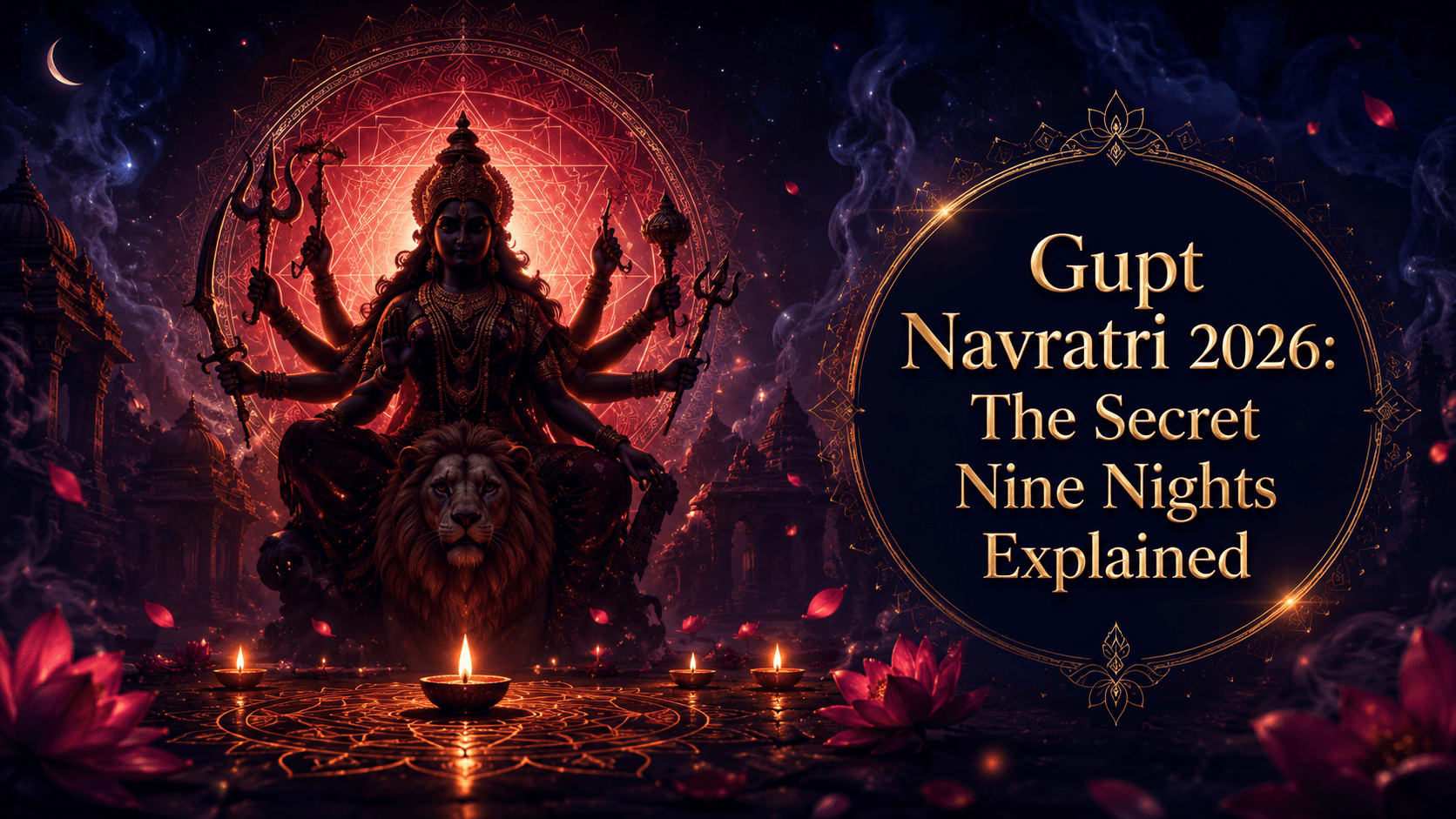
Gupt Navratri 2026: The Secret Nine Nights Explained
DevMarg Team22 July 20267 min read
Gupt Navratri is observed twice a year, and the current one, Ashadha Gupt Navratri, runs from Wednesday, 15 July to Thursday, 23 July 2026. Unlike Chaitra and Sharad Navratri, this nine-night period is kept quiet and personal, centred on the worship of the Das Mahavidya, the ten wisdom forms of the Divine Mother.
The word Gupt means hidden or secret. While the more famous Navratris fill streets with garba and pandals, these nine nights belong to lamps, mantra japa and private sadhana. In this guide you will find the verified Gupt Navratri 2026 dates, the Ghatasthapana muhurat, the day-wise Das Mahavidya sequence, the puja vidhi and the fasting rules, all in one place.
Key Highlights: Ashadha Gupt Navratri 2026
Dates: Wednesday, 15 July to Thursday, 23 July 2026 (nine days)
Ghatasthapana Muhurat: 5:54 AM to 10:20 AM, 15 July 2026 (Ujjain reference; check local timing)
Ashtami: Wednesday, 22 July 2026
Navami (last day): Thursday, 23 July 2026
Deities worshipped: Goddess Durga in her nine forms, alongside the ten Mahavidyas
Nature of worship: Private and personal, generally not celebrated in public
Also known as: Varahi Navratri, Gayatri Navratri, Shakambari Navratri
Next Gupt Navratri: Magh Gupt Navratri, January 2027
What Is Gupt Navratri?
Gupt Navratri is a nine-night festival dedicated to the Divine Mother, observed twice a year in the Hindu months of Magh (January–February) and Ashadha (June–July). The word Gupt means hidden or secret, and these nine days are meant for quiet personal devotion rather than public celebration.
While Chaitra Navratri and Sharad Navratri fill streets with garba and pandals, Gupt Navratri stays close to home. Devotees light a lamp, perform Ghatasthapana, and sit with their mantra japa away from crowds and cameras.
Why Is Gupt Navratri Called Secret?
Tradition holds that the spiritual energy of Gupt Navratri should not be diluted by public display. Sadhaks are advised not to invite guests, not to share photos of their home puja, and in some traditions not to discuss the practice at all until it is complete.
This period is closely linked with tantric worship and the ten Mahavidyas, forms of the Goddess associated with deep inner transformation, protection and the removal of obstacles. Historically, saints and sadhaks used this quiet window for advanced sadhana that outward festivals do not offer.
Gupt Navratri 2026 Dates
Gupt Navratri comes twice in 2026:
Magh Gupt Navratri 2026: 19 January to 28 January 2026 (already concluded)
Ashadha Gupt Navratri 2026: 15 July to 23 July 2026 (current observance)
The Ashadha Gupt Navratri falls at the start of the monsoon, a season traditionally associated with cleansing and renewal. This guide focuses on the ongoing Ashadha period. For every fast and festival in this window, see the full Ashadha 2026 vrat calendar.
Ghatasthapana Muhurat for Ashadha Gupt Navratri 2026
Ghatasthapana, also called Kalash Sthapana, marks the formal start of Navratri. For 15 July 2026, the widely followed auspicious window for Ujjain is between 5:54 AM and 10:20 AM. The Pratipada tithi begins on the afternoon of 14 July and continues until late morning on 15 July.
Devotees are encouraged to verify the exact muhurat for their own city on the DevMarg muhurat page before beginning the puja, as timings shift with location.
The Ten Mahavidyas: Day-by-Day Guide
During Gupt Navratri, devotees who follow the tantric tradition worship the Das Mahavidya, the ten wisdom goddesses, alongside the regular Navdurga puja. Here is the day-wise flow for Ashadha Gupt Navratri 2026.
Day
Date
Weekday
Mahavidya Worshipped
1
15 July 2026
Wednesday
Ghatasthapana and Maa Kali
2
16 July 2026
Thursday
Maa Tara
3
17 July 2026
Friday
Maa Tripura Sundari (Shodashi)
4
18 July 2026
Saturday
Maa Bhuvaneshwari
5
19 July 2026
Sunday
Maa Chhinnamasta
6
20 July 2026
Monday
Maa Tripura Bhairavi
7
21 July 2026
Tuesday
Maa Dhumavati
8
22 July 2026
Wednesday
Maa Baglamukhi (Ashtami)
9
23 July 2026
Thursday
Maa Matangi and Maa Kamala (Navami)
Since there are ten Mahavidyas across nine days, the final day usually honours two forms together, Maa Matangi and Maa Kamala, alongside the Navami rituals.
Step-by-Step Puja Vidhi for Gupt Navratri
The daily worship during Gupt Navratri follows the same basic structure as any Navratri, kept simple and private. Follow these steps through the nine days:
Wake before sunrise, bathe and clean the puja space.
Perform Ghatasthapana on the first day with a clay pot, mango leaves, a coconut and a lit diya.
Offer red flowers, kumkum, rice and a sesame oil lamp to the Goddess each morning.
Chant the Devi Mahatmya, Durga Chalisa or your chosen Mahavidya mantra with sincerity.
Keep the akhand jyot burning, if you have taken that sankalp, and refill the oil or ghee carefully.
On Ashtami or Navami, complete the fast with a simple puja and, if observed in your family tradition, honour young girls as a form of the Goddess.
Avoid sharing details or images of your home rituals publicly during these nine days.
You can pair your daily chant with the Durga Chalisa or explore other protective Devi mantras for daily sadhana.
Fasting Rules and What to Avoid
Fasting during Gupt Navratri follows similar principles to other Navratris, though the level of observance varies by family and region.
Many devotees eat only fruits, milk, sabudana or singhara flour dishes during the fast.
Onion, garlic and regular grains are typically avoided by those observing a strict vrat.
Alcohol, non-vegetarian food, and arguments or negative speech are avoided throughout the nine days.
Those new to tantric practices are advised to stick to simple Navdurga worship rather than attempting advanced Mahavidya sadhana without guidance.
Significance and Benefits of Gupt Navratri
Devotees believe that because this period draws less outward attention, the spiritual focus stays concentrated rather than dispersed among large crowds. It is considered a favourable time for:
Inner reflection, meditation and mantra sadhana
Seeking protection and the removal of obstacles
Strengthening willpower and spiritual discipline
Connecting with the fierce and nurturing aspects of the Divine Mother together
As with all matters of faith, beliefs around Gupt Navratri vary by region, lineage and scripture, and should be approached with respect for that diversity.
If you already follow Navdurga worship during Chaitra or Sharad Navratri, Gupt Navratri offers a quieter, more introspective way to continue that devotion twice more in the year. To understand the nine forms and their meaning, read our guide to Navratri and the nine nights of the Divine Mother.
Temples and Devi Shrines Connected to Gupt Navratri
Several temples across India hold special significance for Shakti and Mahavidya worship, and many devotees connect with them, in person or in spirit, during this period.
Kamakhya Temple, Guwahati — one of the most significant Shakti Peethas and a major centre for tantric worship.
Dakshineswar Kali Temple, Kolkata — closely associated with Maa Kali, the first of the ten Mahavidyas.
Chandi Devi Temple and Mansa Devi Temple, Haridwar — two important stops on the Haridwar Shakti circuit.
Vaishno Devi Temple, Katra — one of India's most visited Shakti shrines.
What is Gupt Navratri 2026? Gupt Navratri 2026 is a nine-night festival for the Divine Mother observed twice this year, in Magh (19 to 28 January) and Ashadha (15 to 23 July). It is called gupt, or secret, because it is meant to be observed privately.
When is Ashadha Gupt Navratri 2026? Ashadha Gupt Navratri 2026 runs from Wednesday, 15 July to Thursday, 23 July 2026. Ghatasthapana falls on the morning of 15 July, and Ashtami falls on 22 July.
Which Goddess is worshipped during Gupt Navratri? Devotees worship Goddess Durga in her nine forms, alongside the ten Mahavidyas, which include Maa Kali, Tara, Tripura Sundari, Bhuvaneshwari, Chhinnamasta, Tripura Bhairavi, Dhumavati, Baglamukhi, Matangi and Kamala.
Can beginners observe Gupt Navratri? Yes. Anyone can keep a simple vrat, light a lamp and chant the Durga Chalisa or a Devi mantra with devotion. The deeper tantric sadhana connected with the Mahavidyas is usually reserved for those with proper guidance from a guru.
Why should Gupt Navratri rituals be kept private? Tradition holds that the spiritual power of this period is best preserved through quiet, personal practice, without public display, photographs or discussion, so that the sadhana stays focused.
Conclusion
Gupt Navratri 2026 offers nine quiet nights of devotion from 15 to 23 July, a rare window for inner sadhana, mantra japa and the worship of the ten Mahavidyas. Whether you light a single lamp at home or take up a deeper practice under guidance, what matters most is sincerity and steady focus. For more festival dates and guides, explore the full DevMarg festivals hub.
Raksha Bandhan 2026: Shubh Muhurat, Rakhi Tying Time & Bhadra Kaal Timing
Raksha Bandhan 2026 falls on Friday, 28 August. Here are the exact Purnima tithi timings, the 5:57 AM to 9:48 AM rakhi tying shubh muhurat, why Bhadra Kaal does not clash this year, the alternate Aparahna window, the step-by-step rakhi vidhi and Gulf NRI timings.