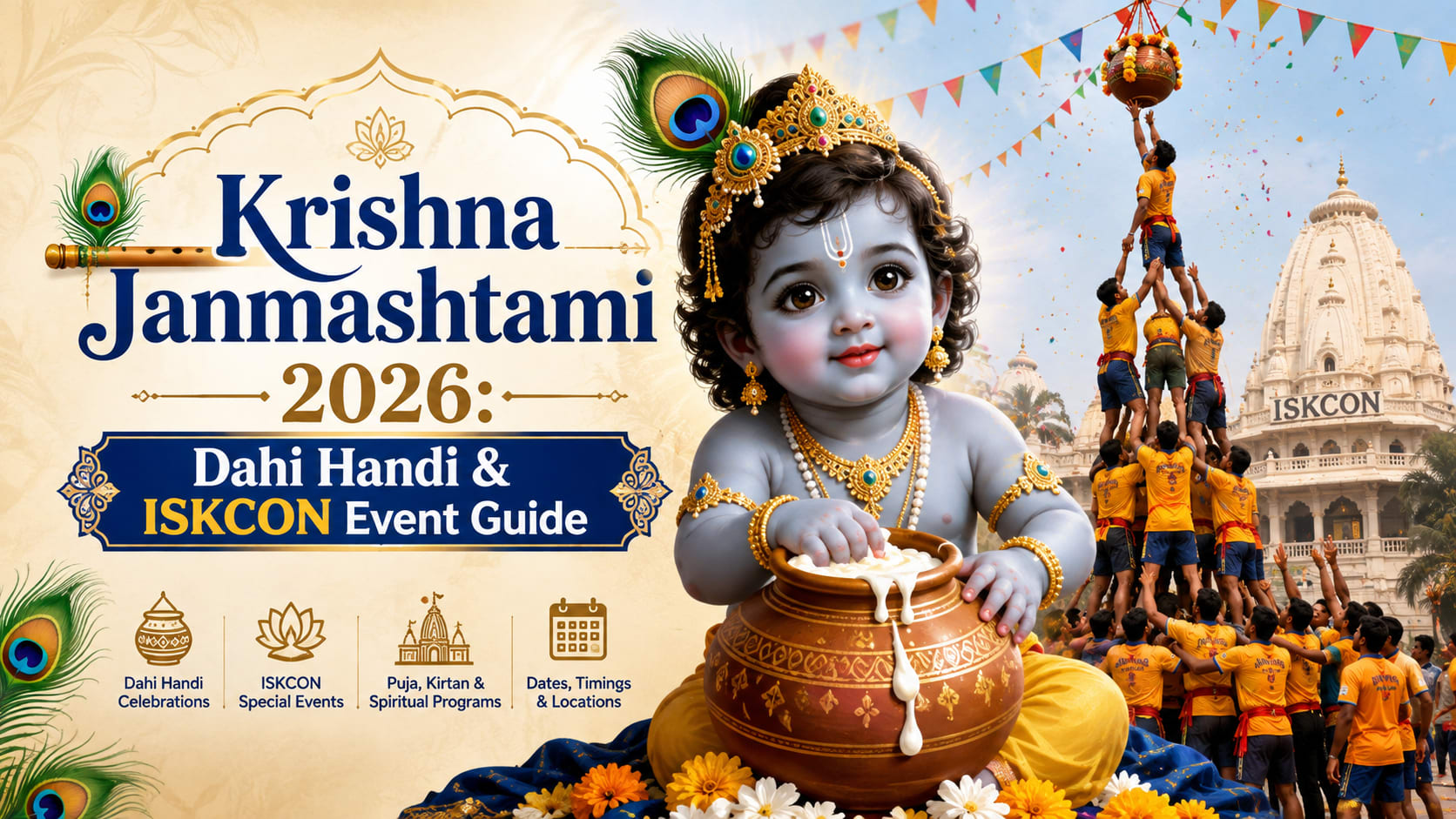
Krishna Janmashtami 2026: Dahi Handi & ISKCON Event Guide
Krishna Janmashtami is one of the most joyful festivals on the Hindu calendar, and it rarely stays confined to a single evening of puja at home. Across India, it spills into the streets as Dahi Handi, fills temple courtyards with an entire night of kirtan, and turns cities like Mathura, Vrindavan, Dwarka and Mumbai into places every devotee wants to visit at least once.
This guide brings together the two sides of the festival that devotees ask about most: the Maharashtra tradition of Dahi Handi, and the ISKCON style of Janmashtami celebration that has become popular with devotees across India and among the global Hindu diaspora. Along the way, we cover what to expect at the major centres of celebration, Mathura and Vrindavan, Dwarka, and Mumbai, so you can plan your Janmashtami with confidence.
Quick Facts: Janmashtami 2026
- Krishna Janmashtami (ISKCON and most Vaishnav temples): Friday, September 4, 2026
- Some Smarta households observe the vrat a day earlier, on September 3, based on regional tithi tradition
- Dahi Handi (Mumbai, Thane, Pune and across Maharashtra): Saturday, September 5, 2026
- Nishita Puja (midnight puja) window falls close to midnight on the night of September 4 into September 5, and varies slightly by city
- This is the 5,253rd birth anniversary of Lord Krishna by the count most temples use
When Is Janmashtami and Dahi Handi in 2026?
Krishna Janmashtami 2026 falls on Friday, September 4, according to Drik Panchang, and this is the date followed by ISKCON temples and most Vaishnav sampradayas, including the major temples of Mathura and Vrindavan. Some Smarta households, who follow a slightly different tithi rule, observe the fast and puja a day earlier, on September 3. This kind of one day difference is common with Janmashtami and depends on which tradition a family or temple follows, so neither date is incorrect.
Dahi Handi always falls on the day after Janmashtami, and in 2026 that is Saturday, September 5. This is when Mumbai, Thane, Pune and cities across Maharashtra see their famous human pyramid competitions.
The most sacred moment of Janmashtami is the Nishita Kaal, the midnight period believed to be the exact time of Lord Krishna's birth. Puja muhurat timings during this window shift slightly from city to city, so it is worth checking the exact timing for your location on the DevMarg Hindu calendar closer to the date.
Dahi Handi: The Festival That Follows Janmashtami
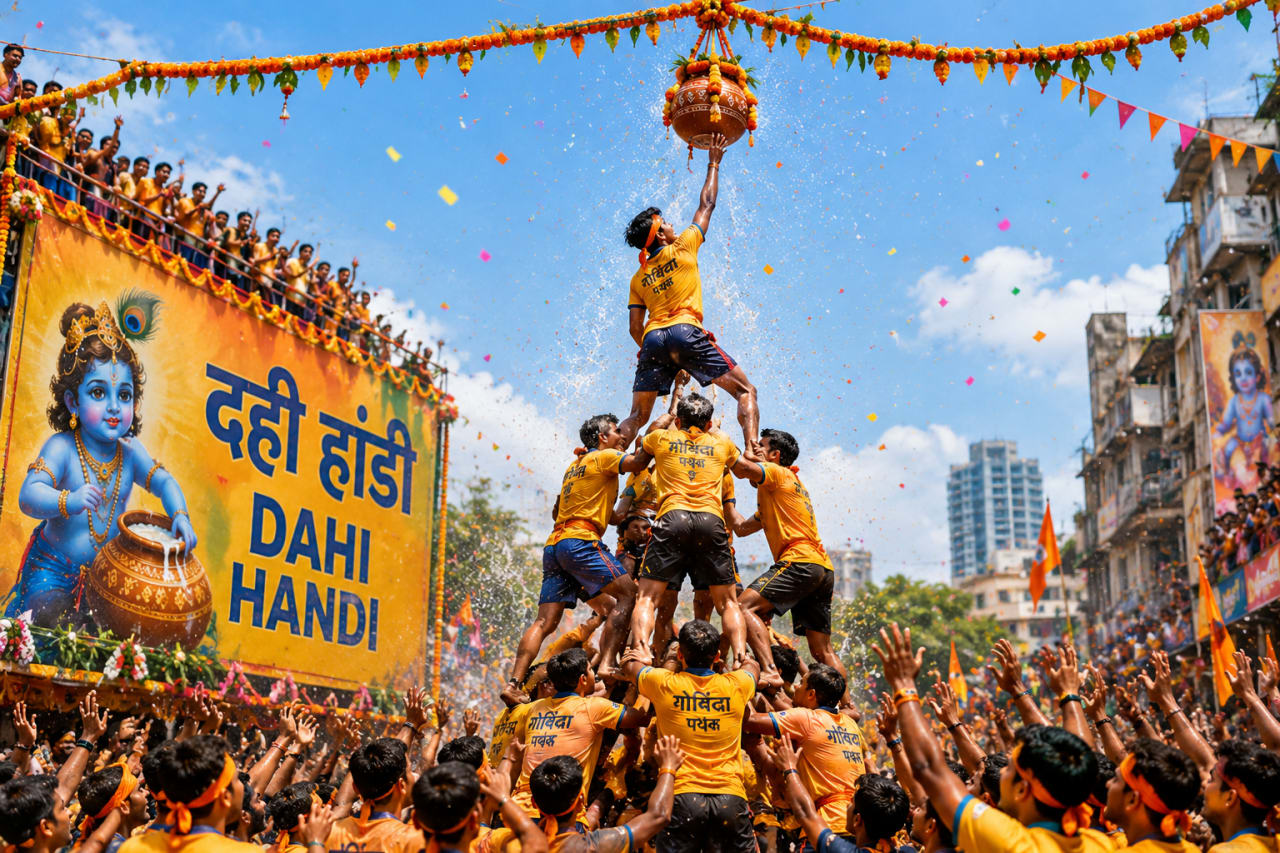
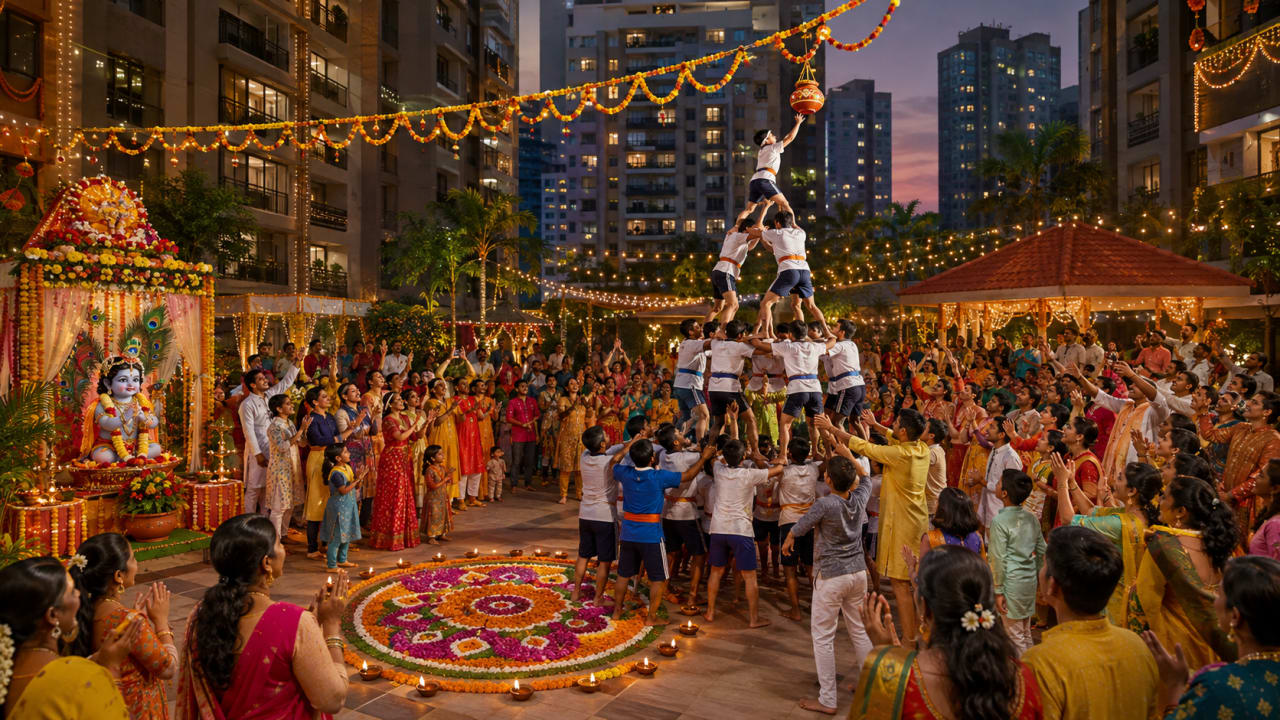
Dahi Handi, also called Gopalkala in Maharashtra, recreates a well-loved chapter of Krishna's childhood in Gokul. As a boy, Krishna and his friends were famously fond of curd and butter, and would raid pots hung out of their reach by the women of the village. To recreate this playful mischief, an earthen pot filled with curd, butter, milk, and puffed rice is hung high above a street or open ground, and teams of young men and women, known as Govindas or a Govinda Pathak, climb onto each other's shoulders to form a human tower tall enough to break it.
The prasad that spills out when the pot breaks is called gopalkala, and it is shared among everyone present, from the climbers to the spectators watching from balconies and terraces, chanting the popular cry of Govinda Aala Re. The mischief being recreated here comes straight from the birth story of Lord Krishna and his early years in Gokul.
What to Expect at Dahi Handi
- Most main events take place throughout the day, typically from late morning until evening, on September 5, 2026
- Mumbai, Thane and Pune host the biggest and most competitive Dahi Handi events, with dozens of Govinda teams and large prize pools organised by local mandals and sponsors
- Handis can be hung several storeys high, and human pyramids can reach four or five tiers, so the events draw large crowds of spectators
- If you are attending with family, especially children, it is safer to watch from a distance rather than stand directly beneath a pyramid in progress
Dahi Handi is not a declared public holiday in most states, so plan your visit around office hours if you are watching a weekday adjacent event or a Saturday celebration close to home.
ISKCON Janmashtami: What Makes It Different
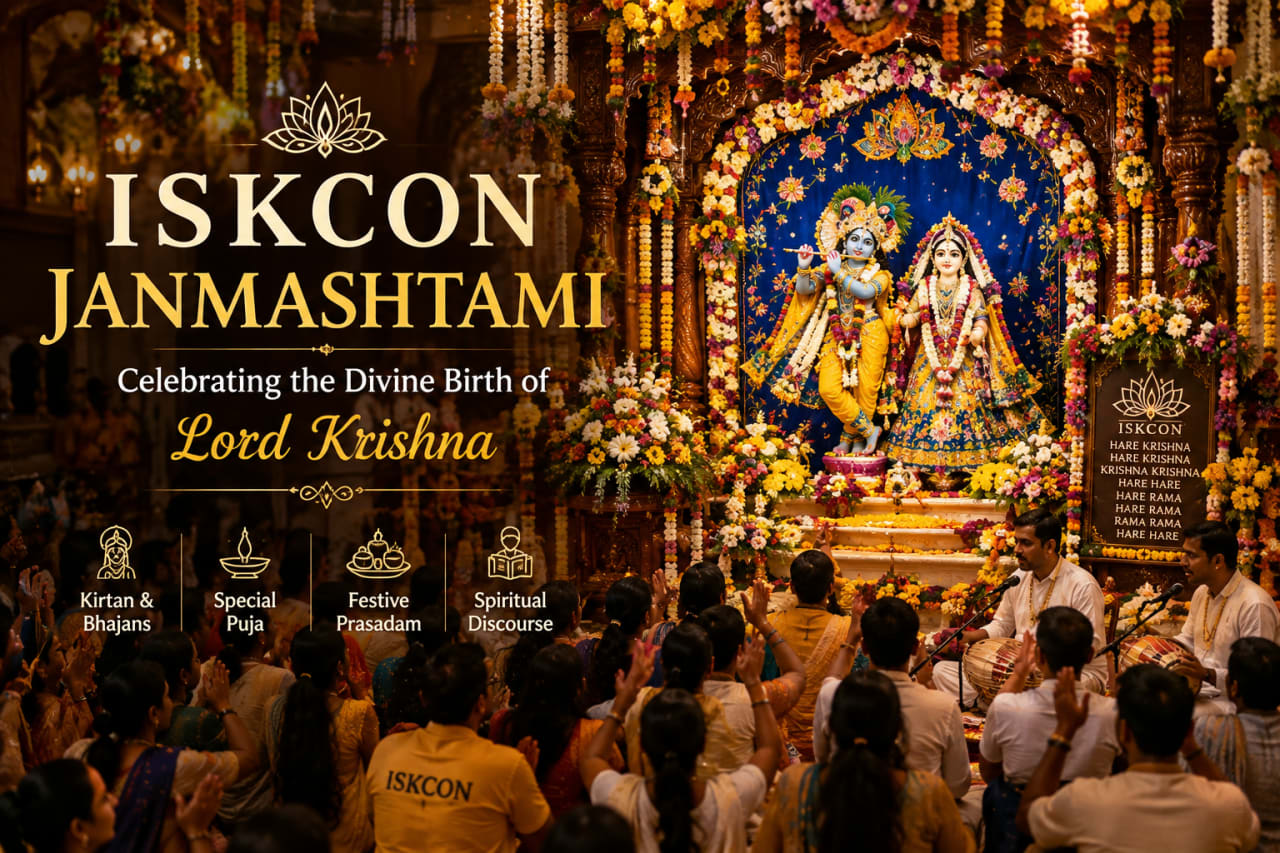
The International Society for Krishna Consciousness, known as ISKCON, holds one of the most elaborate and devotee-friendly Janmashtami celebrations anywhere in the Vaishnav tradition. ISKCON temples exist in nearly every major Indian city and in dozens of countries abroad, which makes ISKCON Janmashtami a familiar, accessible option for both resident devotees and NRIs who cannot travel to Mathura or Vrindavan that year.
A typical ISKCON Janmashtami programme includes an entire evening and night of kirtan and bhajan, discourses on the life and teachings of Lord Krishna, an elaborate abhishek of the deity at midnight using milk, curd, honey, ghee and other traditional items, and a grand darshan of baby Krishna once the midnight arati is complete. Many temples also stage cultural performances depicting scenes from Krishna's childhood, and devotees typically break their fast together with a shared feast in the early hours of the morning.
You can read more about the philosophy and daily practices at ISKCON temples in our ISKCON guide, and browse individual temple listings on our ISKCON temples hub.
City Guide: Where to Celebrate Janmashtami 2026
Mathura and Vrindavan: The Heart of the Celebration
Mathura is the birthplace of Lord Krishna, and no other city in India carries the same weight on Janmashtami night. The focal point is the Shri Krishna Janmabhoomi temple complex, built at the site believed to be the prison cell where Krishna was born. On the night of September 4, the temple holds a grand midnight Janmotsav with abhishek, continuous chanting and jhankis, or decorated tableaux, depicting scenes from Krishna's life. Lakhs of devotees are expected to gather in the Mathura and Vrindavan corridor on Janmashtami night alone, so those planning a visit should prepare for heavy crowds and allow extra travel time.
Just a short distance away, Vrindavan is where Krishna spent his playful childhood, and the town has more than a thousand temples that mark the occasion in their own way. The ISKCON Vrindavan temple, also known as the Krishna Balaram Mandir, is one of the largest ISKCON temples in India and holds an extensive Janmashtami programme with kirtan, abhishek and a midnight celebration that draws devotees from across the world.
- Banke Bihari Temple performs its Mangala Aarti publicly only twice a year, and Janmashtami is one of those two rare occasions, drawing enormous early morning crowds
- Prem Mandir is illuminated through the night with coloured lights and is best experienced after dark
- Nidhivan and Seva Kunj, the forested gardens associated with Krishna's rasa leela, carry a distinctly quiet, devotional atmosphere during the festival period
- Most visitors cover both Mathura and Vrindavan across two days, since the towns are close but each has its own set of major temples to visit
For the full story of Krishna's birth and early life, see our guide to the Krishna birth story and our piece on Mathura and Vrindavan, Krishna's playground.
Dwarka: Krishna's Kingdom by the Sea
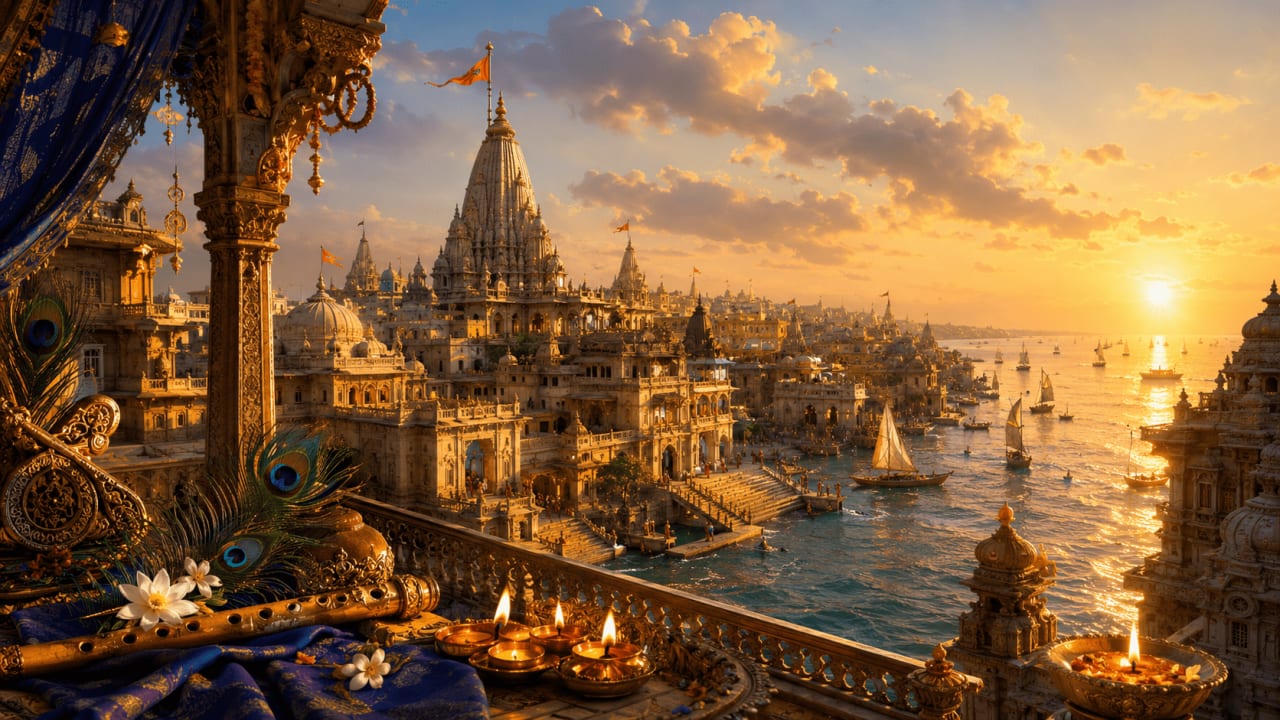
Dwarka in Gujarat holds a different kind of significance. This is the city Lord Krishna is believed to have established as his kingdom in his adult life, and it remains one of the four sacred Char Dham sites in Hinduism. Janmashtami at the Dwarkadhish Temple is marked by elaborate rituals, with the deity adorned in gold jewellery, special Utsav Bhog offerings, and a late-night puja followed by a procession.
One of the most memorable sights at Dwarka on Janmashtami night is the illumination of the temple exterior, which becomes visible from the sea and draws devotees from across the country. If you are planning a visit, the Dwarkadhish Temple page has practical details on darshan timings, and you can explore the wider city on our Dwarka temple guide.
Dwarka is also linked to one of Hindu mythology's more fascinating legends, the story of the city said to have submerged into the sea after Krishna's departure from the world. You can read more in our piece on the underwater city of Dwarka.
Mumbai: Janmashtami Night and Dahi Handi Together
Mumbai offers a celebration unlike anywhere else in India, simply because it combines a deeply devotional Janmashtami night with the citywide spectacle of Dahi Handi the very next day. On the night of September 4, temples across the city hold midnight aarti and abhishek programmes, with devotees gathering for darshan of baby Krishna in a beautifully decorated cradle.
The ISKCON temple in Juhu is one of Mumbai's most visited spiritual destinations during this period, known for its all-night kirtan, cultural programmes and a grand midnight celebration that regularly draws thousands of devotees.
Then, on September 5, the city changes character entirely. Dahi Handi in Mumbai has grown into a major public event, with Govinda Pathaks from across the city and neighbouring Thane competing to break handis hung several storeys high. Well-known mandals draw large sponsorships and celebrity appearances, and the energy on the streets, with people watching from windows and terraces chanting Govinda Aala Re, is part of what makes Janmashtami in Mumbai such a distinctive experience.
A Simple Two-Day Plan
- Day 1, September 4: Observe the Janmashtami fast through the day, visit your local temple or an ISKCON centre for the evening kirtan programme, and stay for the midnight abhishek and arati if you can
- Late night, September 4 into 5: Break your fast after the midnight puja with a simple, sattvik meal, following the fasting rules your family or tradition observes
- Day 2, September 5: If you are in Maharashtra, step out to watch or take part in Dahi Handi celebrations, and share gopalkala prasad with those around you
- If travelling to Mathura, Vrindavan or Dwarka, plan to arrive a day early, since Janmashtami night draws the heaviest crowds of the year at these temples
Practical Tips for Visiting Temples on Janmashtami
- Book any travel or accommodation in Mathura, Vrindavan or Dwarka well in advance, since hotels near the main temples fill up quickly around Janmashtami
- Arrive early for midnight darshan, as queues at Krishna Janmabhoomi, Banke Bihari and ISKCON temples can stretch for hours as the night progresses
- Carry minimal belongings, since most major temples enforce strict security checks and do not allow bags, cameras or electronic items inside
- Dress modestly and comfortably, keeping in mind that you may be standing in queues or crowds for extended periods
- If watching Dahi Handi with children, keep a safe distance from the human pyramid formation and avoid standing directly underneath
- Stay hydrated if you are observing a day long fast, and follow the fasting rules appropriate to your tradition, since some allow fruits and milk while others are stricter
Editor's note: Janmashtami dates, muhurat windows and fasting rules vary across sampradayas and family traditions, and Dahi Handi event timings are set by local mandals each year. This article covers the widely followed observances. For a specific puja timing or a planned temple visit, please confirm with the temple administration or your family priest.
Frequently Asked Questions
Why do ISKCON and some households celebrate Janmashtami on different days? The difference comes from which tithi calculation a tradition follows. ISKCON and most Vaishnav sampradayas follow a rule tied closely to when the Ashtami tithi and Rohini Nakshatra overlap with the midnight hour, while some Smarta households follow a rule based on the tithi prevailing at sunrise. This can result in a one-day difference, as it does in 2026, when ISKCON observes Janmashtami on September 4 while some households observe it on September 3.
Is Dahi Handi celebrated outside Maharashtra? Dahi Handi is most prominent in Maharashtra, particularly Mumbai, Thane, and Pune, and it is also celebrated in parts of Gujarat and Goa. In other regions, Janmashtami is marked primarily through temple rituals, fasting, and midnight puja rather than the human pyramid tradition.
What is Nishita Kaal and why does it matter for Janmashtami puja? Nishita Kaal is the midnight period considered the most auspicious time to perform Janmashtami puja, since it is believed to be the exact time Lord Krishna was born. Devotees typically perform the main abhishek and arati during this window, which lasts around 45 minutes and varies slightly depending on your city.
Can I visit ISKCON temples in Mumbai if I cannot travel to Mathura or Vrindavan? Yes. ISKCON temples, including the well-known centre in Juhu, Mumbai, hold complete Janmashtami programmes with kirtan, abhishek and midnight darshan that mirror the devotional experience of the larger temples in Braj, making them an accessible option for devotees who cannot travel.
What should I eat to break my Janmashtami fast? Most devotees break their fast after the midnight puja or after sunrise the next day, depending on the tradition followed, with a simple sattvik meal. Gopalkala, a mix of curd, butter, milk and puffed rice, is a traditional prasad associated with the festival, especially in Maharashtra.
Conclusion
Krishna Janmashtami 2026 offers something for every kind of devotee, whether that means a quiet midnight puja at home, a place in the crowd for the Janmotsav at Krishna Janmabhoomi in Mathura, a night of kirtan at an ISKCON temple, or a spot on the street watching a Govinda Pathak reach for the handi in Mumbai. With Janmashtami falling on Friday, September 4, and Dahi Handi following on Saturday, September 5, devotees across India have two full days to mark the birth of Lord Krishna in whichever way feels most meaningful to them.
For more on the festival's rituals, puja vidhi, and mantras, explore our complete Krishna Janmashtami festival guide, our article on Janmashtami celebrations, and our collection of Krishna mantras for daily devotion. You can browse more festival and temple writing on the DevMarg blogs hub.