10 Mysterious Temples in India With Stories of Divine Presence
India is home to more than two million temples, and a small number of them carry stories that go far beyond ordinary devotion. At these places, a flag resists the wind, a stone pillar hangs without visible support, or a shrine near the sea disappears and returns twice a day. Devotees have passed these stories down for generations, and many still travel long distances just to witness them for themselves.
This guide covers 10 mysterious temples in India, the legends behind each one, what devotees believe, and what is known through study and observation. Whether you are planning a pilgrimage or simply curious about India's spiritual heritage, these temples offer a mix of faith, history, and quiet wonder.
Key Highlights
- Kamakhya Temple, Guwahati, Assam: one of the most powerful Shakti Peethas in India
- Jagannath Temple, Puri, Odisha: home to the famous flag that defies the wind
- Kal Bhairav Temple, Ujjain: the temple where liquor is offered to the deity
- Mehandipur Balaji Temple, Rajasthan: known across India for its healing tradition
- Konark Sun Temple, Odisha: the legend of a giant magnet and a floating idol
- Kailasa Temple, Ellora: a full temple carved out of a single rock, top to bottom
- Karni Mata Temple, Deshnok: thousands of rats considered sacred family members
- Veerabhadra Temple, Lepakshi: a pillar that appears to hang in mid air
- Stambheshwar Mahadev, Gujarat: a Shiva lingam the sea covers and uncovers daily
- Sri Kalahasti Temple, Andhra Pradesh: a lamp flame that never stays still
1. Kamakhya Temple, Assam: The Shakti Peeth of Ambubachi
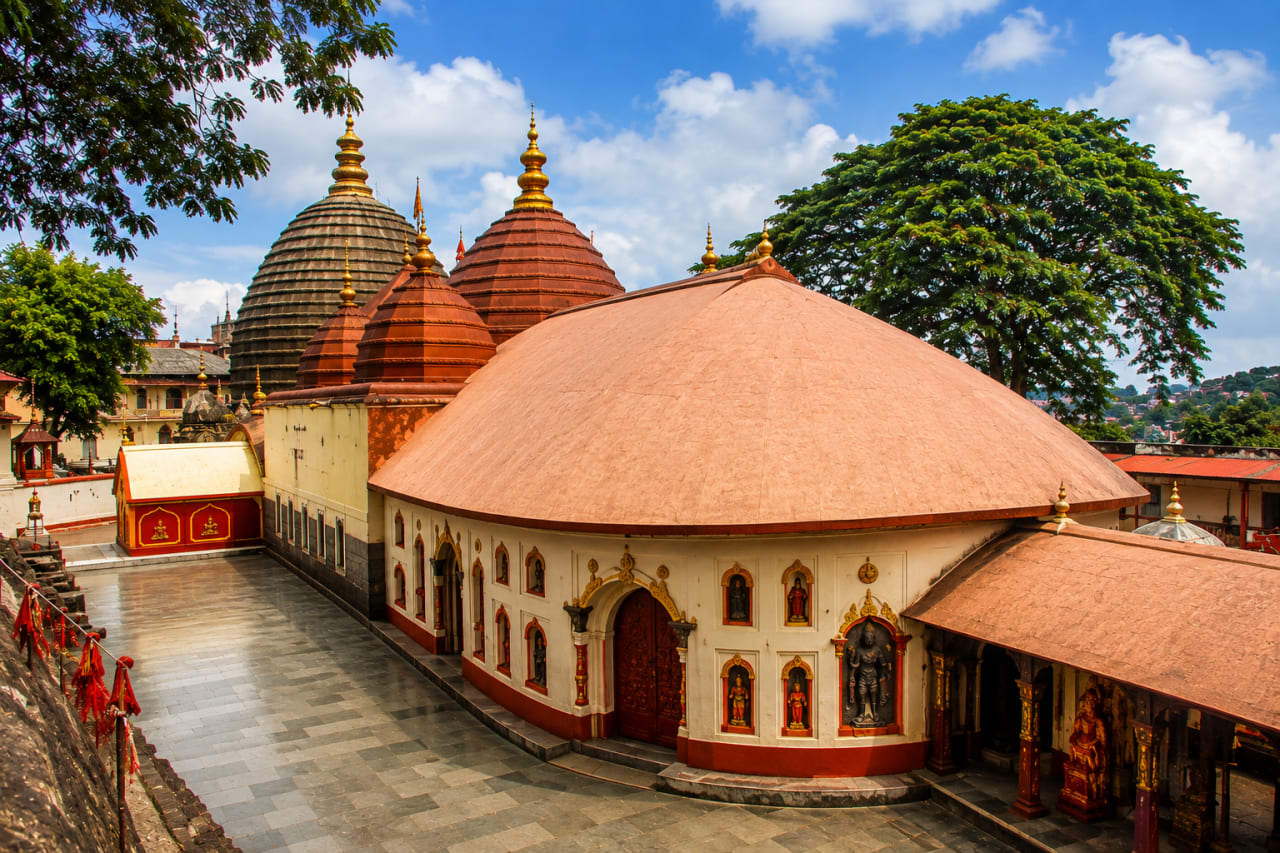
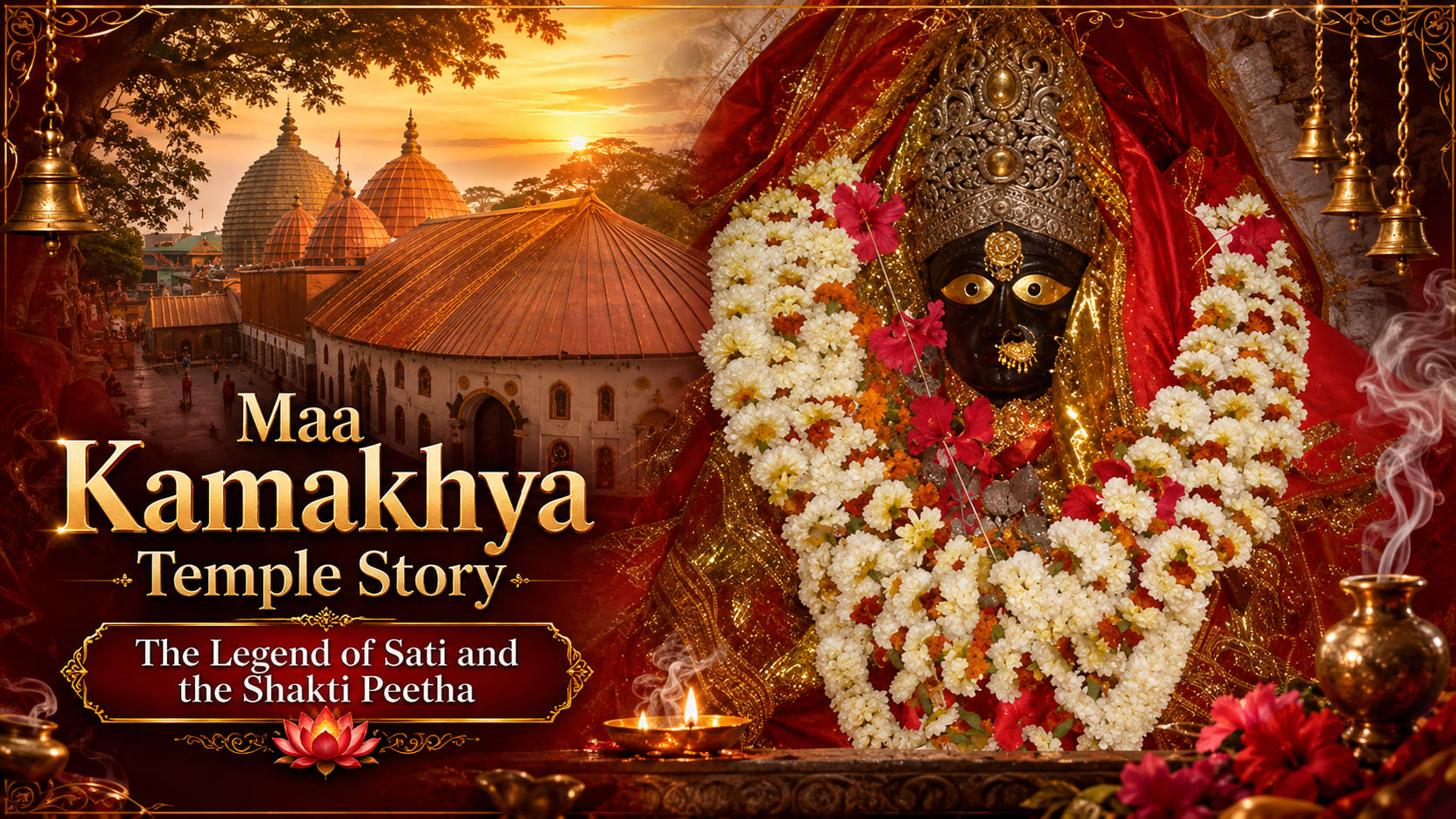
Kamakhya Temple sits on Nilachal Hill in Guwahati and is one of the most revered Shakti Peethas in India. Devotees hold that the temple marks the spot where a part of Goddess Sati fell to earth, making it a center of deep Shakti worship. The full account of that legend is covered in our guide to the Maa Kamakhya Temple story and the legend of Sati.
Unlike most temples, Kamakhya has no idol in the usual sense. Devotees instead worship a natural rock cleft inside the sanctum that stays moist through the year. Every June, during the Ambubachi Mela, the temple closes its doors for three days. Tradition holds that the goddess undergoes her menstrual cycle during this period, and the temple reopens with the belief that the earth has been renewed.
Thousands of devotees, sadhus, and spiritual seekers gather for this festival every year, making it one of the most distinct celebrations in Sanatan Dharma.
Best time to visit: October to March for pleasant weather, or June for the Ambubachi Mela.
2. Jagannath Temple, Puri: The Flag That Defies the Wind
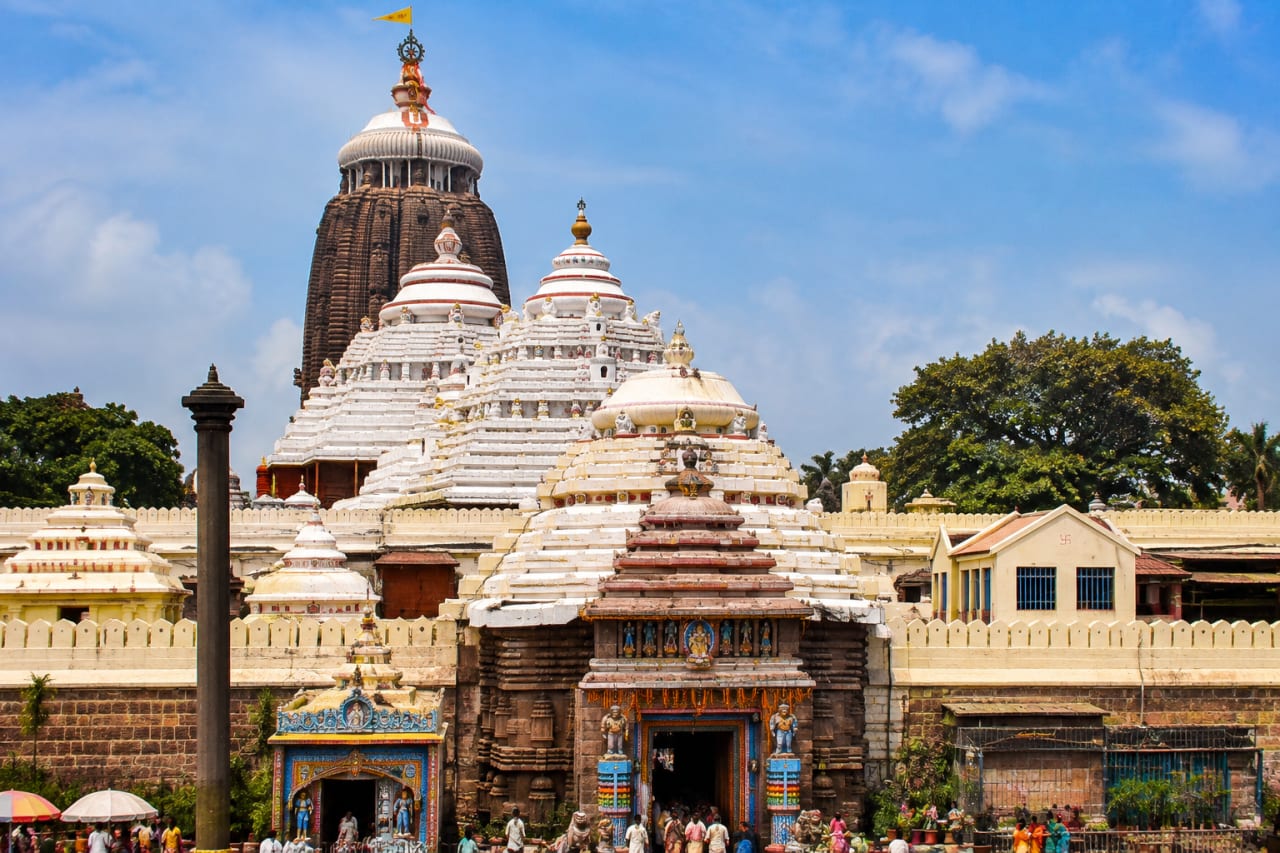
The Jagannath Temple in Puri is one of the four Char Dham sites and is known for several occurrences devotees describe as impossible to fully explain. The most talked about is the temple flag, said to flutter opposite to the direction of the wind, every single day.
Local priests change this flag every evening by climbing the temple's 214 foot spire without safety equipment, a practice that has continued for generations. Visitors also describe the temple casting no visible shadow at certain hours, and say birds are rarely seen flying directly over the main dome. Some of these accounts have simple architectural explanations, while others remain part of belief rather than proven fact.
What is certain is the devotion the temple draws each year, especially during the Jagannath Rath Yatra, when the deities are pulled through Puri's streets on massive wooden chariots.
Best time to visit: during Rath Yatra for the full experience, or November to February for cooler weather.
3. Kal Bhairav Temple, Ujjain: Where Liquor Becomes Prasad
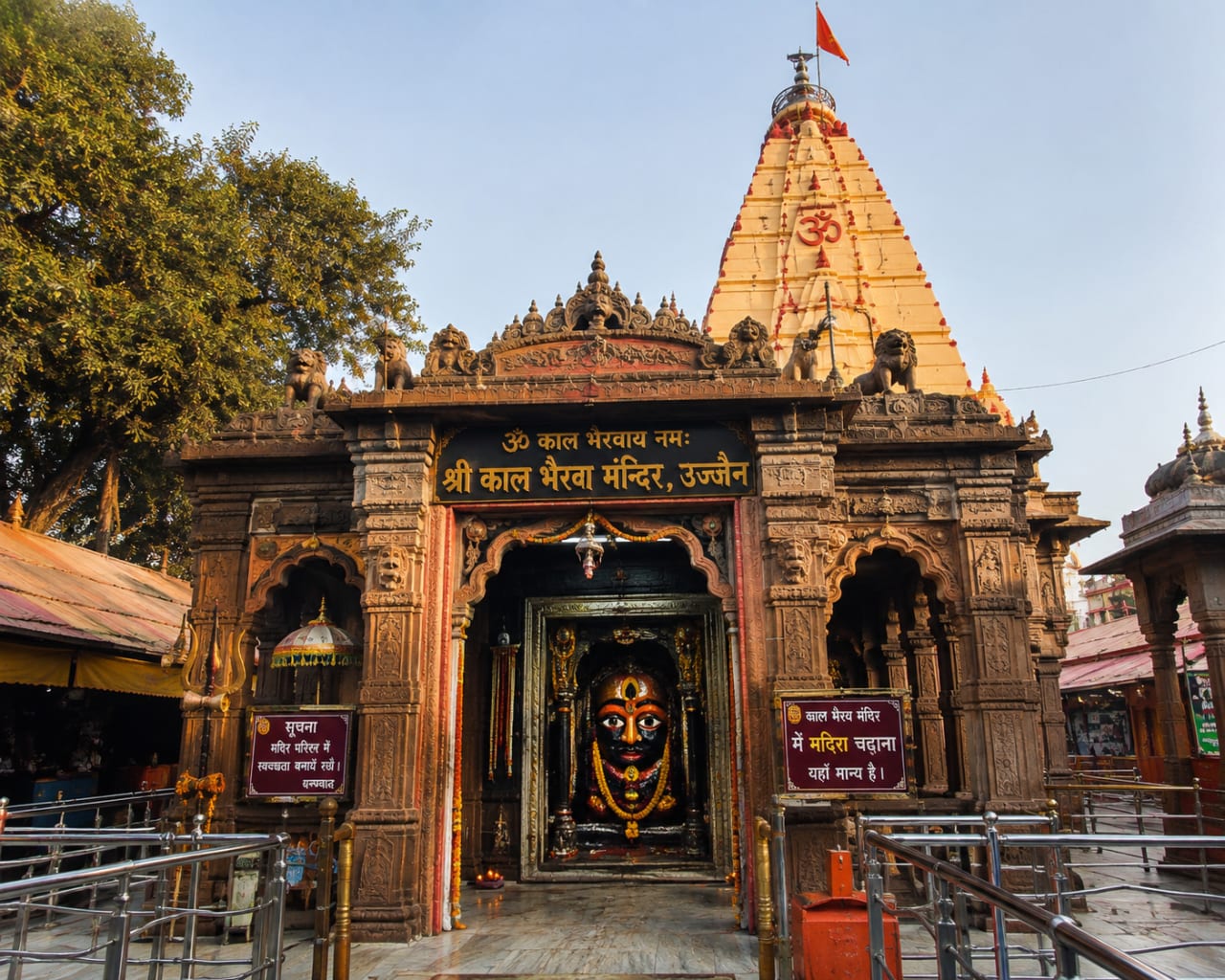
The Kal Bhairav Temple in Ujjain is dedicated to Kal Bhairav, a fierce form of Lord Shiva believed to be the guardian deity of the city. It is one of the few temples in India where liquor is offered directly to the deity as part of daily worship.
Devotees buy small bottles of liquor from shops outside the temple and hand them to the priest, who pours the offering into a shallow container placed near the idol's mouth. Much of the liquid disappears within moments, and the remainder is returned as prasad.
This tradition traces back to panchamakara, a set of five ritual offerings once made in older Shaiva worship, of which liquor is the only one still offered in its original form here. Many devotees also chant Om Namah Shivaya near the sanctum, since Kal Bhairav is regarded as a protector aspect of Shiva himself.
Best time to visit: early morning for a peaceful darshan, or during Bhairava Ashtami.
4. Mehandipur Balaji Temple, Rajasthan: A Temple of Healing and Faith
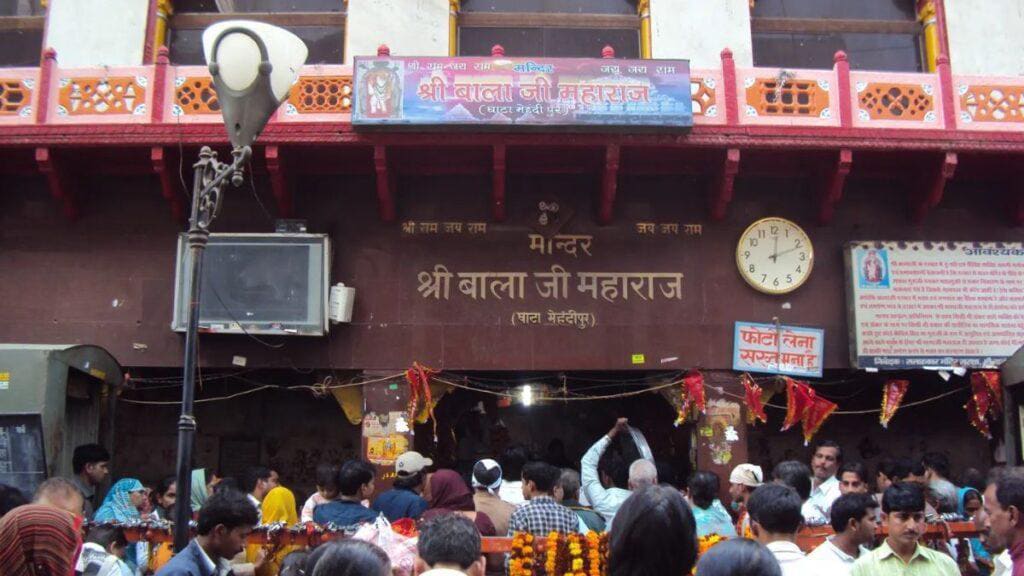
Mehandipur Balaji, located in the Dausa district of Rajasthan, is dedicated to Hanuman in his Balaji form. Families travel here from across India in the belief that the temple can bring relief from mental distress and difficulties that have not eased through other means.
The temple follows its own set of long standing customs. Visitors are asked not to carry or eat food inside the temple town, and many avoid looking back once they leave. Every afternoon, a ritual gathering takes place where devotees seek the blessings of Balaji and Bhairav for peace of mind.
These practices have been followed for generations and are treated with sincere respect by regular devotees. If you plan to visit, it helps to speak with local priests beforehand and follow the temple's customs with an open and respectful attitude, the way any pilgrim would at a site with deep, old traditions.
Best time to visit: Tuesdays and Saturdays are considered most significant, and the temple stays busiest during Holi and Diwali.
5. Konark Sun Temple, Odisha: The Legend of the Lost Magnet
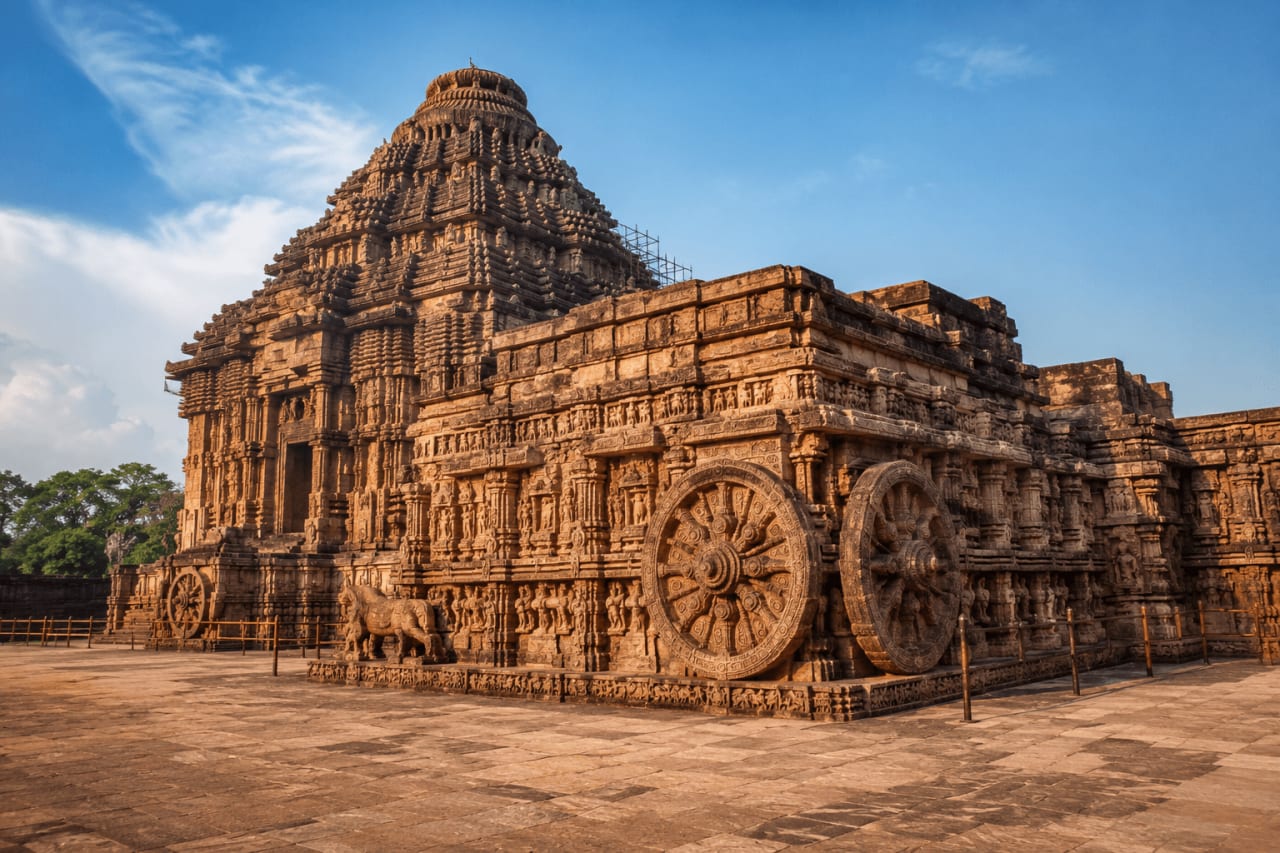
The Konark Sun Temple, built in the 13th century as a giant stone chariot for the Sun God Surya, carries a well known legend about a massive magnetic stone once placed at its peak. You can read the full history of the Konark Sun Temple for more on its construction.
According to local tradition, the temple's central idol contained iron and was held in place by magnets positioned above, below, and around it, so that it appeared to float without support. The story goes that this magnet was so strong it disturbed the compasses of ships along the coast, and that sailors eventually removed it, which caused part of the temple to collapse.
Historians note that no surviving record confirms a magnet of that scale ever existed, and the temple's decline is more likely linked to coastal erosion, cyclones, and the sheer height of the original tower. Even so, Konark remains one of India's most visited heritage sites for its stone carvings alone.
Best time to visit: November to February, ideally during the Konark Dance Festival.
6. Kailasa Temple, Ellora: Carved Downward From a Single Rock
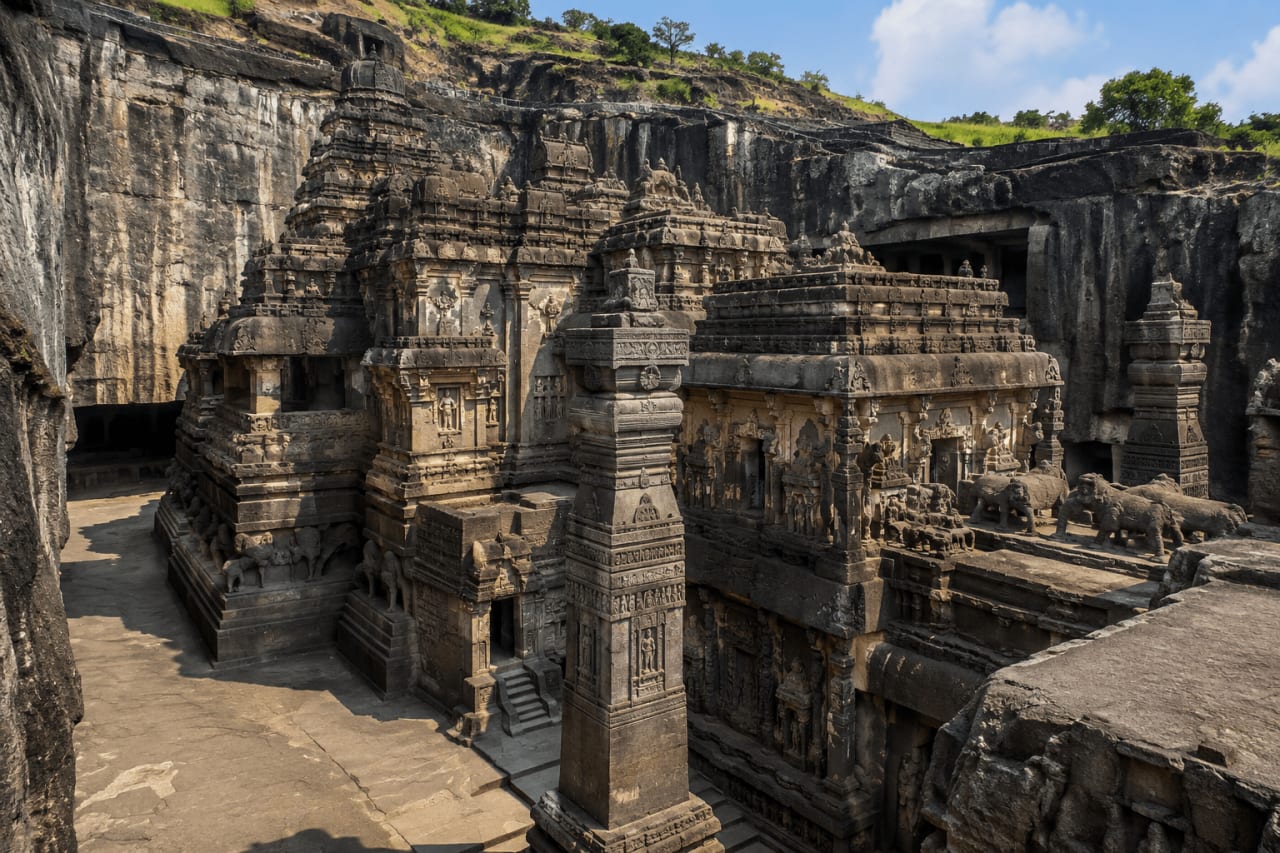
The Kailasa Temple at Ellora is not built in the usual sense. It is carved entirely out of one massive basalt rock, starting from the top of the hill and working downward, a technique almost never used elsewhere in temple architecture.
Commissioned under the Rashtrakuta king Krishna I in the 8th century, the temple is thought to have taken decades to complete and removed several hundred thousand tons of rock, all cut by hand with simple tools. Its scale, roughly three stories tall and modeled after Mount Kailash, Shiva's Himalayan home, still draws attention from architects and historians today.
A well known local account says that the Mughal emperor Aurangzeb sent soldiers to destroy the temple, but after years of effort they could only damage a few sculptures, unable to bring down the structure itself. Inside the courtyard, carved elephants appear to hold up the entire temple on their backs, a detail that leaves most visitors in quiet awe.
Best time to visit: October to March, when the weather is cool enough for walking through the wider cave complex.
7. Karni Mata Temple, Deshnok: Home to Thousands of Sacred Rats
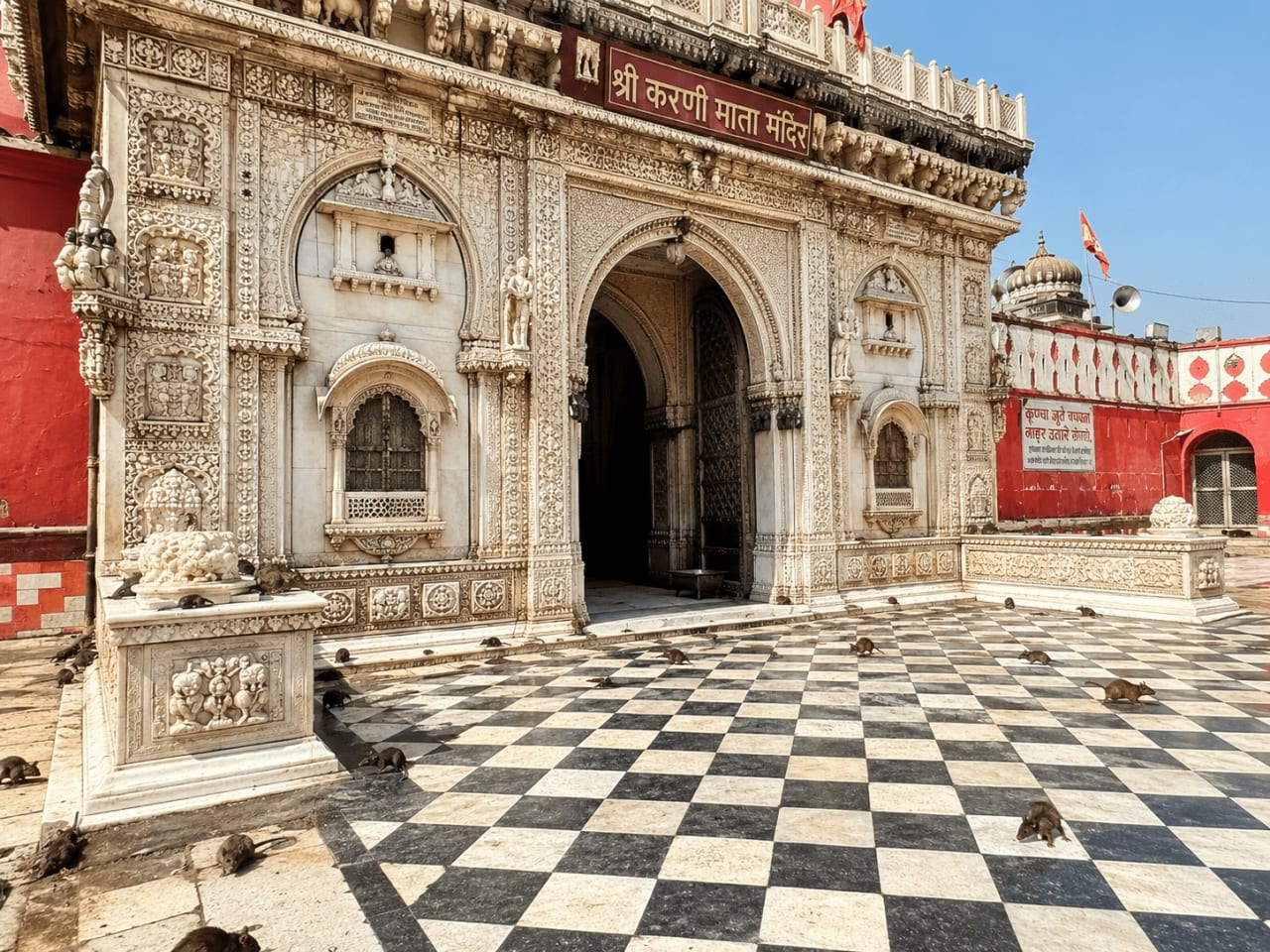
The Karni Mata Temple in Deshnok, near Bikaner, is dedicated to Karni Mata, believed by devotees to be an incarnation of Goddess Durga. The temple is best known for the thousands of rats that live freely within its halls and are treated as sacred.
According to temple legend, Karni Mata once pleaded with Yama, the god of death, to bring back the son of a storyteller from her clan. When Yama refused, she declared that members of her clan would be reborn as rats instead of leaving this world fully, with their souls one day returning as her descendants.
Devotees now consider the temple's rats an extension of this family, and spotting one of the rare white rats among the thousands of black ones is seen as a moment of good fortune. Food nibbled by the rats is treated as prasad, an experience that surprises many first time visitors but is approached with genuine reverence by regular devotees.
Best time to visit: October to March, avoiding the height of summer.
8. Veerabhadra Temple, Lepakshi: The Pillar That Seems to Float
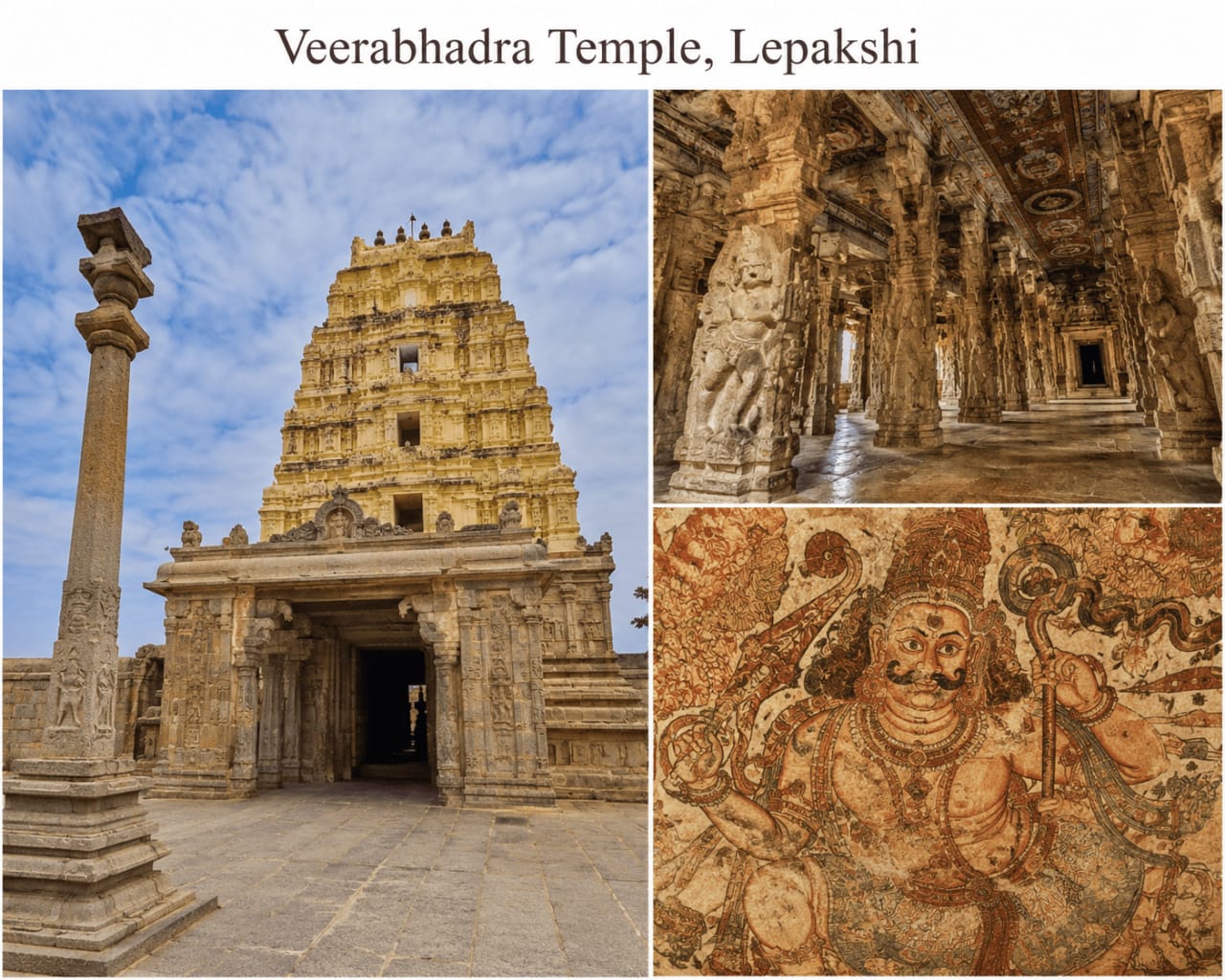
The 16th century Veerabhadra Temple in Lepakshi, built during the Vijayanagara Empire, is famous for one of its 70 stone pillars, which appears to hang slightly above the floor without touching it.
Visitors often slide a thin cloth or a sheet of paper under the pillar to check that the gap is real, and it usually passes through with ease. A popular local story says a British engineer once tried to move the pillar to understand how it worked, and only managed to shift it slightly, leaving it in its current, mostly unsupported position.
The temple is equally known for its detailed frescoes, a massive monolithic Nandi bull carved from a single stone nearby, and a giant footprint in the courtyard believed to belong to Sita from the Ramayana. The name Lepakshi itself comes from the words Lord Rama is said to have spoken to the wounded bird Jatayu, meaning rise, O bird.
Best time to visit: November to February for comfortable daytime temperatures.
9. Stambheshwar Mahadev, Gujarat: The Shiva Temple the Sea Covers Twice a Day
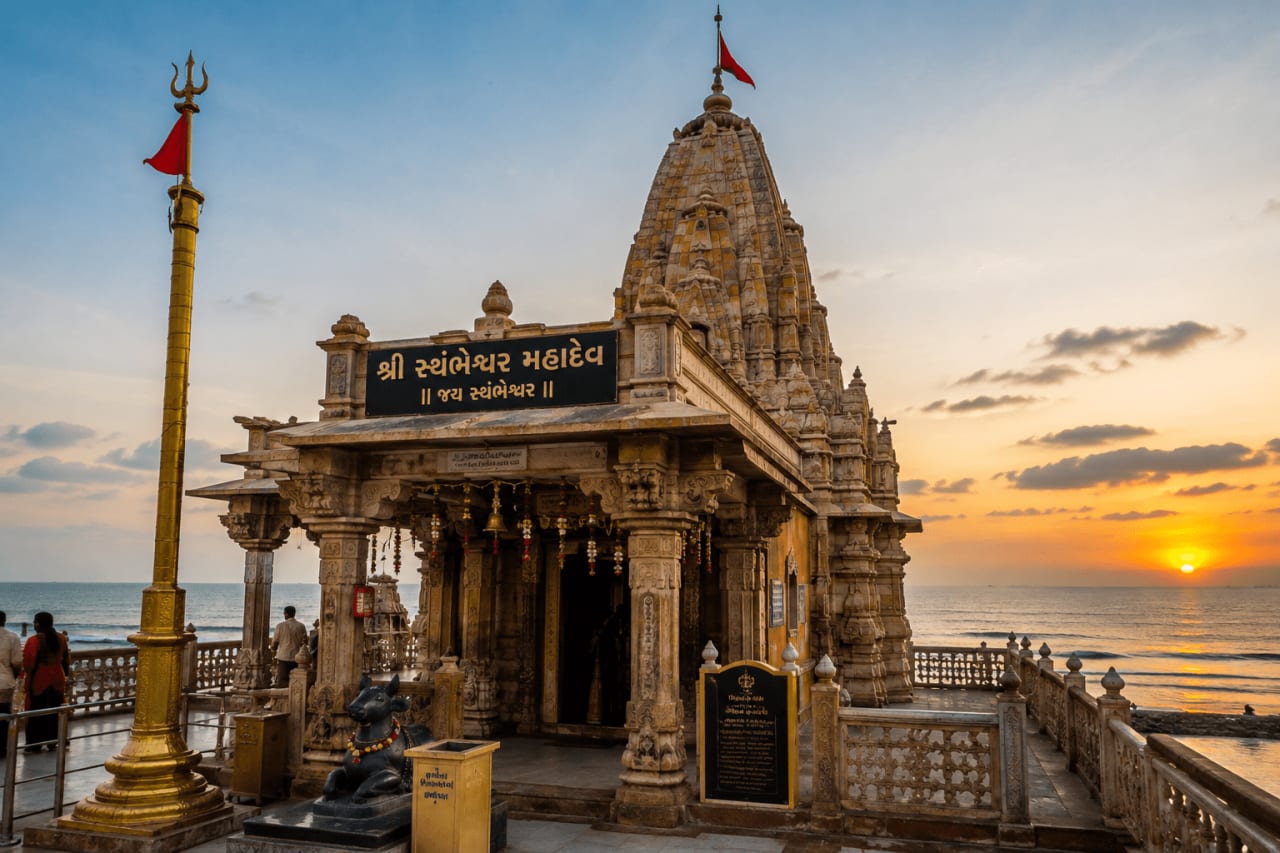
Stambheshwar Mahadev, located on the Arabian Sea coast in Gujarat near Kavi Kamboi village, is one of the few Shiva temples anywhere that goes underwater and reappears every single day, following the natural tide.
During high tide, seawater rises across the shore and fully covers the shrine and its Shivling for a few hours, an event devotees describe as a natural jal abhishek, or water offering, performed by the sea itself. As the tide recedes, the temple slowly re-emerges, dry and ready for regular worship.
According to the Skanda Purana, the temple marks the place where Kartikeya, son of Shiva, is said to have installed a lingam after defeating the demon Tarakasura, honoring a devotee who had once worshipped Shiva in an earlier life. Visitors should check local tide timings in advance, since the temple is only accessible on foot during low tide.
Best time to visit: check tide charts beforehand; the shrine is generally accessible for a few hours around low tide, morning and evening.
10. Sri Kalahasti Temple: The Flame That Never Stays Still
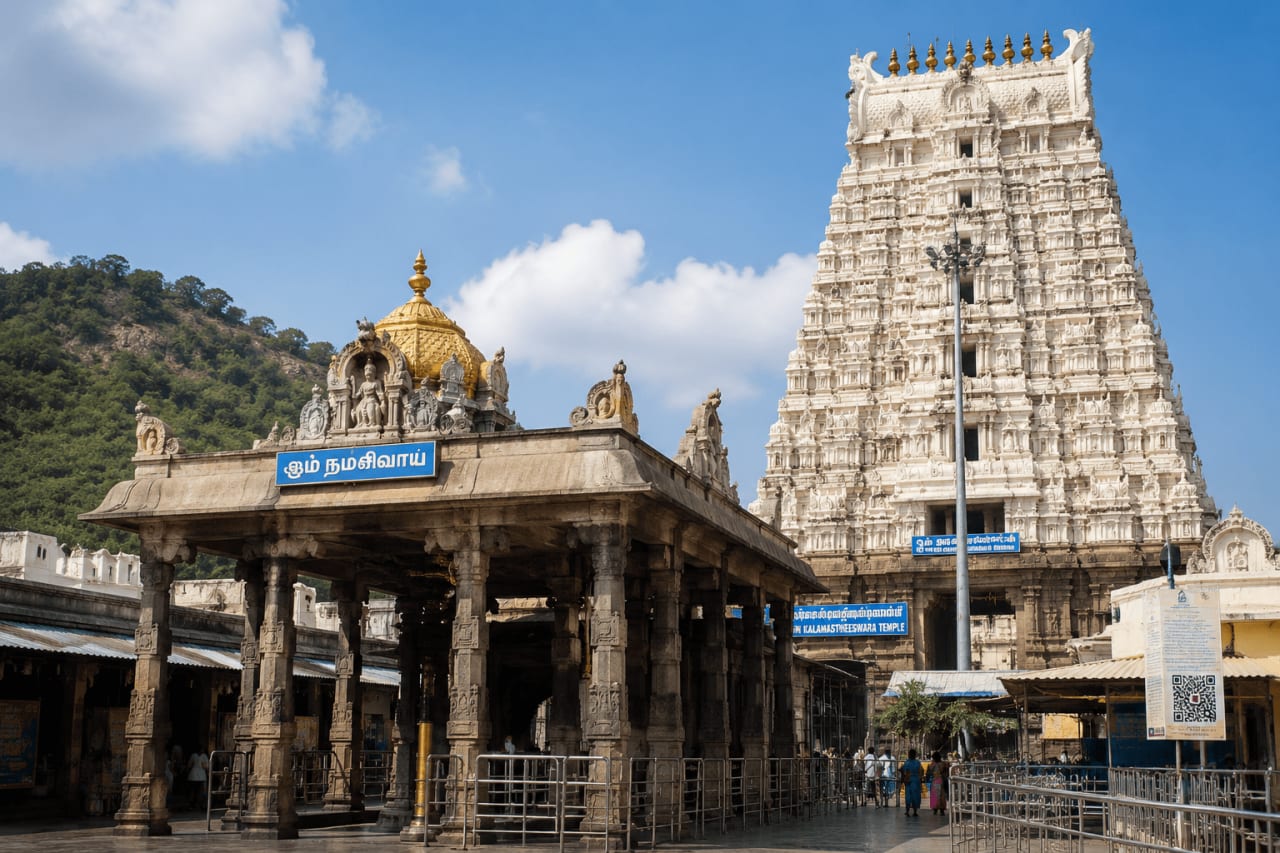
Sri Kalahasti Temple, near Tirupati, is one of the five Panchabhoota Sthalams, temples in South India that each represent one of the five elements of nature. Sri Kalahasti represents Vayu, the element of air.
Inside the sealed inner sanctum, a lamp burns with a flame that constantly flickers and sways, even though the chamber has no windows or visible source of wind. Devotees see this as the living presence of Vayu, worshipped here in the form of the Vayu Lingam.
The temple is also connected to the story of Kannappa, a hunter whose deep devotion led him to offer his own eyes to stop blood flowing from the Shiva lingam, often cited as one of the finest examples of bhakti in Shaiva tradition. Many devotees visit specially during Maha Shivaratri, when the temple sees some of its largest crowds of the year.
Best time to visit: Maha Shivaratri for the festive atmosphere, or October to February for cooler weather.
Planning Your Temple Mystery Trail
These 10 temples are spread across different states, so most devotees plan a trip around one region rather than trying to cover all ten together. Lepakshi and Sri Kalahasti pair well with a Tirupati Balaji visit in South India. Puri and Konark sit close enough in Odisha to cover in a single trip. Karni Mata and Mehandipur Balaji can both be added to a Rajasthan itinerary that includes Jaipur or Bikaner.
Winter months, from October to February, remain the most comfortable time to travel across most of these regions.
Conclusion
These 10 mysterious temples in India show how faith, history, and nature often meet in ways that are hard to fully explain. Whether it is a flag defying the wind in Puri, a pillar that seems to float in Lepakshi, or a shrine the sea claims twice a day in Gujarat, each place carries a story passed down through generations of devotees.
Visiting even one of them is a reminder of how deeply Sanatan Dharma is woven into India's land, coastlines, and hills.
If a personal visit is not possible right now, DevMarg's temple and pilgrimage guides can help you plan darshan timings, travel routes, and rituals for many of these sites, wherever your journey begins.
Frequently Asked Questions
Which temple in India is considered the most mysterious? There is no single answer, since each of these temples carries a different kind of mystery. The Jagannath Temple in Puri and Kamakhya Temple in Assam are among the most discussed, both for their unusual traditions and their deep spiritual significance.
Are these temple mysteries scientifically proven? Some, like the magnet legend at Konark, do not have supporting historical or scientific evidence and are treated as folklore. Others, like the flickering lamp at Sri Kalahasti, are natural occurrences that devotees interpret through a spiritual lens. We have noted this distinction wherever it applies.
Can people from other religions visit these temples? Most of these temples welcome visitors of all backgrounds. The Jagannath Temple in Puri is a notable exception, since entry is limited to Hindus.
Is it safe to visit Mehandipur Balaji Temple? Yes, the temple is safe to visit and receives thousands of visitors every week. It follows its own customs, so it helps to observe local guidance from priests and fellow devotees during your visit.
What should I keep in mind before visiting these temples? Dress modestly, follow each temple's specific rules such as tide timings at Stambheshwar Mahadev, and carry basic essentials like water and comfortable footwear, since many of these sites involve some walking.
Is photography allowed inside these temples? This varies by temple. Photography is generally restricted or fully banned inside the main sanctum at most of these sites, including Puri and Kamakhya, out of respect for the sanctity of the deity. Outer courtyards and heritage sites like Ellora and Lepakshi usually allow photography, though a small camera fee may apply.
Do these temples charge an entry fee? Most of these temples, including Kamakhya, Kal Bhairav, Mehandipur Balaji, and Karni Mata, do not charge a basic entry fee, though special darshan or priest assisted rituals may involve a donation. Heritage monuments like Ellora and Konark, maintained by the Archaeological Survey of India, do charge a standard entry ticket.
Is Kamakhya Temple closed to visitors during Ambubachi Mela? Yes. The temple's inner sanctum closes for three days during Ambubachi Mela each June, and darshan resumes only after the closing rituals are complete. The surrounding fair and gathering of devotees, however, continue throughout this period.
Can devotees book puja or darshan online for these temples? Some larger temples, particularly Jagannath Puri and Kamakhya, offer online booking for special darshan slots or priest conducted pujas. For smaller temples such as Stambheshwar Mahadev or Mehandipur Balaji, it is best to check directly with the temple trust, since online booking options are limited.
Which of these temples are part of a larger pilgrimage circuit? The Jagannath Temple in Puri is one of the four Char Dham sites, while Sri Kalahasti belongs to the five Panchabhoota Sthalams representing the elements of nature. Kamakhya is one of the 51 Shakti Peethas connected across the subcontinent.