
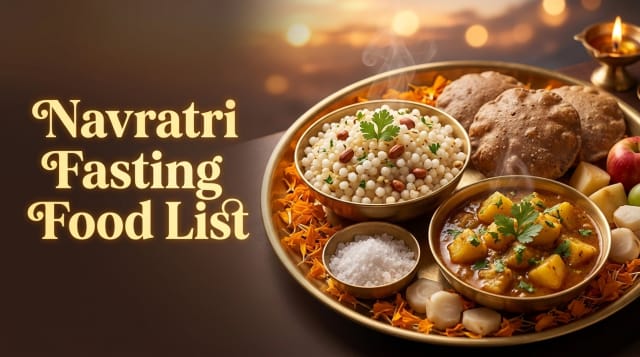
Navratri Fasting Food List: What to Eat and Avoid
The nine nights of Navratri bring a kitchen that looks nothing like your everyday one. No wheat, no rice, no onion or garlic, and sendha namak replaces table salt. For a first-timer in the grocery aisle, it can feel confusing.
This guide gathers the Navratri Fasting Food Guide: What to Eat and What Not to Eat in one place: what you can eat, what you must avoid, and why each rule exists. You will find the permitted grains and flours, the fruits and dairy that sustain you through the day, the spices allowed in a vrat kitchen, and the common slip-ups that catch new fasters. Keep it handy before you plan your meals for the week.
Key facts
- Allowed salt
- Sendha namak (rock salt)
- Forbidden salt
- Common iodised table salt
- Allowed flours
- Kuttu, singhara, rajgira, samak
- Avoid always
- Onion, garlic, grains, lentils, non-veg
What can you eat and not eat during Navratri fasting?
During Navratri fasting you can eat fasting grains like kuttu (buckwheat), singhara (water chestnut) and samak rice, along with potatoes, most fruits, dairy, sabudana, dry fruits and sendha namak. You must avoid regular grains such as wheat and rice, all lentils and pulses, onion, garlic, common iodised salt, and every form of non-vegetarian food, eggs and alcohol.
The idea behind a vrat (fast) is light eating that keeps the body calm and the mind on devotion. Heavy, tamasic foods and anything from the regular grain family are set aside for nine days.
Permitted grains and flours for vrat
You cannot use wheat, rice or any cereal grain during Navratri, so the fasting kitchen runs on a handful of substitutes. These are technically seeds or fruits, not grains, which is why they pass the vrat rule.
The four staples most families keep are:

- Kuttu ka atta (buckwheat flour) for puris, pakoras and cheela
- Singhare ka atta (water chestnut flour) for halwa and rotis
- Rajgira (amaranth) flour and puffed rajgira for ladoo and chikki
- Samak ke chawal (barnyard millet) cooked like rice or made into kheer
Sabudana (tapioca pearls) is the fifth workhorse, used for khichdi, vada and kheer. All of these give slow-release energy, which matters when you are eating fewer meals across a long day.
Tip: Kuttu flour spoils faster than wheat flour. Buy a fresh small pack for the nine days and smell it before use. Rancid buckwheat tastes bitter and can upset your stomach.
Vegetables you can and cannot have

Potato is the backbone of Navratri cooking and is fully allowed. So are sweet potato, arbi (colocasia), kachalu, raw banana, pumpkin, bottle gourd (lauki), cucumber, tomato and spinach in many homes.
Onion and garlic are avoided across almost all fasting traditions because they are considered rajasic and tamasic, foods thought to stir restlessness rather than calm. Most people also skip brinjal, okra, cabbage and cauliflower during the strict fast, keeping the plate to tubers and gourds. Rules vary by family and region, so follow what your household has always done.
Fruits, dry fruits and dairy

All fruits are allowed during Navratri. Banana, apple, papaya, pomegranate, grapes, melon and chikoo all work, whether eaten plain or blended into a lassi or smoothie.
Dairy is a mainstay. Milk, curd, paneer, fresh cream, buttermilk, khoya and homemade ghee are all permitted and give you protein when pulses are off the table. If you fast from sunrise and plan to eat one main meal after your evening puja, a mid-afternoon bowl of curd with a banana and a few soaked almonds will carry you through without feeling heavy.
Dry fruits and nuts are all allowed and often roasted in ghee as a snack: almonds, cashews, walnuts, raisins, pistachios and makhana (fox nuts).
Spices and condiments allowed in a vrat kitchen
The single biggest switch is salt. Use sendha namak (rock salt) in place of ordinary iodised table salt, which is not eaten during the fast. This is the rule new fasters forget most often.
These spices are commonly allowed:

- Cumin (jeera) and cumin powder
- Black pepper
- Green cardamom and cinnamon
- Fresh coriander leaves, green chilli, ginger
- Ajwain (carom seeds) and black salt in some homes
Avoid turmeric, mustard seeds, hing (asafoetida), garam masala, coriander seeds (dhania) and red chilli powder, as these are regular-kitchen spices tied to grains and pulses. Cooking medium should be ghee, peanut oil or another permitted oil, not refined blends in strict homes.
A quick what-to-eat, what-to-avoid table
This table sums up the whole fasting list at a glance. Pin it to your fridge for the nine days.
| Category | You can eat | Avoid |
|---|---|---|
| Grains and flours | Kuttu, singhara, rajgira, samak, sabudana | Wheat, rice, maida, besan, semolina |
| Vegetables | Potato, sweet potato, lauki, pumpkin, tomato | Onion, garlic, brinjal, cabbage |
| Protein | Paneer, curd, milk, makhana, nuts | All dals, pulses, beans, eggs |
| Salt and spice | Sendha namak, jeera, pepper, cardamom | Table salt, turmeric, hing, garam masala |
| Drinks | Water, milk, lassi, coconut water, fruit juice | Alcohol, aerated drinks, regular tea masala |
| Other | Fruits, dry fruits, honey | Non-veg, packaged namkeen, most biscuits |
Common mistakes first-time fasters make
The mistakes are almost always small, hidden ingredients rather than the obvious ones. Packaged snacks are the usual trap. Most chips, biscuits and namkeen use iodised salt, maida and anti-caking agents, so they break the fast even when they seem harmless.
Watch out for these too:
- Ready-made masalas and chaat powders that contain hing or table salt
- Store-bought paneer or curd set with starter cultures you cannot verify, if your home is strict
- Fried food every meal, which leaves you heavier and more tired than light eating would
- Skipping water through the day, which causes the headaches people blame on fasting
Drink enough fluids, keep one meal light and fruit-based, and fry only once a day. If you have diabetes, low blood pressure, are pregnant or recovering from illness, speak to your doctor before attempting a full fast, as long gaps without food can be risky.
Planning your nine days
Start by stocking the five fasting flours, a kilo of potatoes, sendha namak, ghee and a basket of fruit. That covers most meals without a second trip. Rotate your dishes so you are not eating sabudana khichdi for nine straight days: kuttu cheela one morning, samak pulao the next, fruit chaat in the afternoon.
The food is only one part of the observance. For the dates, timings and the ritual order of the nine days, see the full guide to the Navratri Vrat, and check the wider vrat and upavas calendar for other fasting days through the year. If you want to plan the whole festival around muhurat and tithi, the festivals section lays out the dates for you.
For a sense of what counts as permitted fasting food across traditions, India's official food standards body, the FSSAI, publishes guidance on labelling and additives that helps when you read a packet, available through the FSSAI website. Keep your fast simple, your meals light, and your focus on the nine nights.
Frequently asked questions
Can I eat sabudana during Navratri fasting?
Yes, sabudana (tapioca pearls) is one of the most common Navratri fasting foods. It is used for khichdi, vada and kheer, cooked with sendha namak, peanuts, potatoes and cumin. It is not a grain, so it passes the vrat rule. Soak it well before cooking to avoid a lumpy, sticky dish, and eat it in moderation as it is heavy.
Is milk tea or coffee allowed during Navratri vrat?
Plain milk tea and coffee are usually fine during Navratri, since milk and sugar are both permitted. The catch is the masala, as many tea blends contain ingredients not allowed in a fast. Make it with just milk, water, sugar, and optionally cardamom or ginger. Avoid pre-mixed masala chai powders that may include forbidden spices.
Why is onion and garlic not allowed during Navratri?
Onion and garlic are avoided because they are considered rajasic and tamasic in nature, foods believed to stir restlessness and dull the mind rather than keep it calm and devotional. The fast aims for sattvic, light eating. This rule applies across most Navratri traditions in India, though a few regional practices differ, so follow your family's custom.
Can I eat paneer during Navratri fasting?
Yes, paneer is allowed and is a good protein source when pulses are off the table. Homemade paneer is safest if your household is strict, since you control the salt and setting agent. Cook it with sendha namak, cumin, black pepper and tomato rather than onion, garlic or garam masala. Pair it with kuttu roti or samak rice for a filling meal.
Is normal salt allowed in Navratri fast or only rock salt?
Only sendha namak (rock salt) is used during Navratri fasting. Common iodised table salt is avoided, as it is treated as processed and part of the everyday kitchen that the fast sets aside. Check packaged snacks carefully, because most use iodised salt and will break your fast even if they look otherwise plain.
Can diabetics or pregnant women do a full Navratri fast?
A full fast with long gaps between meals can be risky for people with diabetes, low blood pressure, pregnancy, or those recovering from illness. Low blood sugar and dehydration are real dangers. Speak to your doctor before deciding, and consider a partial fast with fruit, milk and nuts spread through the day rather than one long stretch without food.
Are peanuts and groundnut oil allowed during Navratri?
Yes, peanuts and groundnut oil are both commonly allowed during Navratri fasting. Peanuts add protein and are roasted into sabudana dishes or eaten as a snack. Groundnut oil and ghee are the usual cooking fats, while refined blended oils are avoided in strict homes. Use them in moderation, as fried peanut-heavy food can feel heavy over nine days.
Can I eat rice during Navratri if it is samak?
Regular rice is not allowed, but samak ke chawal (barnyard millet) is permitted and looks similar when cooked. Samak is a seed, not a cereal grain, which is why it passes the vrat rule. You can cook it like rice, make pulao with potatoes and cumin, or turn it into a sweet kheer with milk and sugar.