
Durga Puja 2026: Kolkata Dates, Anjali & Pandal Guide
The dhaak drums start before dawn, the air smells of shiuli flowers and incense, and all of Kolkata pours onto the streets in new clothes. That is Durga Puja, the five days when the city stops working and starts celebrating. If you are planning to be there in 2026, you want to know the exact dates, when to reach a pandal for Anjali, and how to see the famous ones without wasting half your day in a queue.
This guide gives you the Durga Puja 2026: Kolkata Dates, Anjali & Pandal Visit Guide from Shashthi to Dashami, the timings for Ashtami Anjali, the difference between community and household pujas, and a realistic pandal-hopping plan for first-timers. Timings below are set for Kolkata and New Delhi local reckoning, so always confirm the exact muhurat with your local panchang before the day.
| Day | Date |
|---|---|
| Shashthi | 16 October 2026 |
| Saptami | 17 October 2026 |
| Ashtami | 18 October 2026 |
| Navami | 19 October 2026 |
| Vijaya Dashami | 20 October 2026 |
Durga Puja 2026 Kolkata dates at a glance

Durga Puja 2026 in Kolkata runs from Maha Shashthi on 16 October to Vijaya Dashami on 20 October. The centre of the festival is the three middle days, Saptami, Ashtami and Navami, when the goddess is worshipped in full and the city stays awake almost round the clock.
The festival follows the Hindu lunar calendar, so the Gregorian dates change each year. Durga Puja falls in the bright fortnight of Ashwin month and overlaps with the autumn Navratri. The Navratri Vrat page and the full 2026 festival calendar help you plan leave and travel around it.
| Day | Date | What happens |
|---|---|---|
| Maha Shashthi | 16 Oct 2026 | Bodhan, Kalparambho, revealing of the idol's face |
| Maha Saptami | 17 Oct 2026 | Nabapatrika bath, pran pratishtha, worship begins |
| Maha Ashtami | 18 Oct 2026 | Pushpanjali, Kumari Puja, Sandhi Puja |
| Maha Navami | 19 Oct 2026 | Maha aarti, Navami bhog, homa |
| Vijaya Dashami | 20 Oct 2026 | Sindoor khela, bisarjan (immersion) |
What the five days involve
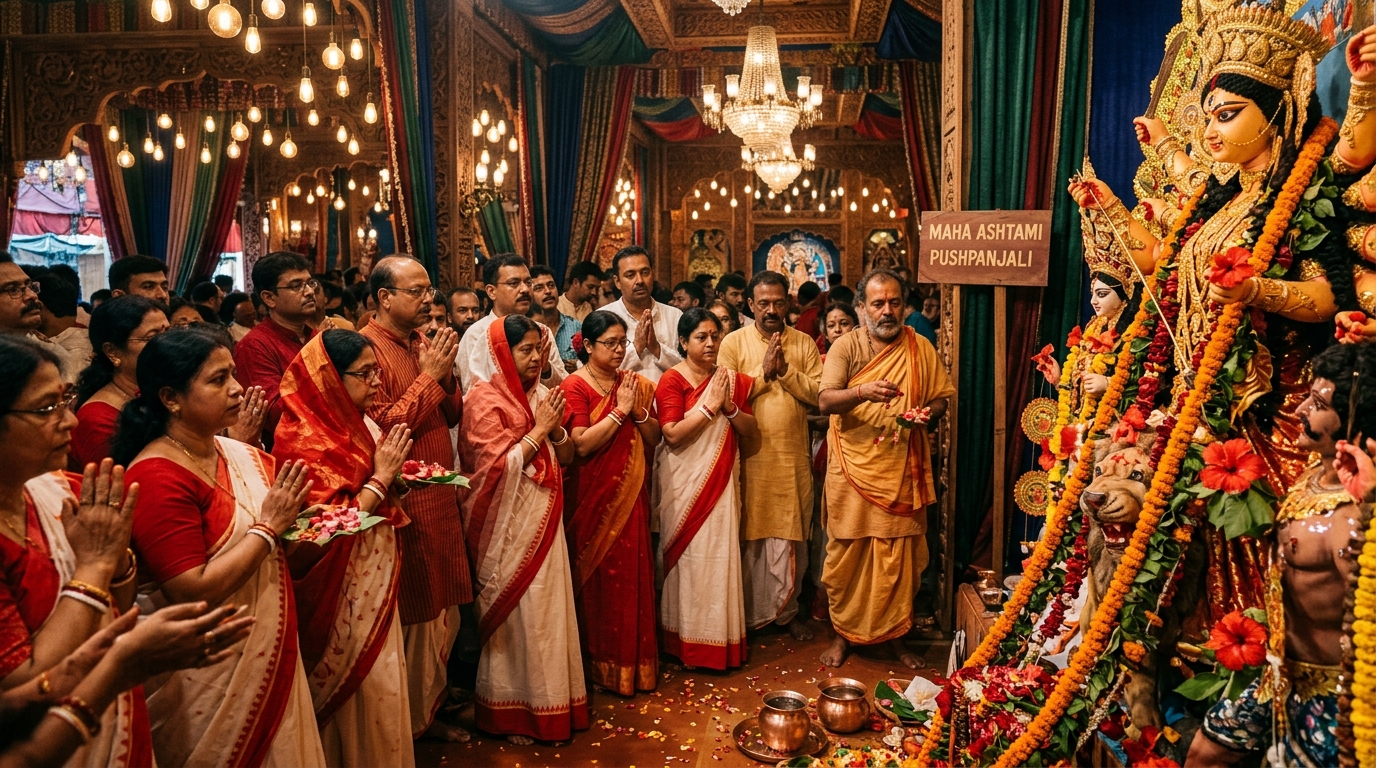
Each day has its own ritual, and knowing them helps you decide when to visit a pandal.
Shashthi opens the puja. Priests perform bodhan, waking the goddess, and the idol's face is revealed. Crowds are lighter this day, which makes it good for seeing big pandals in peace.
Saptami brings the nabapatrika, nine plants tied together representing the goddess, bathed at dawn in a river or pond. Full worship starts after the pran pratishtha, the rite that invokes Durga's presence in the idol.
Ashtami is the biggest day. It carries the Pushpanjali (Anjali), the Kumari Puja where a young girl is worshipped as the goddess, and the Sandhi Puja at the junction of Ashtami and Navami. Navami has the maha aarti and the grand bhog. Dashami is farewell, with married women playing sindoor khela before the idols go to the Hooghly for immersion.
Anjali and Ashtami timing

Anjali, or Pushpanjali, is the collective gift of flowers to Durga while priests chant Sanskrit shlokas. You stand with a few flowers in your cupped palms, repeat the mantras line by line after the priest, and offer the flowers at the end. It is the one ritual any visitor can take part in, no booking or membership needed.
Ashtami Anjali is the most attended of all. Most pandals hold it mid-morning on Ashtami, often between 9 am and 11 am, though the exact time depends on when that pandal finishes the morning puja. Reach the pandal 20 to 30 minutes early, because popular ones run several rounds and the first round fills fast.
Tip: Pick a smaller neighbourhood pandal for Anjali rather than a headline one. You will get closer to the idol, hear the mantras clearly, and finish in time to start pandal hopping before the afternoon crush.
Fasting before Anjali
Many people offer Ashtami Anjali on an empty stomach as a mark of respect, but it is a custom, not a strict rule. The idea is to make the morning offering before your first meal of the day. Families that keep the stricter observance avoid food and even water until the Anjali is done, then eat the bhog prasad afterwards.
If you have a medical condition, are elderly, pregnant or travelling with young children, there is no bar on eating first. Faith here rests on intent, not hardship. The Vrat Upavas section explains how different vrats are kept and relaxed.
Sarbojonin vs Bonedi Bari pujas

Kolkata has two very different kinds of Durga Puja, and seeing one of each gives you the full picture.
Sarbojonin puja is the community or public puja, funded by a neighbourhood committee and open to everyone. These are the giant themed pandals you see in photos, with artwork, lighting and crowds. Bonedi Bari puja is the private puja held inside the ancestral mansions of old Kolkata families, some running for over 200 years, with rituals that follow family tradition rather than spectacle.
| Feature | Sarbojonin | Bonedi Bari |
|---|---|---|
| Run by | Neighbourhood committee | Old family household |
| Setting | Street pandal | Family mansion (thakur dalan) |
| Idol style | Themed, varies yearly | Traditional ek-chala, fixed style |
| Crowd | Very heavy | Quieter, more intimate |
| Entry | Fully open | Usually open to respectful visitors |
Say you have one free morning. Spend it at a Bonedi Bari like those in the Shobhabazar or Rani Rashmoni area to watch the old rituals up close, then move to the big Sarbojonin pandals after dark when the lighting is at its best.
Best pandals in North and South Kolkata
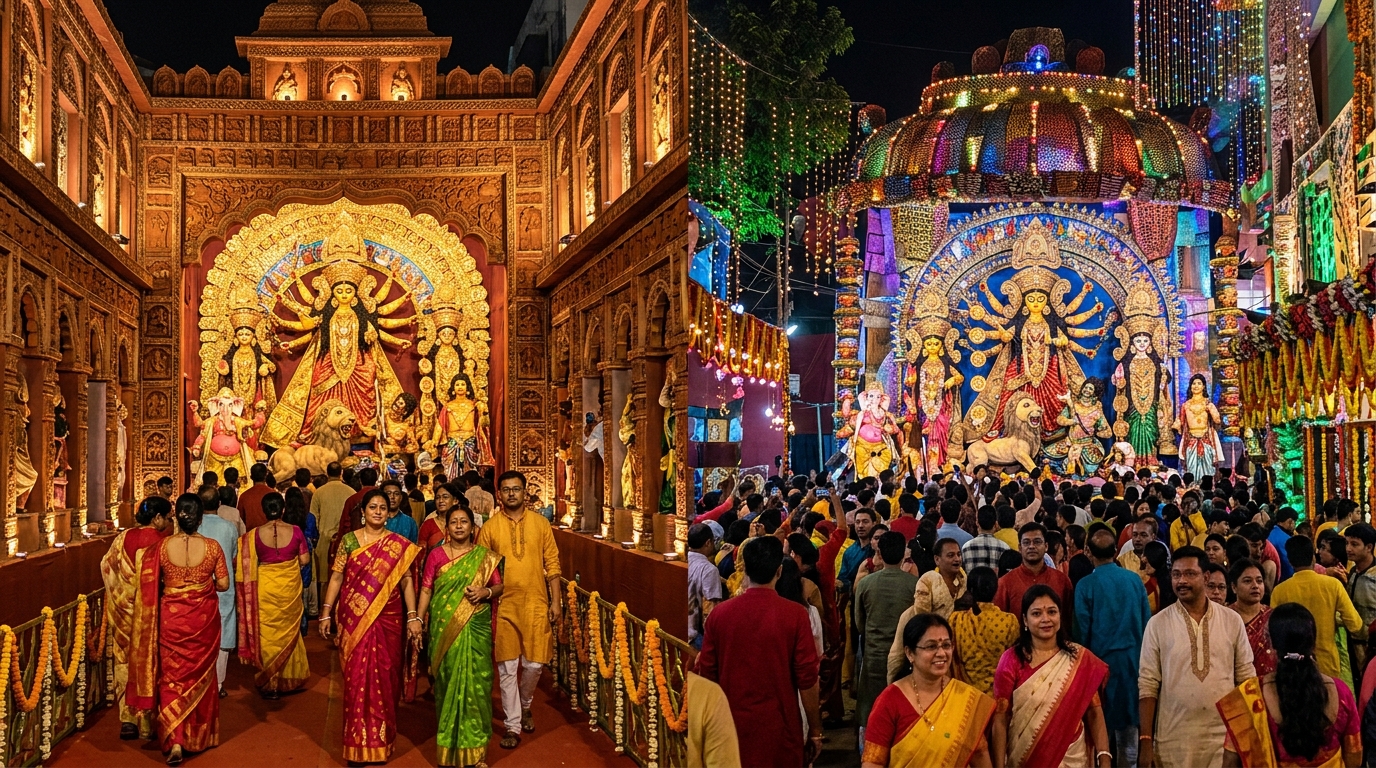
The city's pandals cluster into two broad zones, and most visitors pick one zone per day to avoid criss-crossing traffic.
North Kolkata is the older, more traditional heartland. Look for the pujas at Kumartuli Park (near the idol-makers' district), Bagbazar Sarbojonin, Ahiritola, Shobhabazar and Jagat Mukherjee Park. The lanes are narrow and the feel is classic.
South Kolkata is where the big-budget theme pandals compete for awards. The famous names include the Ekdalia Evergreen Club, Singhi Park, Mudiali, Maddox Square (as much a social hub as a pandal), Deshapriya Park, Ballygunge Cultural and Suruchi Sangha. Central Kolkata adds College Square with its lake-side lighting. Pandal designs and award winners change every year, so check the current season's lists before you lock a route.
Note: Maddox Square is famous less for its idol than for being the place young Kolkata gathers to sit, chat and adda through the night. Go there late, not for a quick darshan.
A one-day pandal-hopping route

To cover the most pandals in a day, group them by zone, start early, and use the Metro for long hops while walking the clusters. The single biggest time-saver is avoiding the car on puja days, when central roads are closed or jammed for hours.
Here is a workable plan if you want to see both ends of the city:
- Start by 6 am in North Kolkata. Early morning is empty. Cover Kumartuli, Bagbazar, Ahiritola and Shobhabazar on foot within a tight radius.
- Mid-morning, take the Metro south. The north-south line skips all the road traffic.
- Late morning to afternoon, do the South Kolkata cluster: Mudiali, Shiv Mandir, Badamtala Ashar Sangha around the Kalighat Metro area.
- Evening, move to Ekdalia, Singhi Park and Ballygunge for the illuminated pandals.
- End late at Maddox Square or College Square for the night-time atmosphere.
Carry water, wear broken-in shoes, and keep cash in small notes for street food and donations. Mobile networks choke in crowds, so agree a meeting point with your group in advance.
Visiting Kolkata as a tourist during Durga Puja
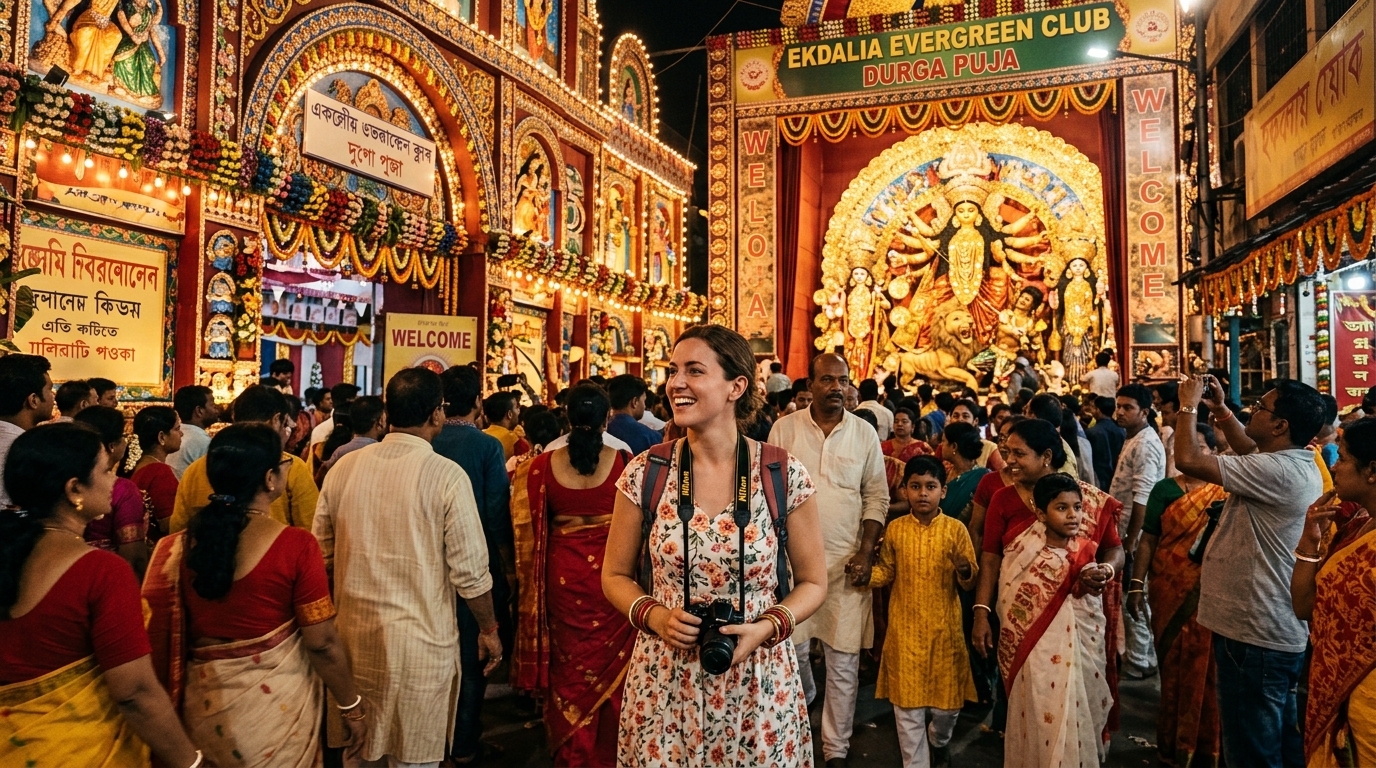
Durga Puja is the best and the most crowded time to see Kolkata, and for a first visit the energy is worth the crush. The whole city becomes an open-air art exhibition, street food stalls run all night, and the warmth towards outsiders is real. The trade-off is heavy crowds, booked-out hotels and slow traffic on the three main days.
Book accommodation two to three months ahead, because rooms near the puja zones fill fast and prices climb. Expect to walk a lot. If crowds overwhelm you, visit the big pandals on Shashthi or in the early morning hours when queues are short. The many temples in Kolkata such as Kalighat and Dakshineswar draw their own festival crowds, so time those visits for off-peak hours too.
The 2026 puja runs 16 to 20 October. Ashtami on 18 October is the day for Anjali and Kumari Puja. Reach pandals 20 to 30 minutes before Anjali, and split your pandal hopping by zone using the Metro. See one Bonedi Bari for the old rituals and the Sarbojonin giants for the spectacle.
For dates of other festivals and vrats through the year, browse the 2026 calendar and the wider festivals section on Devmarg. Shubho Durga Puja to you and your family.
Frequently asked questions
Why do different pandals hold Ashtami Anjali at different times?
Each pandal runs its own priest and schedule, so Anjali happens whenever that pandal finishes the morning puja. There is no single citywide time. Big pandals often hold two or three rounds between roughly 9 am and 11 am. Reach 20 to 30 minutes early and ask the volunteers which round you can join.
Can non-Bengalis and non-Hindus take part in Pushpanjali?
Yes. Pushpanjali is open to anyone willing to join respectfully. You stand with the crowd, hold a few flowers, repeat the Sanskrit lines after the priest, and present the flowers at the end. No membership, booking or language skill is needed. Volunteers at most pandals will guide first-timers through it.
Is it safe to visit Kolkata pandals with young children at night?
Night crowds on Ashtami and Navami are extremely dense, which is hard with small children and strollers. If you are travelling with kids, visit the big pandals in the early morning or on Shashthi when queues are short. Keep a written note of your hotel address in the child's pocket in case you get separated.
Do I need to book anything in advance to enter the famous pandals?
Sarbojonin community pandals are free and need no booking; you simply queue. A few premium pandals sell paid VIP passes for shorter queues, sold through the organising committee, not resellers. Bonedi Bari household pujas are usually open to respectful visitors without a pass. Hotels and trains must be booked two to three months ahead.
Will the Durga Puja 2026 dates be the same across India?
The tithi days of Shashthi to Dashami are fixed by the lunar calendar, so the sequence matches nationwide. But exact timings for Sandhi Puja and Anjali change by location because they depend on local sunrise and tithi end times. Always confirm your city's muhurat with a local panchang rather than relying on Kolkata timings.
Can I drive or take a cab for pandal hopping, or is the Metro better?
The Metro is far better on the main days. Central and south Kolkata roads are closed or gridlocked for hours around popular pandals, and cabs can take over an hour for a short hop. Use the north-south Metro line for long distances and walk the tight pandal clusters within each zone.
What time does Sandhi Puja happen and why does it matter?
Sandhi Puja falls at the junction of Ashtami and Navami, the last 24 minutes of Ashtami and first 24 minutes of Navami, so its exact clock time changes every year and must be read from the panchang. It is one of the most sacred moments, with 108 lamps lit, and pandals get very crowded then.
Is Shashthi worth visiting or should I wait for the main days?
Shashthi is one of the best days for first-timers. The idols are revealed, the pandals are fully built, and the crowds are a fraction of what Ashtami brings. You can photograph the big theme pandals without long queues and still return for the night-time atmosphere on Saptami or Ashtami.
Do I have to fast completely before offering Anjali?
o. Fasting before Anjali is a traditional custom, not a rule. Stricter observers avoid food and water until the morning ritual is done, then eat bhog prasad. If you are elderly, pregnant, unwell or managing children, eating first is fine. The ritual rests on sincere intent, not on going hungry.
How early should I book a hotel for Durga Puja 2026 in Kolkata?
Book two to three months ahead, ideally by July or August 2026. Rooms near the main puja zones in north and south Kolkata sell out early and prices rise sharply for the 16 to 20 October window. Staying slightly outside the main areas and using the Metro is often cheaper and less hectic.